Skokie Epoxy Flooring has spent more than 20 years on epoxy flooring in Westchester and the surrounding suburbs, and this page covers one of the more technical requests in the trade: a floor that controls static. In rooms packed with sensitive electronics, the floor is asked to do more than resist wear and look clean. It becomes part of a grounded system, chosen around the people and the equipment that share the room.
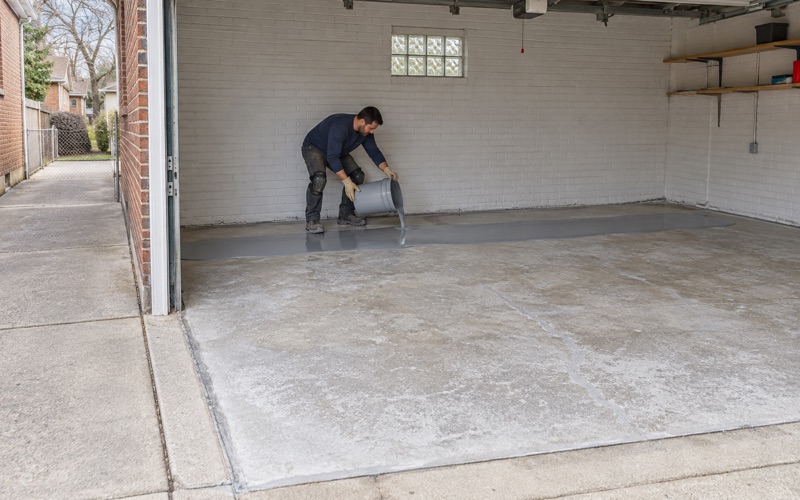
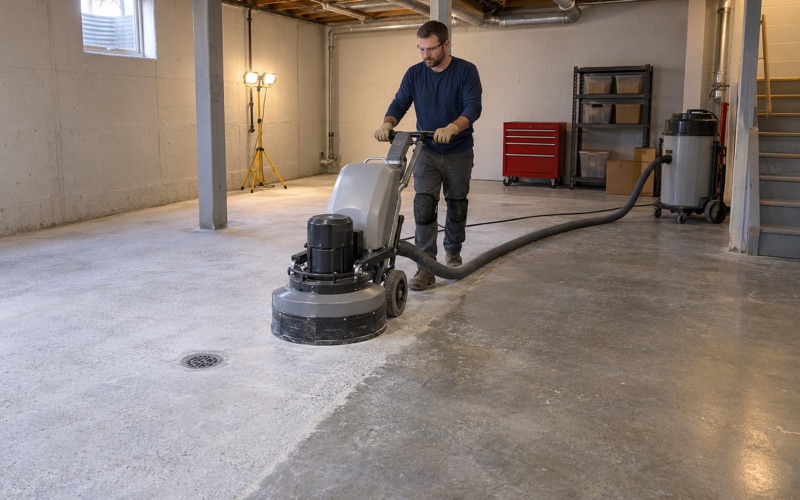
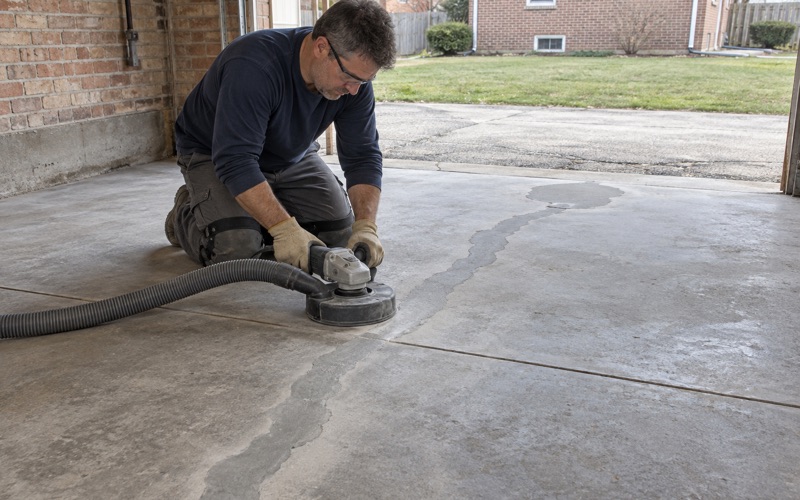
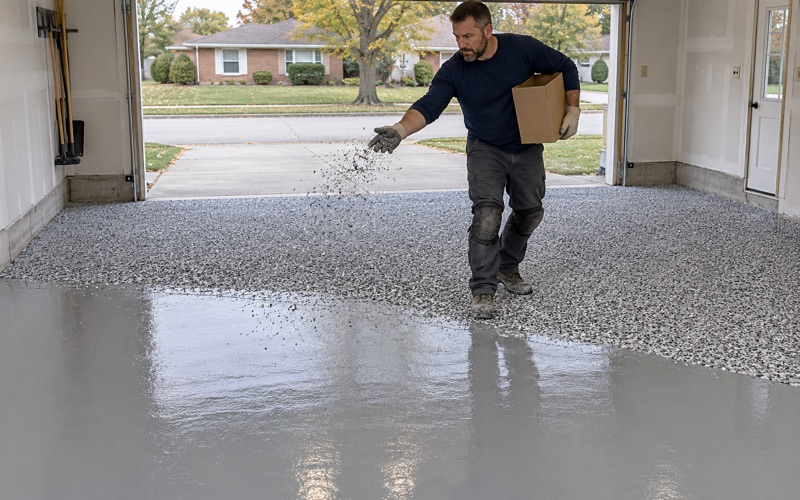
Garage and basement floors get the same groundwork. Every slab is opened with a diamond grinder or a shot blaster rather than an acid etch, so the coating has a real profile to grip, and the grinding dust is pulled into a vacuum at the machine instead of being rinsed toward a floor drain. Cracks, spalls and old coatings are mapped before anything is priced.
On a static control job that groundwork matters even more. A resistance range is met only when the floor is prepared, built, grounded and tested as one assembly. Our proposal names the product line, the number of coats and the finished thickness, and we say so when a room is better served by a vinyl or rubber system than by a resin one.
Diagnostic Electronics on Enterprise Drive
What the outpatient center runs
Westchester is a village in Cook County, a western suburb of Chicago with 16,892 residents at the 2020 census, and it sits in Proviso Township. In the village, Lurie Children’s Hospital runs an outpatient center at 2301 Enterprise Drive that it lists as a Surgical Treatment Center, with a 23-hour observation unit and overnight sleep studies.
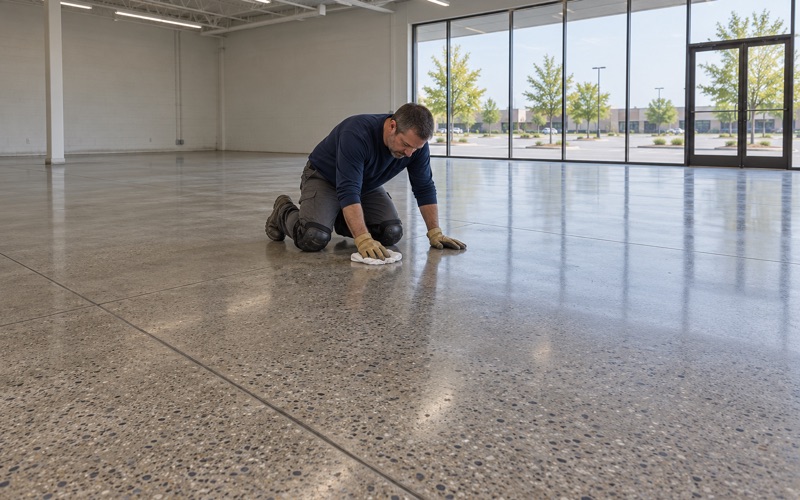
The services listed there include a clinical neurophysiology laboratory, video EEG, echocardiograms, electrocardiograms, and Holter and event monitoring. Those are rooms built around sensitive, calibrated electronics, which is exactly where static control flooring tends to come up. We use the center as a local example of that kind of room, not as a client: we have not seen its floors and have no project there.
Where static comes from
In a clinic or lab, people are a common source of static. A person walking across a floor can build up a charge through the contact and separation of shoe soles and floor surface, and that charge looks for a path to ground. When the path is a piece of sensitive equipment, static can damage the electronics, and near flammable material it can ignite it.
The NIH technical bulletin on static control flooring names humidity and occupants’ footwear as factors that affect static. Dry indoor air during a long heating season tends to make charge easier to build, so the same room can behave differently in January than in a humid July. A floor reduces the problem; it does not erase the role of the air and the shoes.
Other rooms with the same need
Diagnostic rooms are not the only places this comes up. The NIH bulletin calls static control flooring frequently required around diagnostic equipment and sensitive, calibrated electronics, and it also names data centers, clean rooms, operating rooms and rooms holding flammable materials. In each case the question is what a stray discharge could damage or ignite, and how quickly the charge needs somewhere to go.
That is also why we do not treat a static control request like a garage color choice. A garage floor is chosen for wear, salt and looks; a static control floor is chosen for a resistance range first, and every other decision follows from it.
Looking for epoxy-flooring closer to Brookfield? See Epoxy-Flooring Services in Brookfield.
Conductive Versus Static Dissipative: Two Ranges, Two Jobs
The numbers behind the names
Static control floors are sorted by electrical resistance, measured in ohms. ANSI defines a conductive floor as one below 1 million ohms, and a static dissipative floor as one between 1 million and 1 billion ohms. Both carry charge away from a person and toward ground; the conductive floor simply does it faster and with less resistance in the way.
Which range a room needs depends on what is being protected and who works there. The equipment maker, the facility’s engineer and the people who use the room set the target, and we build to it rather than picking a number from a product sheet.
Lower is not automatically better
It is tempting to assume the most conductive floor is the safest. The NIH bulletin warns that a floor that is too conductive may raise safety concerns for staff working with electricity, since the floor gives a person a lower-resistance path to ground. That trade-off is why the decision sits with the room’s users and its equipment rather than with a brochure.
For a room where staff both handle sensitive devices and plug in or service equipment, both concerns apply at once, and the target range has to weigh them. We would rather have that conversation before a sample board is chosen than learn afterward that the floor meets the wrong number.
Epoxy is one option, not the only one
Most static control floors in healthcare and laboratory buildings are vinyl, with rubber and carpet also available. Fluid-applied epoxy is another, poured and troweled as a seamless floor with conductive components built into the system rather than laid as tiles or sheets. Seamless resin also leaves no tile joints in a room that is cleaned often. Which one fits depends on traffic, cleaning and how the room changes over time.
The maintenance picture differs. Static dissipative vinyl often relies on a conductive polish or wax applied in the field, which has to be maintained and reapplied to keep working. A resin system is built to carry its properties in the coating itself, and we hand over the manufacturer’s cleaning instructions with the finished floor.
A Grounded System, Tested After It Cures
Grounding is part of the floor
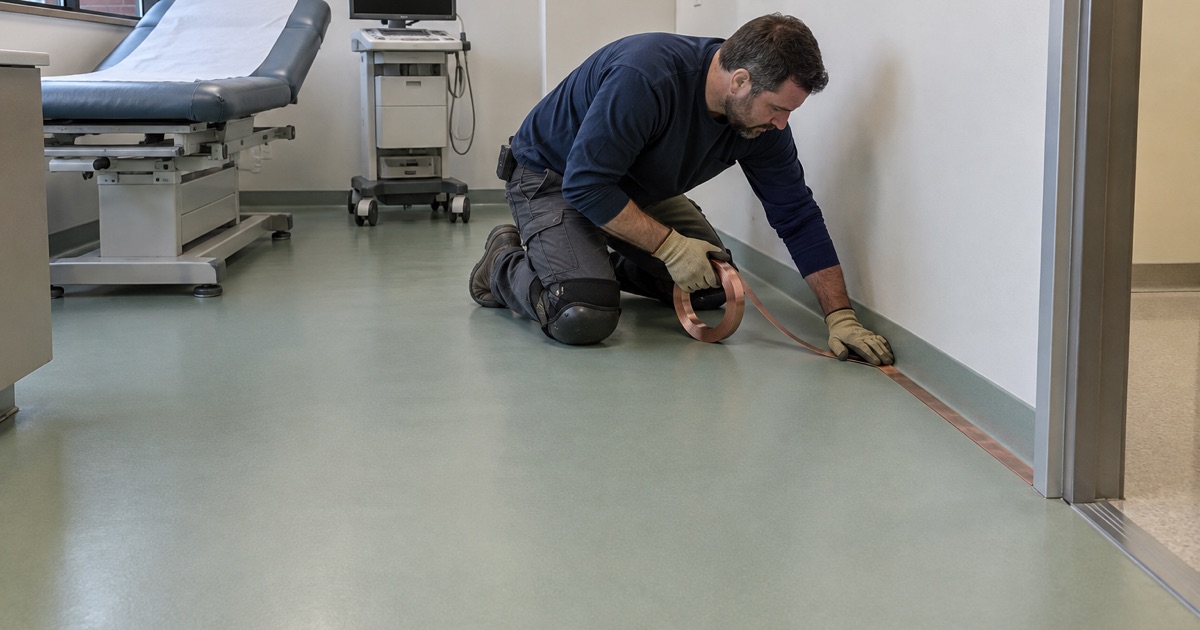
A static control floor is not a coating color. A gray or blue topcoat on its own does nothing for static; what matters is the conductive path through the system and its connection to building ground. That connection is planned before the first coat goes down, and the tie to the building’s electrical ground is made by the owner’s electrician, not by a flooring crew.
Preparation decides whether that path survives. The slab is profiled to the ICRI concrete surface profile the product calls for, and moisture is tested with ASTM F2170 in-situ relative humidity probes or an ASTM F1869 calcium chloride test before the price is final. A coating that lifts or blisters over a damp slab breaks the very path it was installed to provide, and moisture is the first warranty exclusion we name.
Testing with ESD STM7.1
Resistance is a measured result, not a label on a pail. After the floor has cured, it is tested to ESD STM7.1, the standard method for the resistance of floor materials, and the readings are compared against the range the room was specified for. If a reading falls outside it, the floor is not done.
A second method, ESD STM97.2, looks at the voltage that builds on a person wearing their actual footwear on the finished floor. That test treats the shoe and the floor as one system, which is closer to how a room is really used than a reading of the floor alone. Where the people using a room want proof beyond the floor reading, that is the test to ask about.
Humidity and footwear after handover
Because humidity and footwear both affect static, a floor that tests in range on handover day is only part of the answer. Staff footwear and the building’s humidity control are the room owner’s half of the system, and we put that in writing so nobody treats the floor as the whole solution.
We are also careful about what such a floor is for. It manages charge on people and helps protect sensitive equipment from discharge; it is not a substitute for the equipment maker’s own grounding requirements, and we do not describe it as anything more. If a room needs more than a floor can give, we say so before the job is quoted.
Static at Home, on the Bench and on a Schedule
A hobby electronics bench in the basement
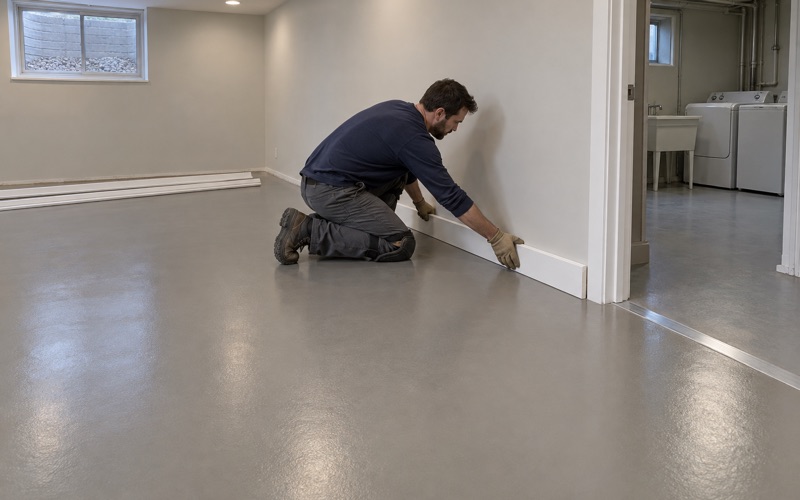
The same physics applies in a house. Westchester’s housing is overwhelmingly owner-occupied, and a basement workshop where someone repairs radios, builds computers or solders circuit boards is a small version of the problem a clinic faces. A static dissipative coating on that part of the floor, tied to a proper ground, can be part of a bench setup that also includes a grounded mat and wrist strap.
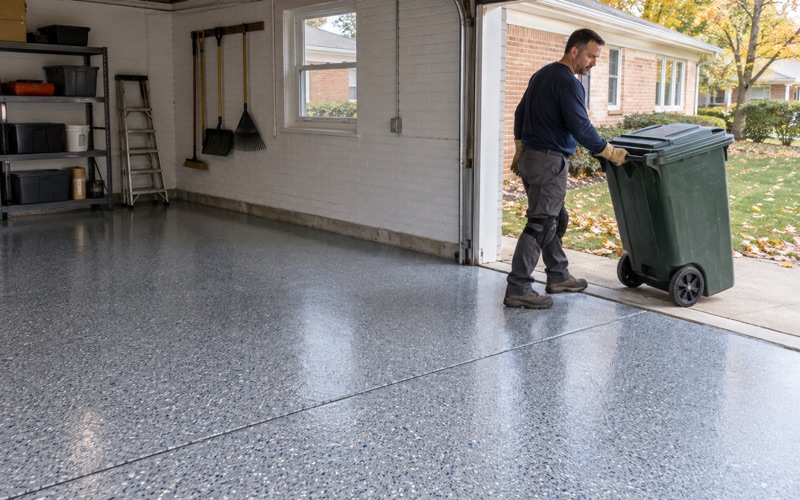
Most home floors do not need that. A garage needs a system that holds up to the brine and rock salt that ride in on tires all winter, and a basement floor is coated around the sump pit, floor drain and overhead sewer line rather than over them. We will tell you plainly which job you actually have.
Permits, registration and the village
Illinois has no state flooring license, so we check each village’s own rules before booking. In Westchester that means the Community Development and Building Department, which handles permits and contractor registration for the village. Whether a coating alone needs a permit is something we confirm with the department directly. Insurance requirements are confirmed before a date is set.
Home jobs over the state threshold get a written contract under the Illinois Home Repair and Remodeling Act, along with the Home Repair: Know Your Consumer Rights pamphlet, before any grinding starts. Products are chosen inside the Illinois VOC limits for floor and industrial coatings, which bind whoever applies them. A floor coating is never sold as radon reduction, waterproofing or flood protection, in a clinic or a house.
Phasing a clinic floor around open hours
A clinic or lab cannot simply close for a week. We phase that kind of floor around the hours a building has to stay open, and a schedule like the one published for the Enterprise Drive center, Monday through Friday from 6:00 a.m. to 6:30 p.m. and Saturday from 7:00 a.m. to 1:00 p.m., shows how narrow those windows can be.
Cure timing makes the windows tighter. Our cure schedules follow slab temperature and the dew point spread at the surface rather than the calendar, and a static control floor cannot be tested until it has cured. We build the test into the phase plan so a room returns to service with readings in hand, not on a promise.
- 20+ Years on Concrete
- Moisture Tested First
- Free Written Estimates