Skokie Epoxy Flooring has spent more than 20 years on epoxy flooring in Summit and across the region, and the floors we think hardest about here are the ones that get hosed down. A wash bay, a dairy room, a utility floor with a drain in the middle: each one is judged less by its color than by where the water goes when the hose shuts off.
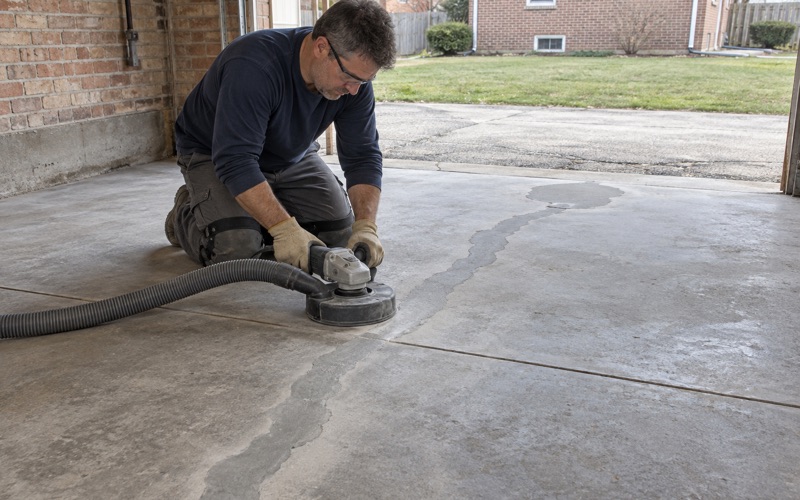
That judgment starts with the slab, not the product. Every floor we take on is opened with a diamond grinder or a shot blaster rather than an acid etch, and cracks, spalls and old coatings are mapped before anything is priced. When a slab needs repair, or a new pour, before it should carry a coating, we say so in writing.
The proposal then names the product line, the coat count and the finished thickness, so the floor can be checked against the quote once it is down. A moisture test belongs to that written scope before the price is final, and we explain what the warranty leaves out, with moisture named first, before the job is sold.
A Food-Grade Tanker Wash on West 59th Street
Who Washes Milk Trucks in Summit
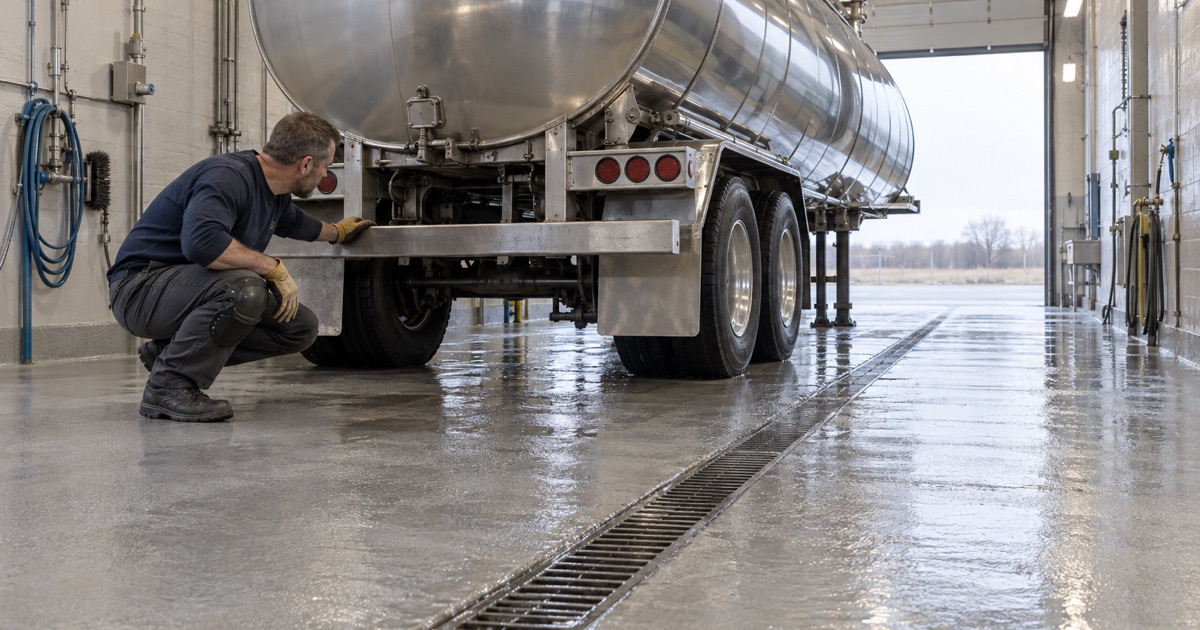
Summit is a city in Cook County with 11,161 residents at the 2020 census, and it holds a working piece of the dairy supply chain that is easy to drive past. T.A.C. Inc. runs a food-grade division at 7739 W. 59th Street, inside the village, where directories list a tanker wash and sanitation operation open 24 hours on weekdays. The same listings describe kosher washing and dairy-certified food-grade truck cleaning, and say the company has served the tank industry since 1968.
An undated national listing of milk tank truck cleaning facilities outside the IMS list carries the entry ‘17-1068, TAC, Inc., Summit, IL’ among ten Illinois sites. We read that as a permit held at some point for washing milk tankers; we have not checked its current status, and we have never seen the inside of that wash bay.
Why a Tanker Bay Answers to a Dairy Floor Rule
The Grade A Pasteurized Milk Ordinance treats the place a milk tank truck is washed much like the room where milk is processed. As one state adopted the PMO wording, facilities for cleaning and sanitizing milk tank trucks must comply with the same floor construction item as a dairy plant, and overhead protection is required in every case.
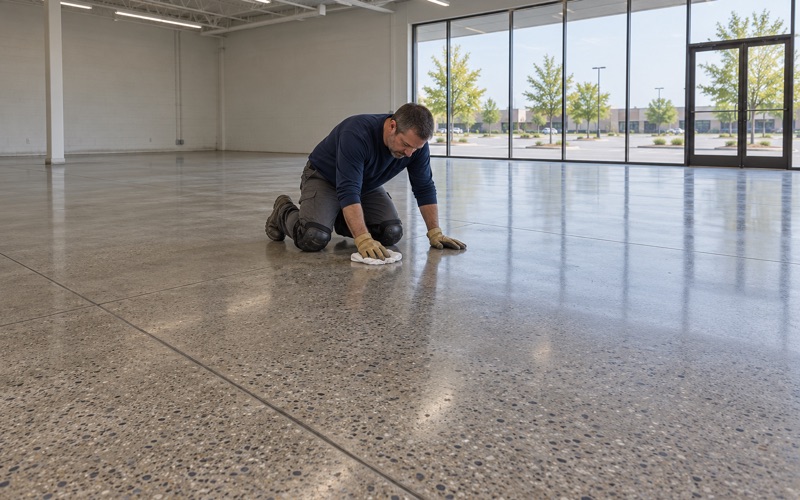
That item asks for floors of concrete or another equally impervious, easily cleaned material that are smooth, properly sloped, fitted with trapped drains and kept in good repair. The stated public health reason is that impervious floors will not absorb organic matter, and in a bay where milk residue is rinsed out of tankers, that reason is the whole point.
What the Rule Does Not Say
The rule names materials and performance, not a brand or a resin chemistry, and it does not hand approval to whoever installs a floor. Whether a wash bay meets it is a call for the dairy regulator, so we never describe a coating as compliant or approved. Illinois’ own adopting text is not something we have read, which is why we quote the wording as a state adopted it rather than citing an Illinois section.
What a coating can do is give an owner a smooth, seamless surface over sound concrete, with fewer pores and joints for residue to settle into. What it cannot do is change the shape of the slab under it, and that limit governs everything in the next section.
Looking for epoxy-flooring closer to Western Springs? See Epoxy-Flooring in Western Springs.
Smooth, Sloped and Flushed Clean
No Pools of Standing Water After Flushing
The administrative procedure behind the floor item sets a plain test: the surface is smooth and sloped so that there are no pools of standing water after flushing. Nobody needs an instrument to apply it. Run the hose the way the bay is actually cleaned, shut it off, wait, and look for the spots that still hold water.
We run that same check before we quote any wet floor, wash bay or not, and we mark every puddle on the slab map next to the cracks and spalls. A pool that forms on bare concrete will form on the finished floor too, only now it sits on a glossy surface where everyone can see it.
A Coating Follows the Slope It Is Given
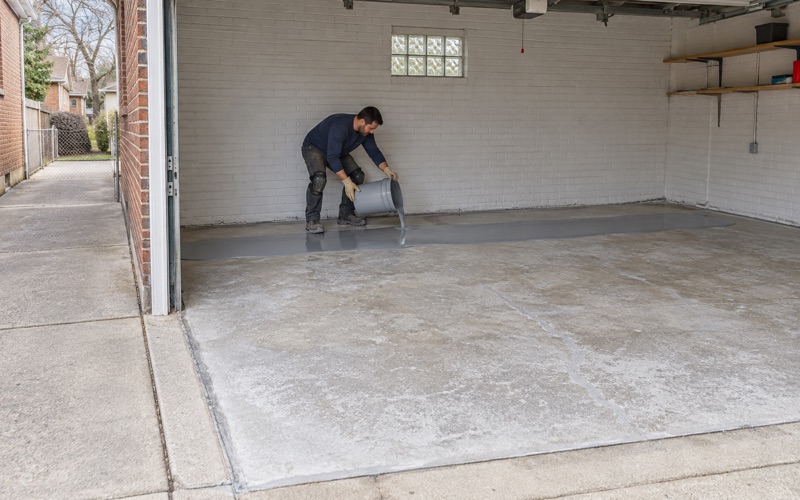
A floor coating is a thin, even film. Even a 100% solids epoxy laid at a generous thickness follows the concrete’s existing fall toward the drain; it does not create one. If the slab dishes away from the drain, the fix is in the concrete, through grinding high spots, filling low ones with a cementitious patch or replacing the section, and it happens before any coating goes down.
That is why the proposal separates slab work from coating work, line by line. An owner should be able to see which part of the price corrects the drainage and which part buys the finish, because only the first one changes where flush water ends up.
Texture That Still Drains
A wet floor needs grip, and grip comes from a broadcast of quartz aggregate locked under the topcoat. The trade-off is that a heavy texture can hold a film of water and residue in the valleys, so we match the profile to the cleaning method: enough tooth for boots on a wet floor, not so much that a squeegee skips over it.
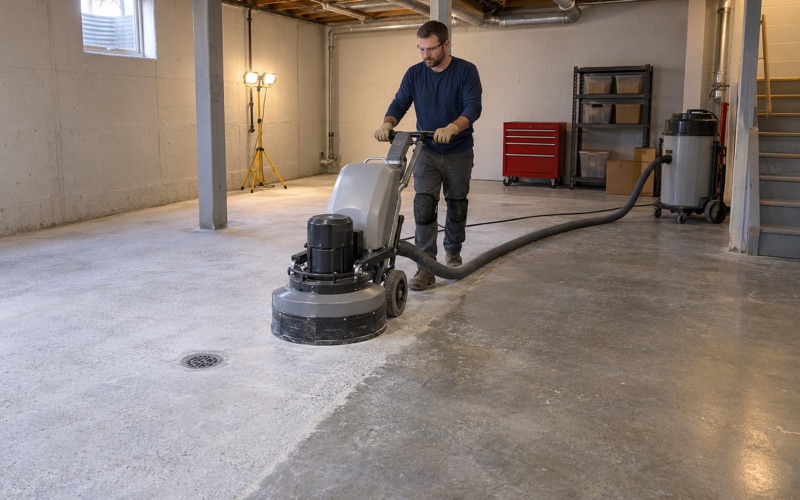
The broadcast only holds if the resin under it has bitten into the concrete, which is why the slab is profiled mechanically first. Grinding dust is captured at the machine by a vacuum instead of being washed toward the drain, which matters on any floor whose drain line serves more than one user.
Trapped Drains and the Joint Where Floor Meets Wall
Detailing the Drain Edge
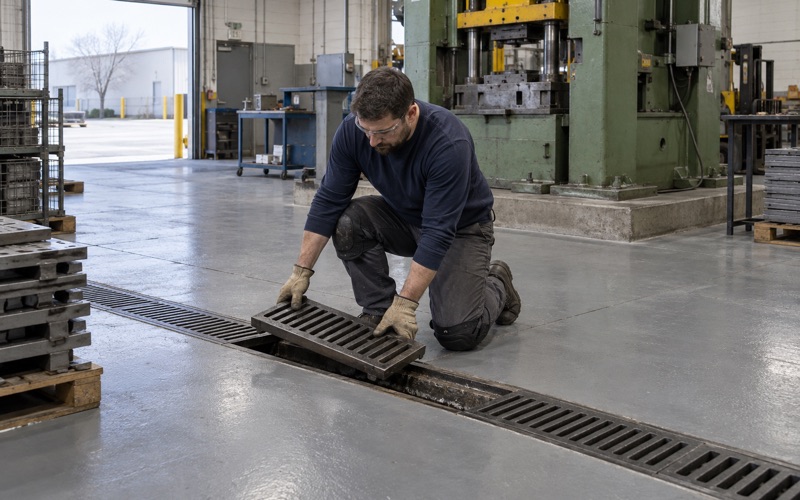
The floor item calls for trapped drains, and the drain body is where a coated floor most often lets go. Coating feathered to a thin edge at the grate lifts first, then water works under it. We cut a keyway into the concrete around the drain so the resin ends at full thickness against a clean shoulder, and we leave the grate, the trap and the drain body themselves alone.
Plumbing changes belong to a plumber and, where it applies, a permit. If a drain sits high or a trap needs work, that is noted on the slab map and sequenced before we arrive, not discovered halfway through a pour.
An Integral Cove at the Wall
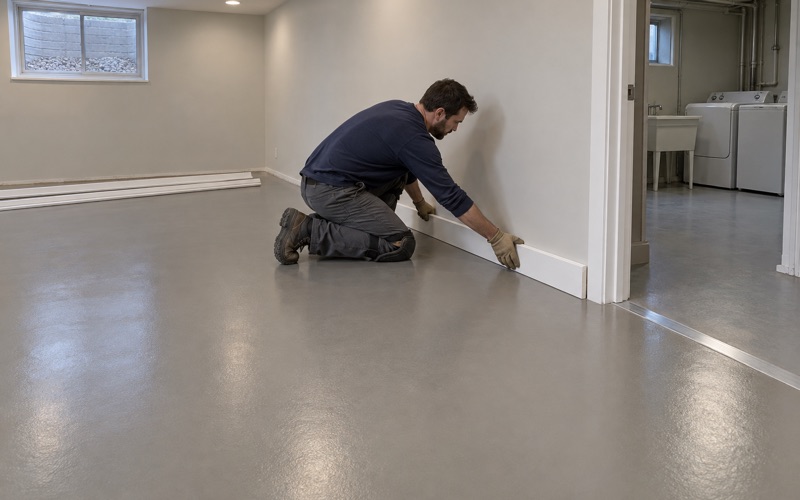
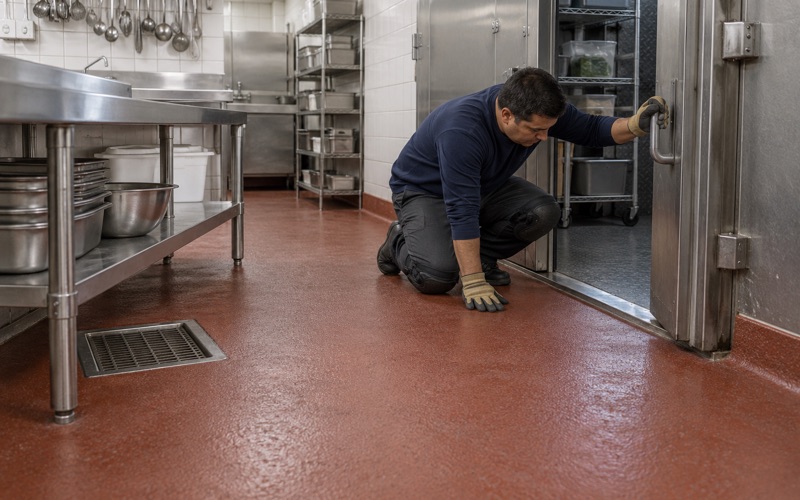
The same procedure asks that the joints between the floor and the walls be impervious. A square corner with a caulk bead or a rubber base is a seam, and seams are where flush water and organic matter collect. An integral cove carries the resin up the wall in a continuous radius, so the floor and the base are one surface with nothing to open.
A cove stays tight only if the wall behind it is sound and dry where it meets the slab. We check that line for cracks and moisture along with the floor, and where a wall has moved away from the slab, we say so before proposing a cove that would crack along the same line.
Wash Water Leaving the Site
On West 59th Street the wash water also has somewhere to go after the drain. MWRD’s list of significant industrial users as of October 1, 2026 carries T.A.C. Inc. at two addresses on that street, 7739 and 7745, along with Express Container Services of Summit at 7703.
For a coating contractor that sets a simple rule on any floor tied to that kind of discharge: nothing from our work goes down the drain. Dust is vacuumed, leftover resin and mixing waste leave with us, and the only thing reaching the drain afterward is the wash water it was built for.
Puddles, Slope and Cove Details on a Summit Garage or Utility Floor
The Same Checks at Home Scale
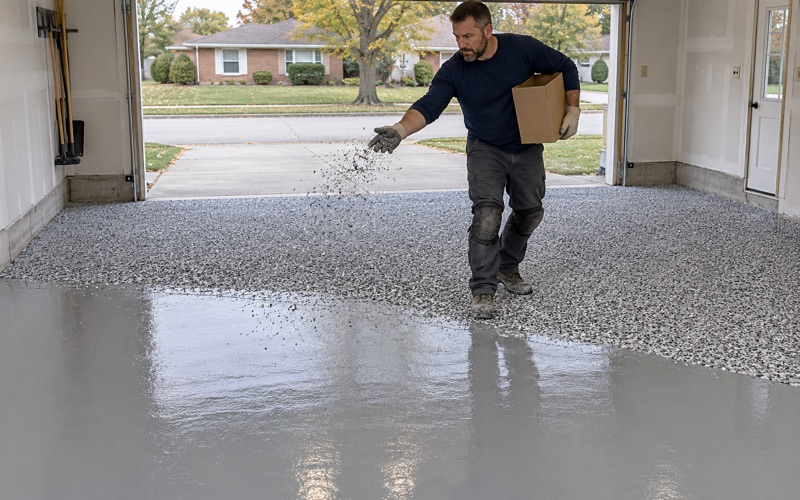
Most floors in Summit are not wash bays, but the wash-bay questions travel well. A garage slab that pools meltwater near the door, a utility room with a floor drain, a laundry corner that gets mopped hard: each one benefits from the same hose test, the same honest answer about slope and the same tight detail where the floor meets the wall.
In a garage, the slope is whatever the original pour left, so we find out what the slab does with water before anyone picks a vinyl flake color. A cove base is optional there, but a tight joint at the stem wall keeps salty meltwater from wicking into the seam.
Salt, Moisture and the Cure Window
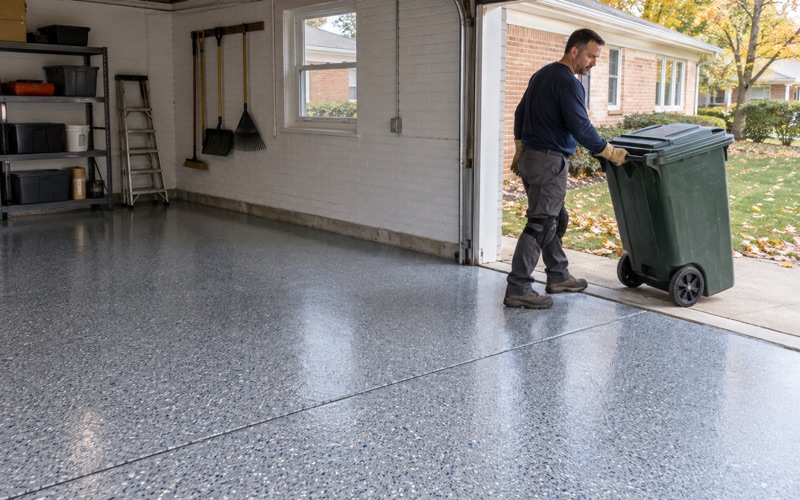
Garage systems here are chosen to stand up to the brine and rock salt that ride in on tires all winter, usually a 100% solids epoxy base with a polyaspartic topcoat. Before that is priced, the slab gets a moisture test written into the scope, often an ASTM F2170 relative humidity probe or a calcium chloride test, because vapor pushing up from below is the first thing our warranty excludes.
Cure timing follows the slab temperature and the dew point spread at the surface, not the date on the calendar. An unheated detached garage in deep winter is told to wait for warmer weather, since a coating that cures cold and damp can blush, stay soft and pick up hot tires by spring.
What a Floor Coating Will Not Do
A coating is a wearing surface. It is not flood protection or radon reduction, and it does not stop water that a slab or a wall lets in; we will not sell it as any of those. Those limits go into the written proposal alongside the warranty exclusions, so nothing about them is a surprise after the floor is down.
Illinois has no state flooring license, so before a Summit job is booked we check the Village of Summit Building and Public Works department at 7321 W. 59th Street for its contractor registration and insurance rules. Home jobs over the state threshold also get a written contract and the Illinois consumer-rights pamphlet before any grinding starts, and the products we use fall inside the Illinois VOC limits for floor coatings.
- 20+ Years on Concrete
- Moisture Tested First
- Free Written Estimates