Skokie Epoxy Flooring has spent 20+ years on epoxy flooring in Prospect Heights and the rest of our service area, and the jobs that take the most thought are rooms asked to do more than one thing. A floor that serves food, takes a mop bucket twice a day and then hosts a game of tag is three floors pretending to be one. Our first question in a room like that is which part of it gets which surface.
Resin is very good at some of those jobs and wrong for others. A seamless epoxy or polyaspartic system shrugs off spilled milk, strong cleaners and rolling carts, but it is a thin, hard layer bonded to concrete, and concrete does not give when a child falls on it. We say that before we quote, because the honest answer sometimes means less coated area and a different product in the middle of the room.
That zoning logic applies to a school cafeteria-gym and to a basement that holds both a toy corner and the holiday bins. The sections below walk through one local project that makes the question concrete, then what a coating can and cannot do, and how we split a shared room at home.
Eisenhower Elementary Adds a Second Multipurpose Room
What District 23 Broke Ground On
In June 2026, Prospect Heights Elementary School District 23 broke ground on an addition to Eisenhower Elementary School on Schoenbeck Road. The project answers the state’s full-day kindergarten requirement, which takes effect in August 2027, and adds four classrooms and a second multipurpose room. It also moves the main office and creates a new entry with a drop-off and pickup lot.
The addition is smaller than the version first proposed and is paid for through a plan that refinances existing debt, with no tax impact. We have no part in the project and have not seen what floor products it specifies. We point to it because it is the clearest local example of a room type that forces a zoning decision.
Lunch, PE and After-School in One Room
When the district laid out its earlier 2023 plan, it described a multipurpose room used for lunch, PE and after-school programs. That is three different floor loads in one day. At noon the floor carries folding tables, food carts and spilled trays; an hour later it carries children running, jumping and occasionally landing hard.
After school, the same space may hold crafts, games or a club meeting, with chairs dragged across it and the occasional paint spill. No single coating is the best answer to all three schedules. The useful question is which part of the room does which job, and that is the question we bring to any shared floor.
Why a Shared Room Needs More Than One Surface
A floor that is ideal for a cafeteria is firm, smooth and seamless so tables stand level and spills wipe up. A floor that is ideal for PE gives slightly under a landing and keeps its grip under sneakers. Those two lists pull in opposite directions, and a product that splits the difference tends to do neither job well.
That is why we treat a multipurpose room as several small floors that happen to share four walls. The kitchen side, the doors and the storage closet get one answer, and the open play area gets another. A homeowner planning a basement that hosts both birthday parties and storage shelving faces the same split on a smaller scale.
Looking for epoxy-flooring closer to Bensenville? See Epoxy-Flooring in Bensenville.
What a Resin Floor Does Well
Spills, Cleaners and Seams
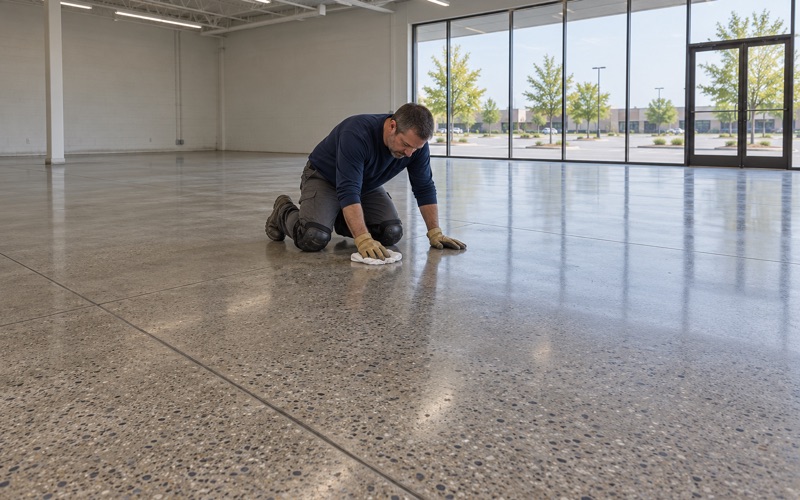
A resinous cafeteria floor earns its place with seamlessness. Manufacturers sell these systems on resistance to heavy foot traffic, strong cleaners and food and beverage spills, and that matches what we see in practice. With no grout lines or tile seams, there is nowhere for milk or juice to soak in and sour.
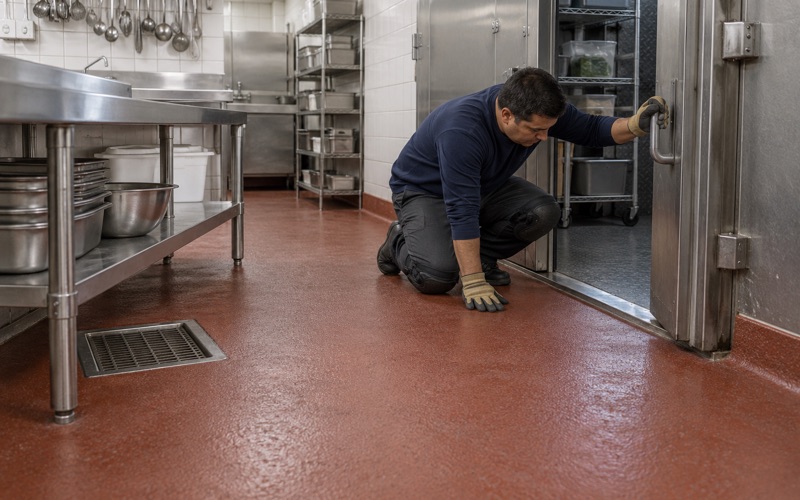
A 100% solids epoxy base with a polyaspartic or polyurea topcoat stands up to daily wet mopping and the disinfectants a lunchroom uses. Where a kitchen or serving area falls under food-service rules, a coved base at the wall junction turns the floor and wall into one cleanable surface instead of a dirt-catching corner.
Carts, Tables and Busy Entries
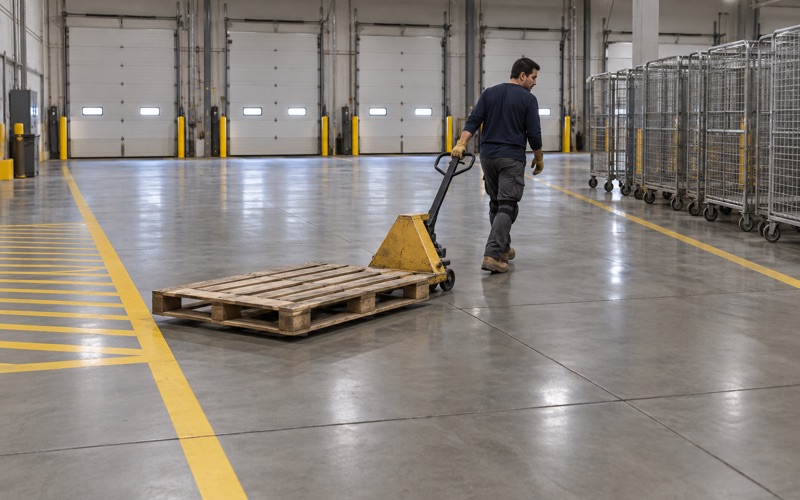
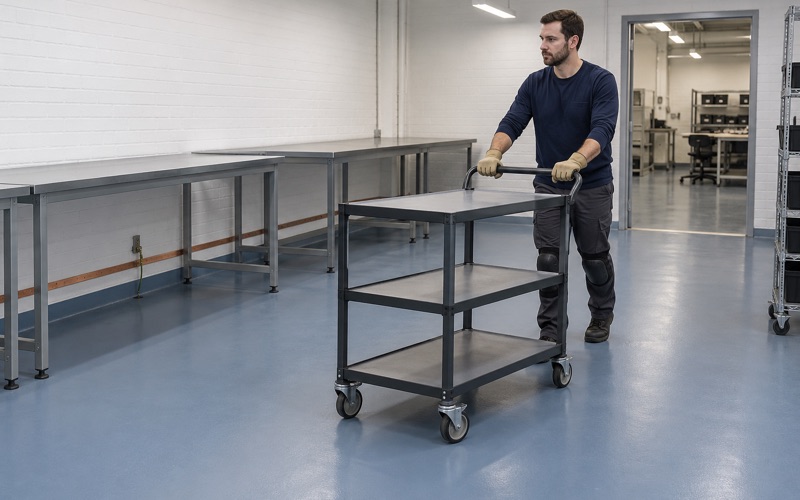
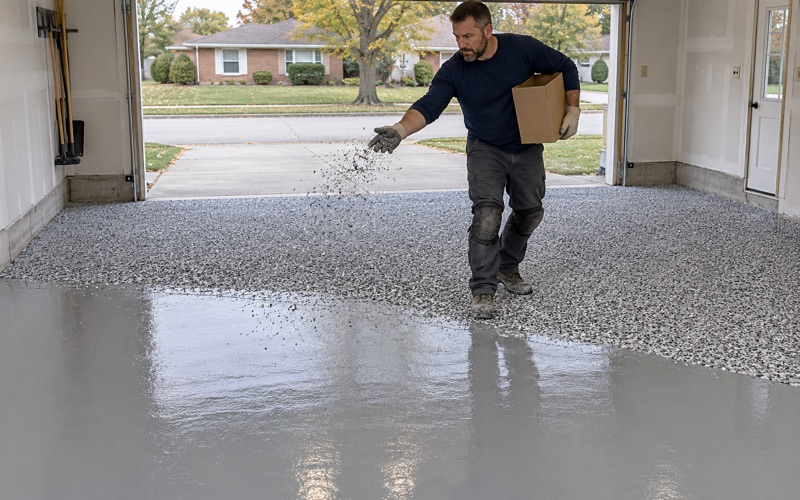
Serving lines see steel cart wheels, dropped trays and the constant shuffle of a line that forms at the same spot every day. A hard resin floor resists that wear better than most soft surfaces, and a quartz aggregate broadcast can add texture where wet shoes cross. Entries carry grit and, in a Chicago-area winter, slush tracked in from the lot.
Storage rooms that hold stacked tables, chairs and gym equipment take point loads that dent softer floors. Those three zones, the serving line, the entry and storage, are where a coating does its best work. They are also the areas where nobody is supposed to be tumbling. A lithium silicate densifier is a lighter option for a storage room that sees little water, and we say so when it fits.
Preparation Decides How Long It Lasts
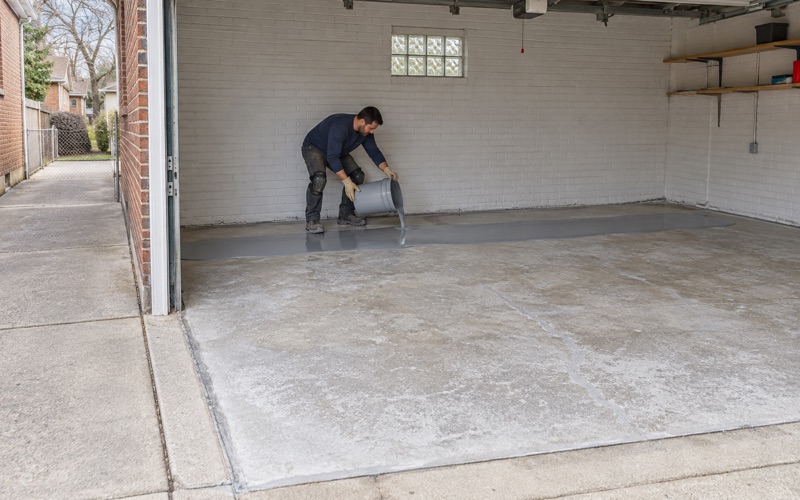
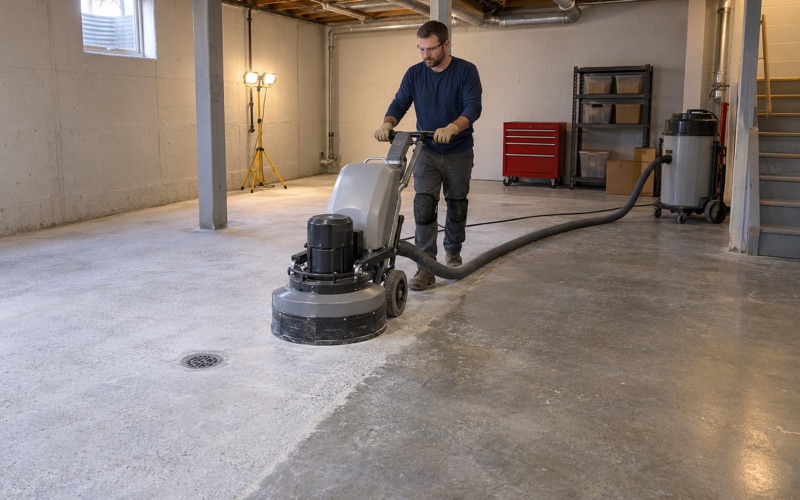
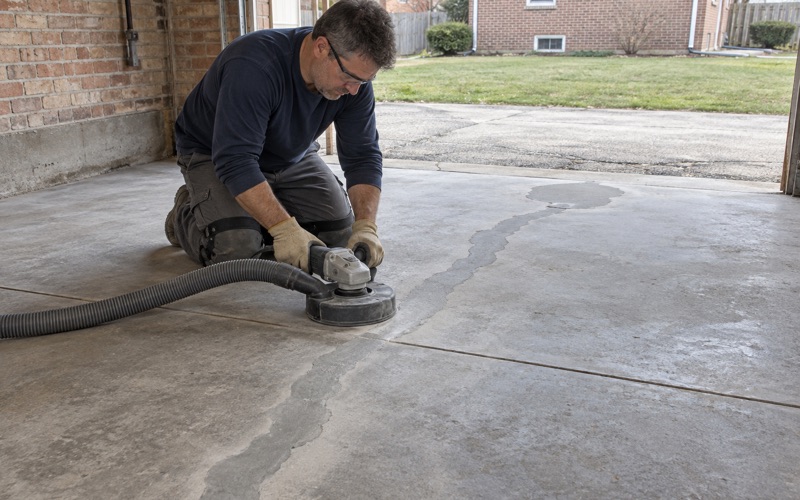
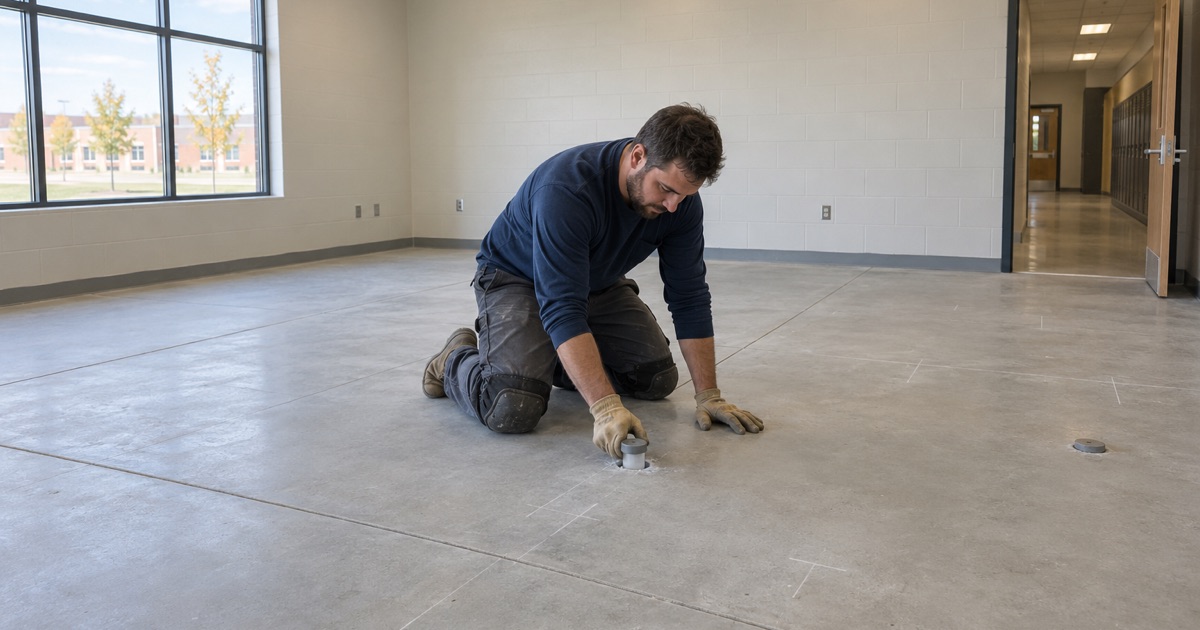
A coating is only as good as its grip on the slab. We open every floor with a diamond grinder or a shot blaster rather than an acid etch, so the surface has a measured profile for the primer to bite into, and the dust is pulled into a vacuum at the machine. Cracks, spalls and old coatings are mapped before we price anything. If a slab needs repair or replacement before it should be coated, we say so in writing.
Moisture testing is written into the scope before the number is final, using methods such as ASTM F2170 in-situ relative humidity probes. Our proposal names the product line, the coat count and the finished thickness, so whoever signs it can check the floor against the paperwork. Moisture is the first warranty exclusion we explain.
What a Coating Does Not Do: Absorb a Fall
Hard Is the Point, and the Problem
Everything that makes resin good in a serving line works against it under a running child. A thin coating adds a hard layer, usually a few millimeters or less, over concrete, and concrete has almost no give. Shock absorption, the floor’s ability to soften an impact, comes from a sports flooring system designed for it, not from a topcoat.
We will not describe any epoxy, polyaspartic or polyurea coating as a sports surface, and we will not quote one as a play floor. If a room’s main job is PE, the answer is a dedicated athletic flooring product from a specialist in that work, and the resin belongs around it rather than under the game. We can still coat the serving line, the storage room and the entry in that same space.
VCT and the Missing Standard
This is not only a coatings problem. Athletic Business has reported that vinyl composition tile is common in gyms that double as cafeterias or auditoriums, and that it is not recognized as an actual sports surface by any entity. The same reporting describes a student chipping a tooth on VCT during PE.
ASTM Committee F06 has been developing a standard for active, multipurpose flooring that would balance a minimum shock absorption with enough firmness for cafeteria tables, stages and pianos. It is a standard in development, not one in force, which tells you how unsettled the multipurpose floor still is. Until it is finished, there is no agreed test that shows one product serving lunch and PE equally well.
Specialty Floors Elsewhere in the District
District 23’s own records treat gym floors as a separate category. Its Buildings and Sites Committee agenda for February 2026 listed gymnasium flooring, described as specialty floors, as the main summer item at MacArthur Middle School, scheduled from June 8 to substantial completion on August 1. We have not seen which product was chosen; the agenda lists the work with estimated amounts.
That is the right instinct for any building owner. A gym floor is purchased as a gym floor, and the floors around it, the corridors, kitchens and storage rooms, are purchased for what they carry. Mixing those decisions is how a room ends up with a surface that is mediocre at everything.
Zoning a Shared Room, at School and at Home
Drawing the Lines in a Multipurpose Space
In a shared room we start with a plan of traffic, not a color chart. Serving lines, the entry from outside, the storage alcove and any area near sinks or food prep are candidates for a seamless resin system. Each zone gets its own texture: a finer finish near the tables and more grip at the doors and sinks. The open court where children run is left to a sports surface chosen by the athletic flooring supplier.
Where the two meet, the transition needs a clean edge and a matching height so carts roll across and nobody catches a toe. We would rather coat less of the room well than coat all of it and leave a hard floor exactly where children fall.
The Basement That Is Playroom and Storage
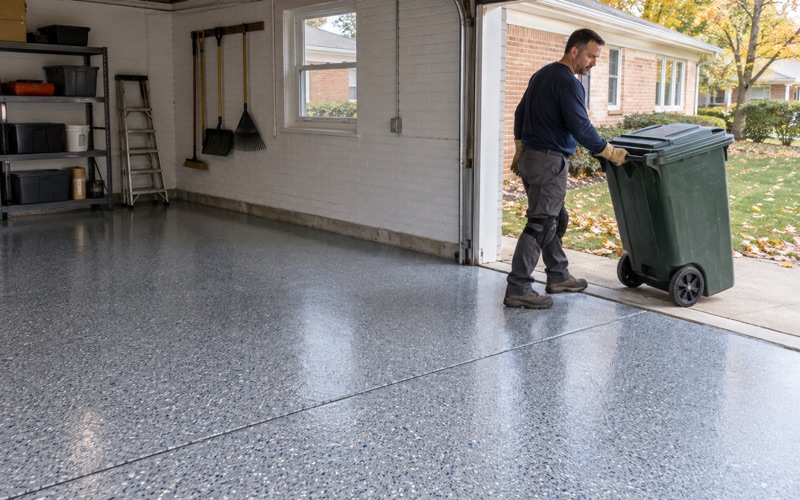
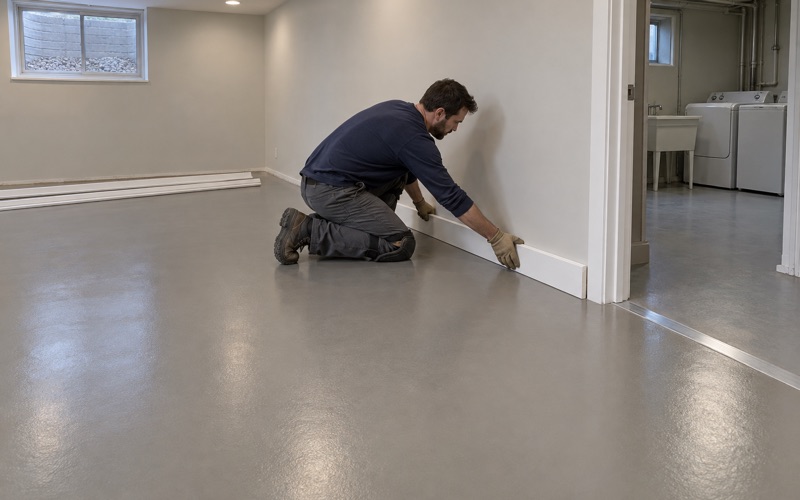
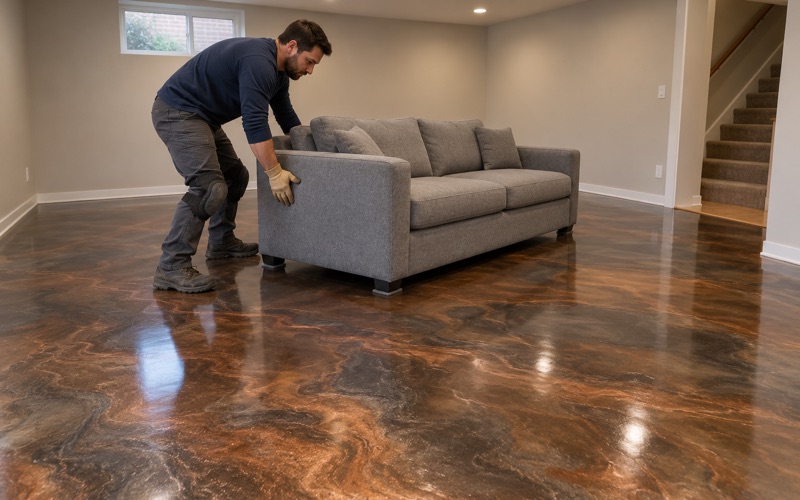
The same thinking scales down to a house. A basement or garage in a Prospect Heights house can be a kids’ play area on Saturday and a storage room the rest of the week. A coated slab is an excellent storage floor, easy to sweep and indifferent to a leaking paint can or a wet bike tire. In a garage, the system we pick also has to hold up to the brine and rock salt that ride in on tires all winter.
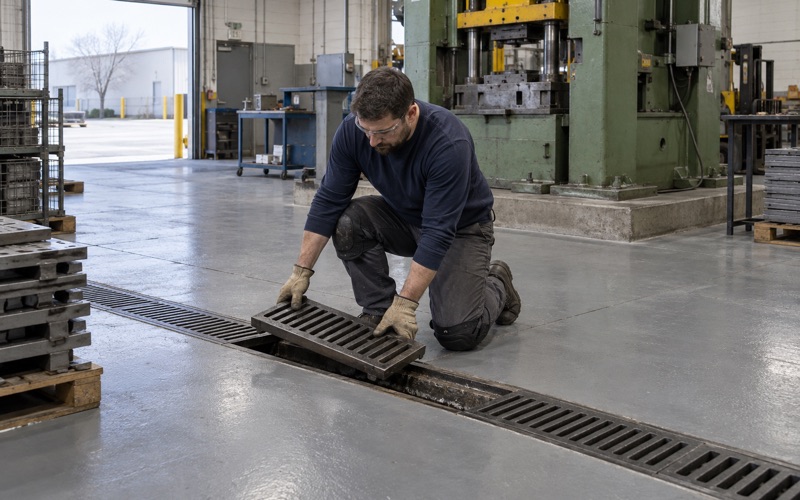
For the play corner, we suggest the family lay interlocking rubber tiles or a padded mat over the coated floor rather than ask the coating to soften a fall. Around the sump pit, floor drain and overhead sewer line, we coat around the fixtures, never over them, and a coating is never sold as waterproofing.
Local Paperwork Before We Book
Prospect Heights is a city rather than a village, with its own building and permitting department, and Illinois has no state flooring license. We check the city’s contractor registration and insurance requirements before a job goes on the calendar rather than after a crew arrives.
Home jobs over the state threshold get a written contract and the Illinois Home Repair: Know Your Consumer Rights pamphlet before any grinding starts. Cure schedules follow the slab temperature and dew point, so a cold detached garage in January may be told to wait for warmer weather.
- 20+ Years on Concrete
- Moisture Tested First
- Free Written Estimates