Skokie Epoxy Flooring brings more than 20 years of work to epoxy flooring in Palos Hills, and the floors that teach us the most are the ones that get wet on purpose. A lab safety station, a mop sink room or a laundry corner takes water as part of its routine, not as an accident. That changes how the slab is prepared, how the coating is textured and where its edges stop.
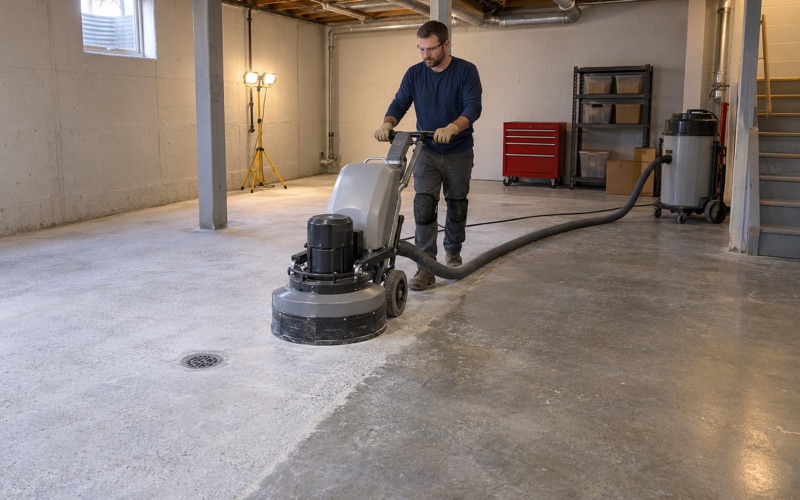
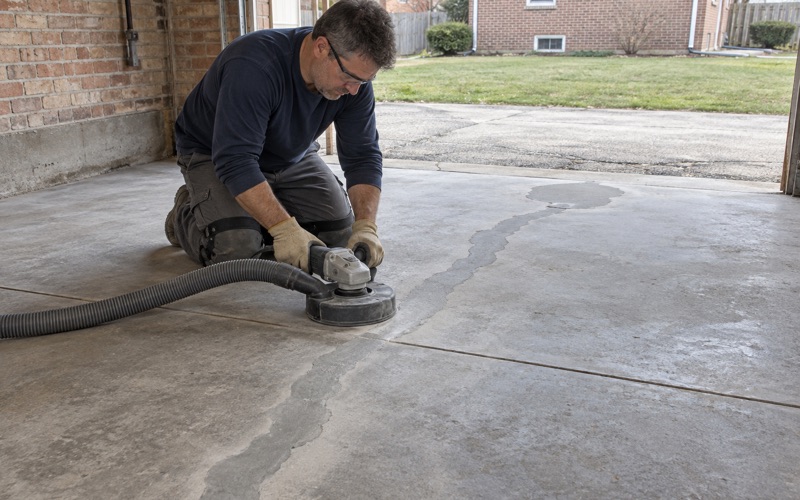
Our approach starts at the concrete. We open every slab mechanically with a diamond grinder or a shot blaster, because an acid etch leaves no real profile for a coating to grip, and we map cracks, spalls and old coatings before we quote. When a slab needs repair or replacement first, we tell you that instead of coating over it.
The written proposal names the product line, the coat count and the finished thickness, so the floor that goes down can be checked against the paper. A moisture test sits inside that scope before the price is final, and we explain what the warranty leaves out, starting with moisture, before anything is signed.
Stagg’s Four New Labs and the Weekly Water Test
Four Science Labs on 111th Street
Illinois High School District 230 recently finished a two-phase expansion of Amos Alonzo Stagg High School at 8015 W. 111th Street, in Palos Township, Cook County. The roughly $15 million project added eleven classrooms, four science classrooms and labs, seven offices and a rooftop environmental learning space, built by Troop Contracting and paid for with bonds, converted working cash and ESSER grants rather than a referendum.
Phase one filled the south courtyard from summer 2023 into spring 2024, and phase two moved to the north courtyard from summer 2024. We have not seen the finished labs, and nothing here describes their floors or equipment. What the four science rooms do show is that new lab space is still being built in Palos Hills, and lab space comes with a cleaning and testing routine that most floors never face.
A Test That Is Activated Weekly
New chemistry and biology rooms are normally fitted with plumbed eyewash stations, often with a safety shower nearby. ANSI Z358.1-2014, as quoted by a university environmental health and safety office, says plumbed emergency showers and eyewashes shall be activated weekly, long enough to verify they work and that flushing fluid is available. The point is to clear sediment and limit microbial growth in the water standing in the line.
ANSI Z358.1 is a voluntary consensus standard about equipment, and it names no floor material at all. It does, however, decide how often water hits the floor beside the equipment. A floor that sees water by schedule is a different specification problem from a floor that might see a spill once a year.
What One Test Puts on the Floor
The weekly shower check runs for 15 seconds or until the water is clear, and a chain-pull shower stops after releasing 5 gallons. Eyewash flushing adds its own splash and overspray around the bowl. Repeat that every week of the year and the few square feet in front of each station become some of the hardest-worked floor in the room.
That water is clean test water headed for a drain or a tray, not a backup and not a flood. A coating does not waterproof anything, and we never sell one that way. Its job here is narrower: shed water where it should go, keep its grip underfoot while wet, and leave no gap for water to sit in.
Looking for epoxy-flooring closer to Lincolnwood? See Epoxy-Flooring in Lincolnwood.
Drain, Tray or Squeegee: Where the Water Goes
When the Station Has a Floor Drain
The weekly eyewash procedure quoted by that same safety office begins with a plain instruction: locate floor drain. Where a drain exists, the coating has to meet its rim cleanly, with the slab around it sloped so water moves toward the grate instead of pooling at a joint or along a cabinet toe kick. On a new slab that slope is set when the concrete is placed; on an old one it is whatever the original finisher left.
We grind right up to the drain body, rebuild any broken edge with a compatible patch, and stop the coating at the flange without bridging the grate. We coat around a drain, never over it. If the existing slab falls the wrong way, the proposal says so, because a coating follows the concrete beneath it and cannot create slope.
When the Test Relies on a Tray
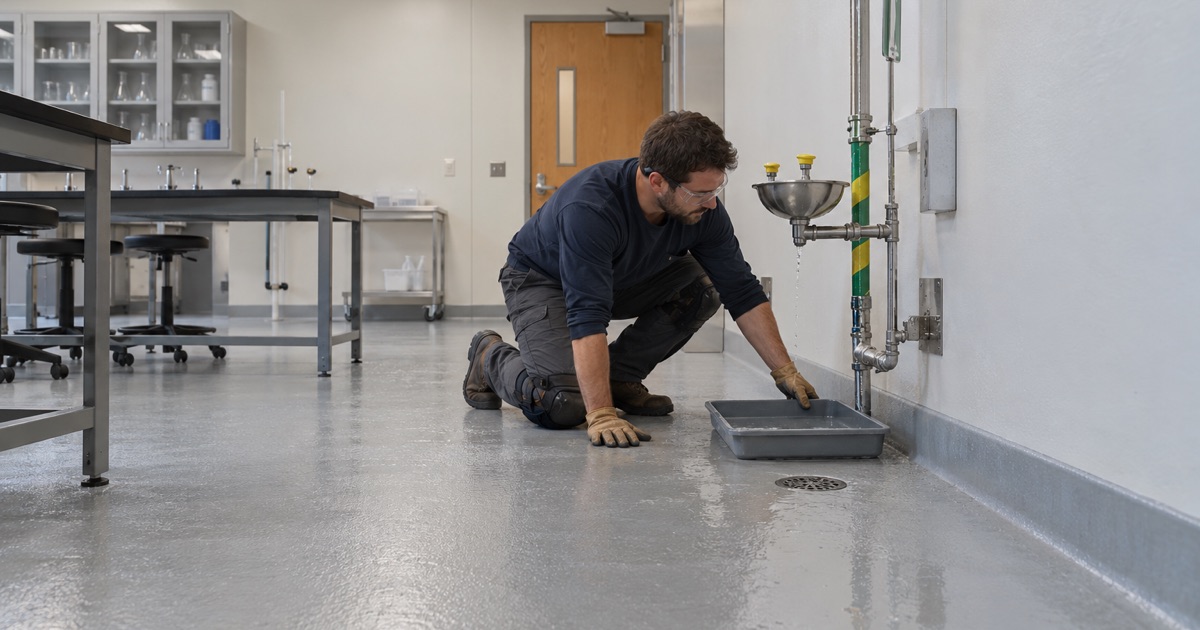
The same procedure says to use a plastic tray to catch the water if the drain pipe does not extend to the floor drain. So some stations are tested with the water caught above the floor rather than piped to a drain, and the tray is the plan. Trays get set down, slid, tipped and emptied, and the floor under them takes both the scuffing and the splash.
For a tray-tested station we lean toward a dense, chemical-resistant system with a hard topcoat that shrugs off sliding plastic. The surface should be smooth enough that a missed drip wipes up in one pass, yet textured enough that a wet patch is not slick. Epoxy alone can scuff dull under constant sliding, which is why the topcoat choice matters more here than the color.
A Squeegee Path for the Custodian
Whatever the tray misses ends up with a custodian. A seamless resin floor gives that person one continuous surface to push water across toward a drain or a wet-vac, rather than a grid of tile joints that each soak up a little every week. Each joint is one more place to work twice.
We plan that path at the walkthrough: where the squeegee starts, where it ends and what stands in the way. Casework legs, cabinet bases and door thresholds are all detailed so the water has one direction to travel and nowhere to hide. We would rather settle that on paper than discover it with a bucket of water after the coating has cured.
Slip Texture, Cove Base and Seams at the Safety Station
Texture That Still Grips When Wet
Students and staff reach an eyewash in a hurry, sometimes with blurred vision, and the floor right there may still be wet from the last test. We build wet traction with a quartz aggregate broadcast into the base coat and locked under a topcoat, and we set the grit size with the client so it grips without fighting the mop.
A vinyl flake broadcast can carry color through a classroom aisle, but at the station itself we favor quartz or an added grit in the final coat. Over a 100% solids epoxy base, a polyaspartic or polyurea topcoat gives that texture a hard, chemical-resistant wearing surface in the one spot that sees the most water and footsteps.
An Integral Cove Base
Where the floor meets a wall or casework, a rubber base with a glued seam is the usual place for weekly water to wick in. An integral cove base runs the resin itself up the wall in a rounded profile, commonly four to six inches high, so floor and base are one piece with no joint at the corner.
The rounded corner is easier to clean, too. A mop or squeegee follows it without leaving a gray line of grime, and there is no vertical seam where water can sit between one week’s test and the next. On a lab floor it also keeps a spilled reagent from reaching the drywall behind the base.
Joints, Cracks and Working Around Class
Control joints and old cracks are the other route water takes. Static cracks are filled flush, and moving joints are carried through the coating with a flexible sealant rather than buried under resin that will simply crack along the same line.
A school lab, like any clinic, kitchen or shop, gets phased around the hours the building has to stay open, so grinding, coating and cure are scheduled around classes. Dust is captured at the grinder by a vacuum instead of being rinsed toward the drain, and every product we pick meets the Illinois VOC limits that bind whoever applies it.
Utility Sinks and Laundry Corners at Home
The Basement Utility Sink
The same logic scales down to a house. A basement utility sink gets filled, overfilled and splashed on a routine of its own, and the slab in front of it usually takes more water than any other spot downstairs. We stop the coating cleanly at the floor drain and sump pit and add texture where someone stands at the basin.
Before we price a basement, we test the slab with ASTM F2170 in-situ relative humidity probes or an ASTM F1869 calcium chloride test, because vapor rising from below is what coating warranties exclude first. On a slab with no history, an ASTM D4263 plastic sheet test is a quick first look, never the whole answer. Where readings run high, a moisture-mitigation primer goes into the written scope instead of a hopeful guess.
The Laundry Corner
Washers leak at the hose, drip at the drain standpipe and leave detergent on the floor, and the laundry corner is often tucked against a foundation wall. A cove along that wall and a seamless field in front of the machines give you the same squeegee-friendly surface a lab station needs, on a much smaller scale.
Cure schedules follow slab temperature and dew point rather than the calendar, which matters in a cool basement in late fall. A thin coat laid over a slab near its dew point can develop amine blush and lose adhesion, so we read the surface before mixing anything. Home jobs above the state threshold get a written contract and the Illinois consumer-rights pamphlet before any grinding begins.
Registration in Palos Hills
Illinois licenses no flooring or coatings contractor, so the city’s own rules are the binding ones, and we check them before booking. Palos Hills permit rules require registered contractors on commercial property, and a general contractor files a $50 registration and a $25,000 surety bond, both good for two years, plus a certificate of liability insurance. A homeowner may do the work personally after signing the city’s hold-harmless agreement.
We sort out that paperwork before a date goes on the calendar, not after the grinder arrives. For a lab or any other commercial room, it is one less question standing between the walkthrough and the work.
- 20+ Years on Concrete
- Moisture Tested First
- Free Written Estimates