Skokie Epoxy Flooring brings more than 20 years of epoxy flooring in Lake Zurich and the surrounding suburbs to floors where the hardest job is not carrying a load but giving up dust. Indoor firing ranges, reloading benches and shooting-sports workshops all collect fine lead particles, and the floor under them decides whether that dust can be cleaned up or only stirred around.
A coating does not remove lead, and we never sell one as if it did. What a well-built resinous floor can do is give the people who maintain a space a seamless, nonporous surface that a HEPA vacuum and a wet mop can actually clean, without the cracks, open joints and bare concrete pores that hold dust between cleanings.
Getting there starts before any coating is opened. Surface preparation is planned around the lead the slab may already carry, because opening a dusty slab with an uncontrolled dry grind is exactly the wrong way to start. Below, we walk through the federal housekeeping rule that shapes a range floor and how we build one that supports it.
The Firearms Range at Lake Zurich’s Police Facility
A Range Listed at 200 Mohawk Trail
The Village of Lake Zurich lists its police facility and firearms range together at 200 Mohawk Trail, in Ela Township in Lake County, and the police Training Division gives the same address. It is one of five municipal buildings on the village’s department list, alongside Village Hall on East Main Street and the public works building on Telser Road.
We have no relationship with the department and have not seen the range, so we cannot tell you its lane count, its floor finish or what has settled on that floor. What the listing does tell us is that a firearms range sits in the village, and every indoor range shares one housekeeping problem that starts at floor level.
How the Range Came to Be Built
According to the Daily Herald in May 2008, the department was set to receive roughly $211,000 under the federal COPS Technology Program toward a pistol range it had sought since 2002. The shell of the range had been installed when the station was built, attached to the police parking garage, with the finished project estimated at $315,000 to $375,000.
Before then, the paper reported, officers trained at an outdoor range in Bristol, Wisconsin, about four times a year on overtime. Moving that training indoors also means managing the airborne and settled lead that indoor ranges are known for, which is why the floor becomes part of the housekeeping plan rather than an afterthought.
Judged by What It Gives Up
Whoever designs or maintains a space like this ends up asking the same question about the floor: does it release what lands on it? A surface that gives dust up to a vacuum and a damp mop, and holds none of it in seams or pores, is doing its job. One that only looks clean after a broom has been across it is not.
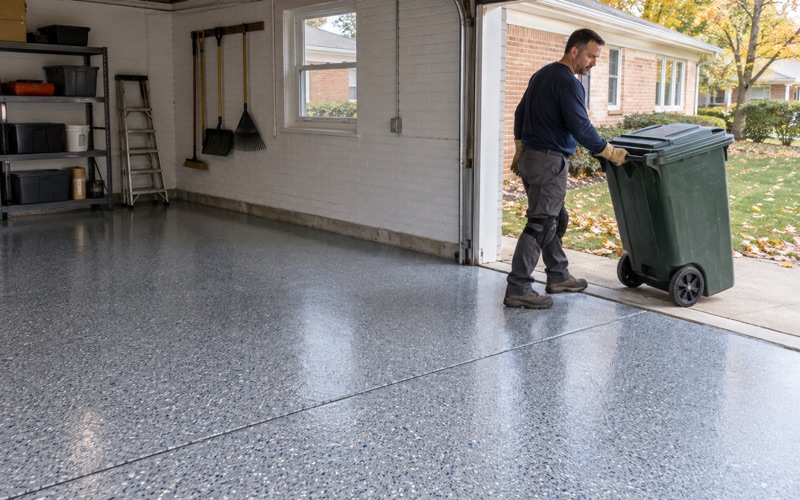
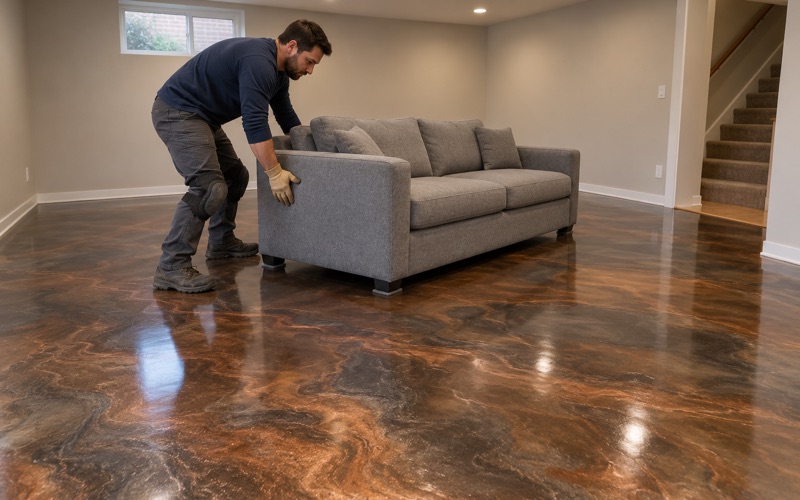
That question has nothing to do with appearance. A glossy decorative chip floor can look spotless and still trap dust in its broadcast texture, while a plainer, smoother system with sealed edges cleans far more completely, which is why we steer range-type rooms away from showroom finishes.
Looking for epoxy-flooring closer to Barrington? See Barrington Epoxy-Flooring.
What OSHA’s Lead Housekeeping Rule Asks of a Floor
Surfaces Kept as Free of Lead as Practicable
OSHA’s general industry lead standard, 29 CFR 1910.1025, has a housekeeping paragraph that reads like a floor specification. Paragraph (h)(1) says all surfaces shall be maintained as free as practicable of accumulations of lead, and on a range the largest of those surfaces is the floor, where spent primer residue and bullet fragments settle shift after shift.
A floor that is cracked, pitted or bare concrete works against that sentence. Lead dust packs into the pores and fractures, and routine cleaning struggles to reach it there, so the surface keeps releasing what it trapped long after the area looks clean. That is why, read from the floor up, the rule points toward a continuous sealed surface rather than raw concrete.
No Compressed Air, and Sweeping Only as a Last Resort
The same paragraph bars compressed air for cleaning floors and other surfaces where lead accumulates. It also allows shoveling, dry or wet sweeping and brushing only where vacuuming or another equally effective method has been tried and found not to work, and it asks that vacuums be used and emptied in a way that minimizes lead re-entering the workplace.
Agency guidance on ranges goes further in the same direction. OSHA lists dry sweeping, compressed air and non-HEPA vacuums as improper range-cleaning methods and calls for a water mist or other wet method, several state health departments say never to dry sweep or shovel bullet debris, and a NIOSH evaluation of a California range found dry sweeping alongside worker exposures above occupational limits.
What That Means at Floor Level
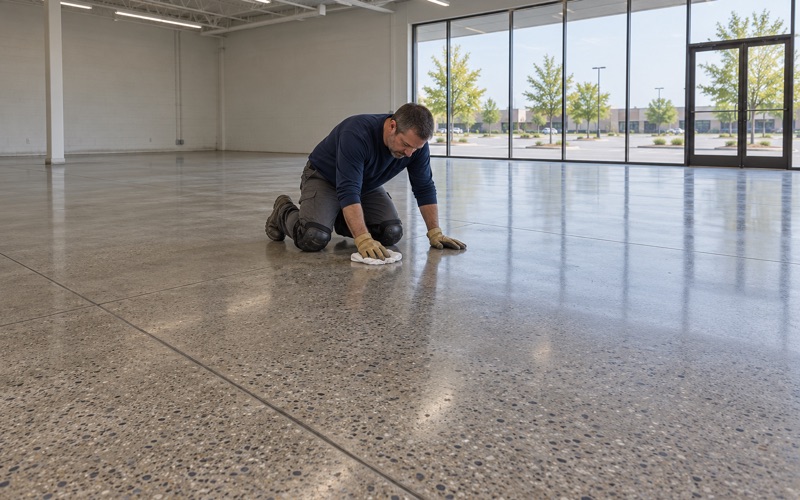
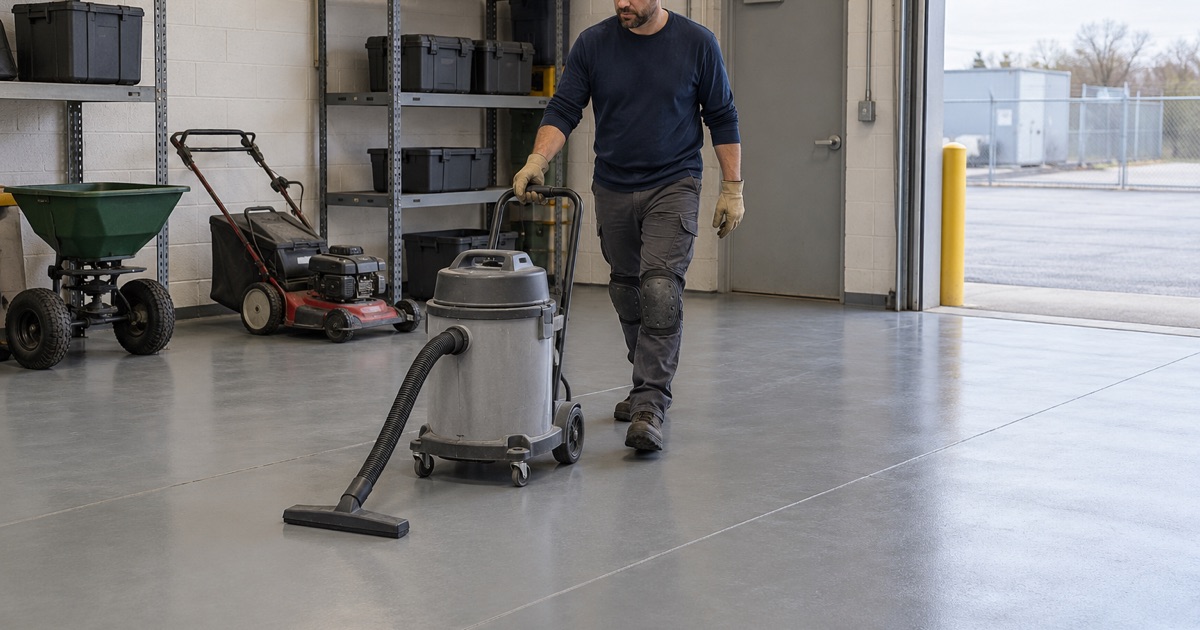
Read together, the rule and the guidance describe a floor built for a HEPA vacuum and a wet mop rather than a broom. It has to be smooth enough that a vacuum head picks up fine dust cleanly, tough enough to take daily wet cleaning, and continuous enough that there is nowhere for debris to lodge. Epoxy and urethane systems can deliver all three when the slab under them is sound.
None of that makes a floor the whole answer. Ventilation, hygiene and the cleaning program belong to the range operator and their safety advisors; our part is a surface that lets that program work instead of fighting it. When we quote a space like this, we ask for the written cleaning procedure first, because it tells us which chemicals and how much water the floor will see every week.
Seamless, Sealed and Prepared Without Spreading Dust
Joints, Coves and Nonporous Surfaces
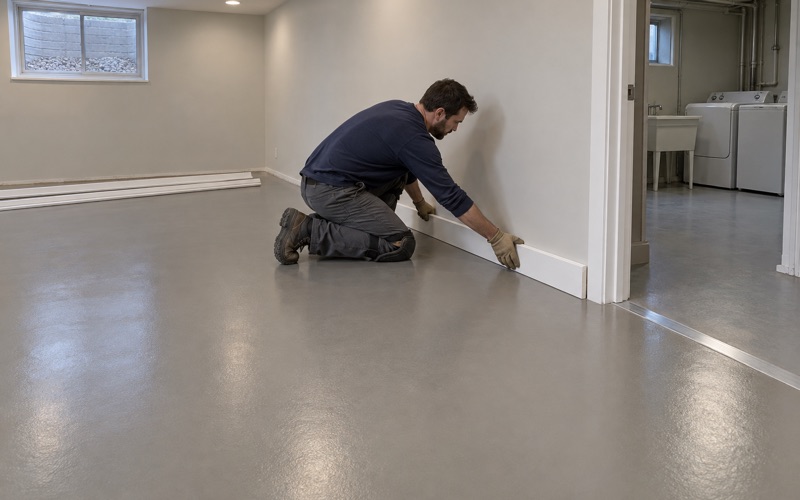
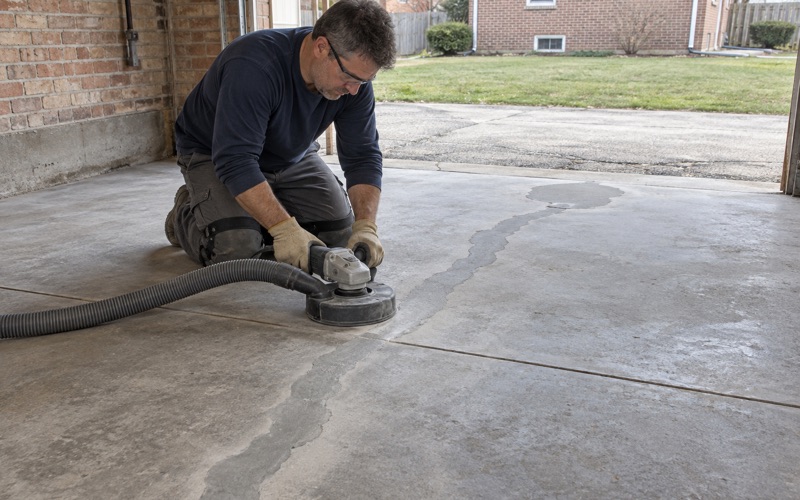
Dust collects where planes meet and where the slab is interrupted. We fill and bridge cracks, treat saw cuts and control joints with a flexible joint filler finished flush, and where the owner wants it we run an integral cove base up the wall so there is no square floor-to-wall corner for a vacuum to miss.
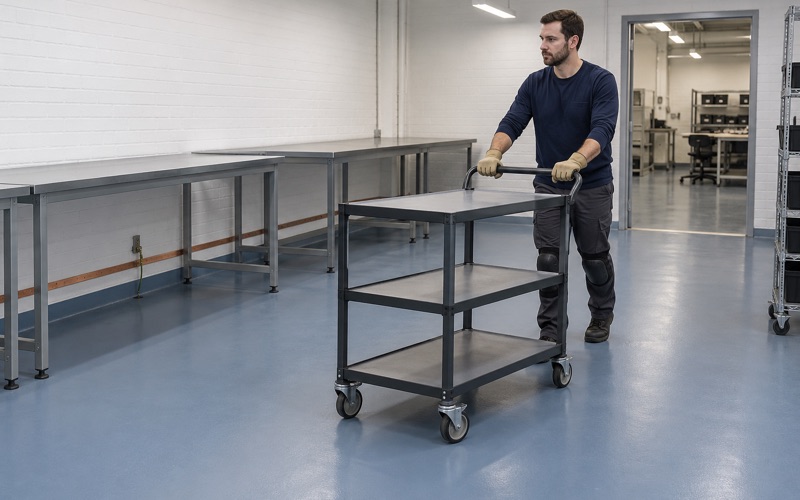
On top of that goes a 100% solids epoxy system or a urethane cement where wet cleaning is heavy, finished with a smooth, chemical-resistant topcoat. Some slip resistance is still needed on a floor that is mopped wet, so we tune texture to the cleaning tools instead of maximizing it. A fine aggregate in the topcoat gives grip without the deep valleys of a full flake broadcast.
Opening a Slab That Has Carried Lead
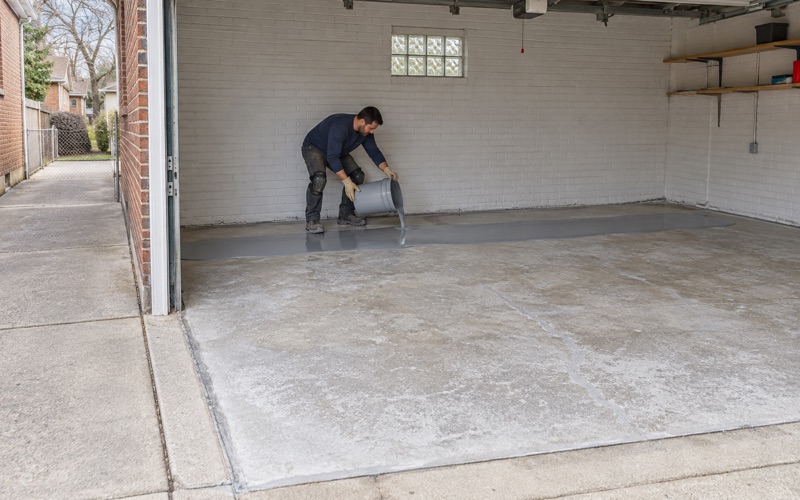
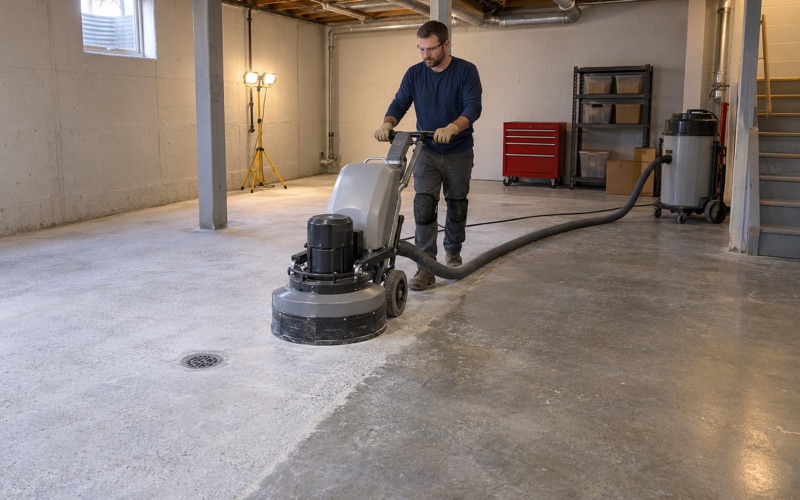
Our coatings normally go down over a slab opened by diamond grinding or shot blasting, with the dust captured at the machine by a vacuum rather than rinsed toward a drain. On a floor that has already carried lead, that step changes: the surface is HEPA vacuumed and wet cleaned first, and the profiling equipment runs with HEPA-filtered collection and no dry sweeping at any stage.
We do not treat a coating as a way of dealing with contamination, and we hold no lead credential. Where an owner suspects heavy lead deposits in the slab or the walls, that assessment belongs to qualified lead professionals before we schedule any grinding, and our proposal says so in writing.
Moisture, Cure and the Written Scope
Any slab on grade or beside a parking structure is worth testing for moisture before anything is priced. We run ASTM F2170 in-situ relative humidity probes or ASTM F1869 calcium chloride tests as part of the written scope, and moisture is the first exclusion we name when we explain what the coating warranty leaves out. If readings come back high, a moisture-mitigation primer goes into the scope before the price is final, not after the floor fails.
The proposal itself names the product line, the number of coats and the finished thickness, so a facility manager can check the floor against the quote. Cure times follow slab temperature and the dew point spread at the surface, which matters in a space that is closed and ventilated on its own schedule.
Home Reloading Benches and Shooting-Sports Garages
The Same Dust, on a Smaller Floor
The housekeeping logic of a range scales down to a basement reloading bench or a garage where someone cleans firearms and sorts brass. Those rooms are generally outside the OSHA rule, but the dust behaves the same way, and a homeowner who wants it out of the house is better served by a sealed floor than a broom and a shop vacuum.
For those spaces we suggest the same habits: a HEPA vacuum and wet wiping instead of sweeping, never a blast of compressed air across the bench, and a smooth coated floor that shows where debris has landed. A light-colored topcoat helps here, because spilled powder and fragments are easier to see and pick up. A cleanable floor near the house door also cuts down on what gets carried inside on shoes.
Lake Zurich Garages and What They Already Carry
Most of the village’s housing went up between 1970 and 1999, with the 1980s alone adding 2,393 units, so a typical garage slab here is decades old and may already wear a sealer, paint or an earlier coating. We map those finishes and any cracks first, and we say plainly when a slab needs repair before it should be coated.
A garage that doubles as a reloading space still sees winter. Brine and rock salt ride in on tires, so the system we choose has to resist deicers as well as solvents, and an unheated detached garage in deep winter is told to wait for warmer conditions. Hot tire pickup is another reason we avoid bargain one-part kits in a garage that also has to clean up well.
Paperwork Before the Grinder Starts
Illinois has no state flooring license, so before booking we check the Village of Lake Zurich’s own contractor registration and insurance requirements. Home jobs above the state threshold get a written contract and the Home Repair: Know Your Consumer Rights pamphlet before any grinding starts, and every product we use falls inside the Illinois VOC limits for floor coatings.
For commercial work, the village’s Building and Zoning Division takes permit applications by e-mail and quotes up to 15 business days for most of them, so that wait sits in the schedule before a crew is booked. Range-type rooms, labs and shops are phased around the hours the building has to stay open, which can mean working in sections rather than closing the whole space.
- 20+ Years on Concrete
- Moisture Tested First
- Free Written Estimates