Skokie Epoxy Flooring has spent more than 20 years putting epoxy flooring in Lake Forest homes, clinics and offices, and the jobs we think hardest about here are the ones where something very cold lives on the floor. A resin floor is usually judged on looks, gloss and how it handles a car tire. In a treatment room or a cold-storage corner, it also has to be judged on what happens when a cryogen lands on it.
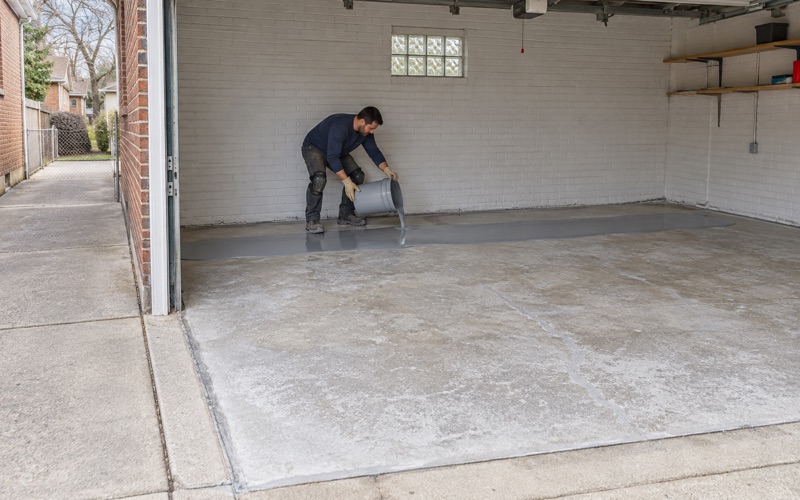
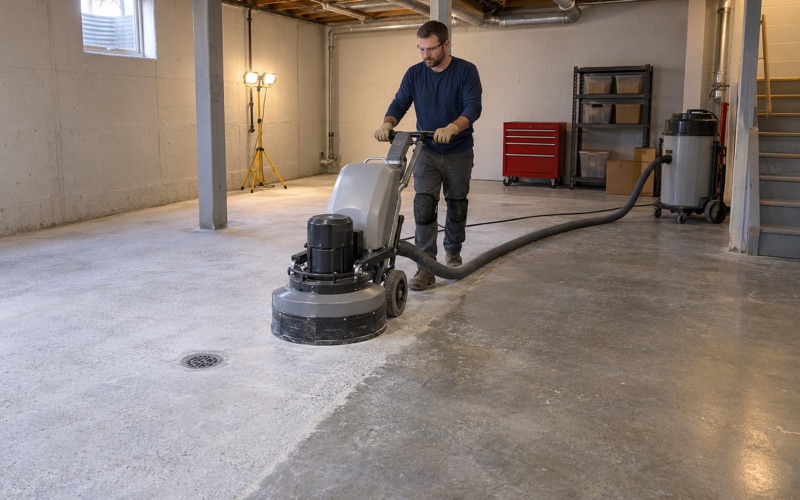
That is a narrower problem than most floor buyers face, and we treat it as one. Every slab we coat is opened by diamond grinding or shot blasting rather than acid etching, so the resin bonds to a real profile instead of a skin of weak paste. A moisture test is written into the scope before the number is final, because a coating that lets go from below fails the same way whether the room holds a dewar or a lawn mower.
What follows is how we think about cold on a floor: the liquid nitrogen that dermatology offices commonly use, why a few droplets can do damage a bucket of water never would, and the habits that keep a fill spot intact. It ends at home, with dry ice and garage freezers, because the same physics shows up there on a smaller scale.
Mohs, Lasers and Cryotherapy on Deerpath
A Dermatology Office at 225 E. Deerpath
The Skin Care Center, an affiliate of DOCS Dermatology, runs a Lake Forest office at 225 E. Deerpath Rd., Suite 50. The address sits inside Lake Forest city limits, in Shields Township, Lake County. Nine providers are listed for the office, which offers Mohs surgery and laser treatments, including CO2 fractional resurfacing and vein and scar lasers.
We have never worked there, and nothing here describes that office’s floors, which we have not seen. We use it because it is a real Lake Forest example of a building type that brings an unusual hazard indoors. Its hours run as late as 7:30 p.m. on Mondays and Wednesdays, a reminder that clinic floor work has to be phased around a full patient day.
Where Cryotherapy Comes In
The practice’s condition pages list cryotherapy among the treatments for actinic keratoses and warts. Those pages do not name the cooling agent, and we have not read anything about what this particular office keeps on hand. In dermatology generally, though, cryotherapy commonly means liquid nitrogen, held in an insulated dewar that is refilled on a schedule.
That refill is the moment that matters to a floor. A dewar sitting closed in a corner is a quiet object, but every top-up involves pouring or transferring a liquid far colder than anything else in the building. Wherever a clinic, lab or research space parks one, the floor beneath it deserves a different kind of planning.
Looking for epoxy-flooring closer to Westchester? See Epoxy-Flooring in Westchester.
Liquid Nitrogen, Thermal Shock and the Floor
What the NIH Sign Warns About
The National Institutes of Health posts a sign called Safe Filling of Cryogenic Liquid Dewars. Most of it is about people: wear appropriate protective equipment, fill only containers meant for cryogen storage, and do not leave the area while filling. The last line turns to the building and says plainly that cryogen droplets can crack floor tiles.
That warning is about tile, and we keep it that way. No source we know of rates any resin floor as safe from cryogen, and we will not sell one that way. What the sign does establish is that a floor near a fill point is exposed to a hazard ordinary spills never create, so the choice of surface there is a thermal decision as much as a cosmetic one.
Why a Splash Cracks What Water Cannot
Spilled water sits at roughly room temperature, so the floor under it barely notices. A droplet of liquid nitrogen chills a tiny patch of surface almost instantly while the material a fraction of an inch below stays warm. The top layer tries to shrink and the layer beneath it does not, and that mismatch is thermal shock.
Glazed tile is hard and brittle, with little ability to stretch before it cracks, which fits the sign’s warning. Resins and coatings are not immune either, since most turn stiffer as they get colder and can craze or let go at a weak bond line. Repeated small splashes in the same spot are the pattern to worry about, more than any single drop.
Bond and Profile Matter Most at a Fill Point
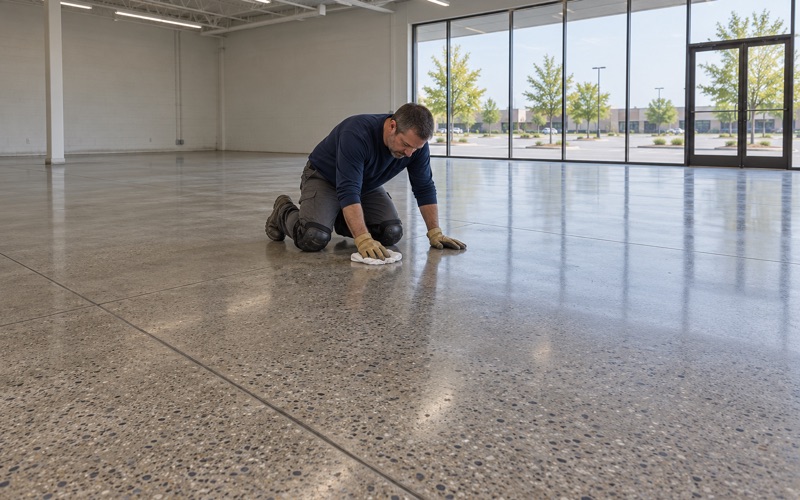
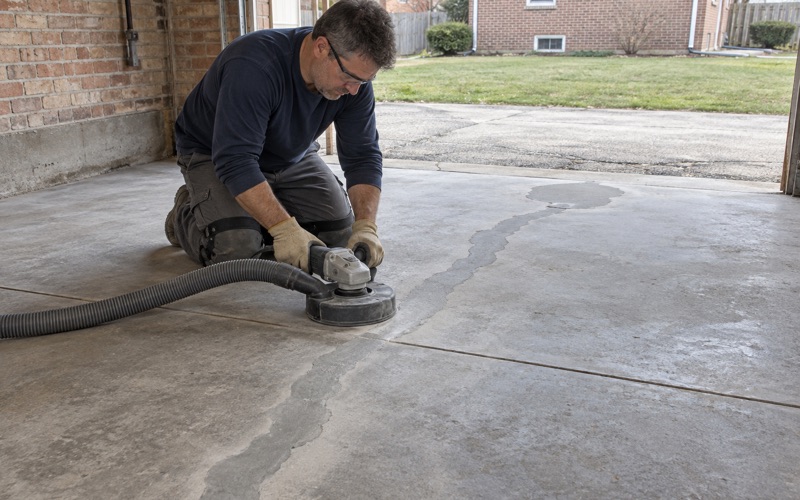
Because cold stress tends to find the weakest interface, the bond between coating and concrete is where we spend our effort. A ground or shot-blasted surface gives the resin a mechanical profile to lock into, measured against the ICRI CSP scale, rather than the shallow etch an acid wash leaves. Old coatings, cracks and spalls near a planned fill spot are mapped before anything is priced.
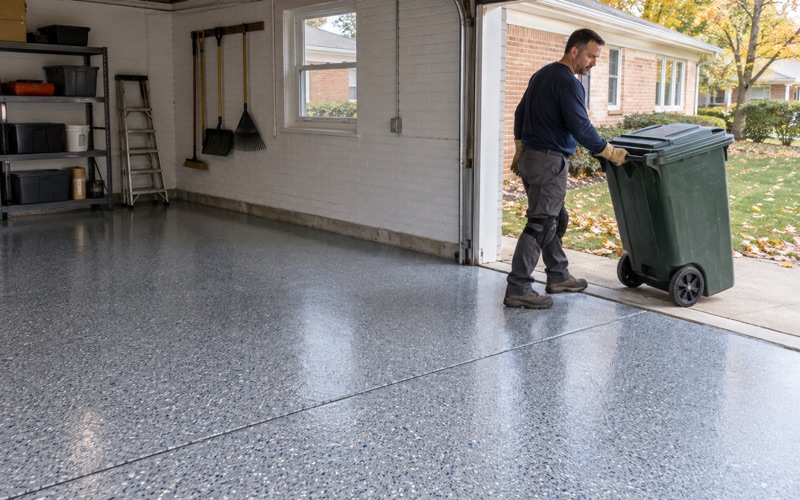
Thickness is the other lever. A thin paint-grade film gives a cold droplet very little to work through, while a 100% solids epoxy body coat with a broadcast and a tough topcoat puts more material between the splash and the slab. Our proposal names the product line, the number of coats and the finished thickness, so a facility manager can check the floor that went down against the one that was quoted.
Fill-Spot Habits That Protect the Floor
Stay With the Fill
The NIH sign’s procedure doubles as floor care. Stay in the area for the whole fill, then close the valve and check the level so the dewar is never overfilled. The droplets that reach a floor tend to come from a transfer left running, a container topped past its limit, or a hose end set down while it is still dripping.
None of that is our job to enforce, and we do not write safety procedures for anyone. It does shape how we lay out a room, though. When a client tells us where a dewar will live and how it gets refilled, we can plan the floor around that spot instead of discovering it after the coating has cured.
A Dedicated Parking and Fill Spot
The simplest protection is a single, marked home for the dewar, away from doorways and foot traffic. A cryogen-rated drip tray or a sacrificial mat under the fill point catches what escapes, and it can be replaced far more cheaply than a section of floor. Keeping fills in one place also means any wear shows up where staff expect to look for it.
On a new floor, we can mark that spot during layout with a contrasting color or a slightly heavier broadcast so it reads as a working zone. On an existing floor, we inspect the area for crazing, hairline cracks or lifted edges before recoating, because a coating laid over a damaged bond inherits the damage.
Phasing Work Around a Clinic Day
Clinic and lab floors are scheduled around the hours a building has to stay open, which in a practice running early mornings and some evenings can mean nights, weekends or one room at a time. Grinding dust is pulled into a vacuum at the machine rather than swept or rinsed toward a drain, which matters in a space that treats patients the next morning.
Products are chosen inside the Illinois VOC limits for floor and industrial coatings, which apply to whoever does the applying. Illinois licenses no flooring or coatings contractor, and Lake Forest requires no general business license, so we check with the city’s Community Development Department for anything that does apply before a commercial job is booked.
Dry Ice, Coolers and Garage Freezers at Home
Dry Ice on a Coated Garage Floor
Most Lake Forest homeowners will never handle a cryogen, but plenty set a cooler of dry ice on the garage floor before a party or a shipment of frozen food. Dry ice is far less extreme than liquid nitrogen, yet a slab of it left directly on a coating chills one spot for hours. Setting it on a wood board or a folded towel keeps the cold off the surface.
In a home garage, salt is the everyday threat. We pick systems built to stand up to the brine and rock salt that ride in on tires all winter, and we explain before the sale what a coating warranty excludes, starting with moisture coming up through the slab.
Chest Freezers and Cold Storage
A garage or basement chest freezer is not a cryogen hazard, but defrosting one is a spill. Meltwater pooled under a freezer for days, or a cooler of ice left to drain, sits on the floor long enough to find any crack or unsealed edge. A coated floor with a sealed perimeter and an intact topcoat handles that well; one with worn spots near the appliance does not.
Freezers that sit in one place for years also hide what is happening under them. Before we coat, we pull appliances out and look at the slab they were hiding, and we say plainly when it needs repair or replacement before it is worth coating. A coating bridges cosmetic flaws, but it does not fix a slab that is moving.
Paperwork Before Any Grinding
Home jobs over the Illinois Home Repair and Remodeling Act threshold get a written contract and the Home Repair: Know Your Consumer Rights pamphlet before a grinder is switched on. Its scope, price and schedule are written down, so there is nothing to reconstruct from memory later.
We also say what a floor coating is not. It is not waterproofing, flood protection or radon reduction, and it is not a guarantee against a cryogen splash in a home lab or hobby space. It is a well-bonded, honestly specified surface, and that is what we put in writing.
- 20+ Years on Concrete
- Moisture Tested First
- Free Written Estimates