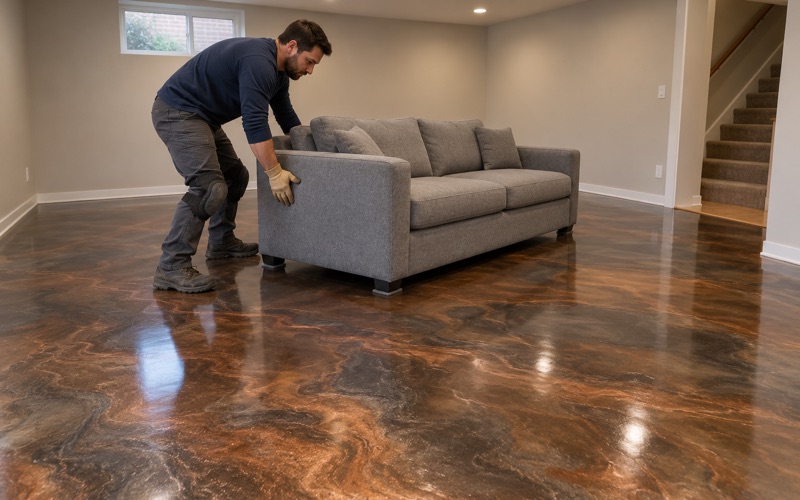
Skokie Epoxy Flooring brings more than 20 years of work to epoxy flooring in La Grange, and some of the hardest floors to get right here are public rooms where people eat, drink and walk in low light. A sealed, textured coating suits those rooms because it gives a cleaning crew one continuous surface to wipe instead of grout lines and open concrete pores that hold every spill.
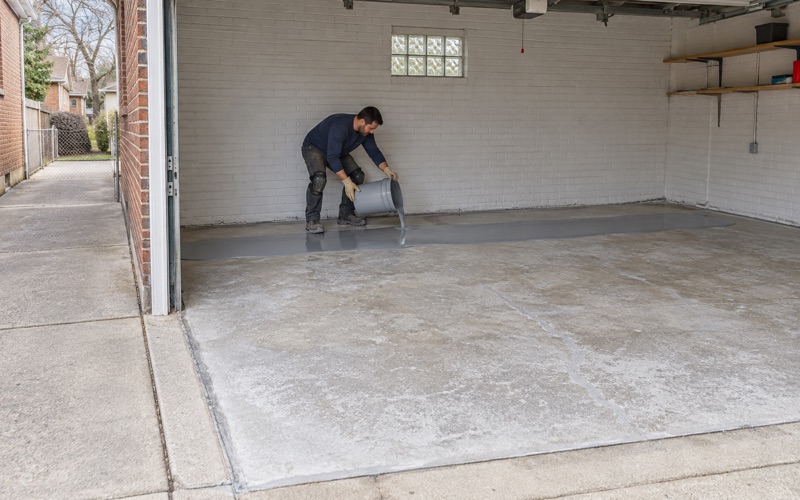
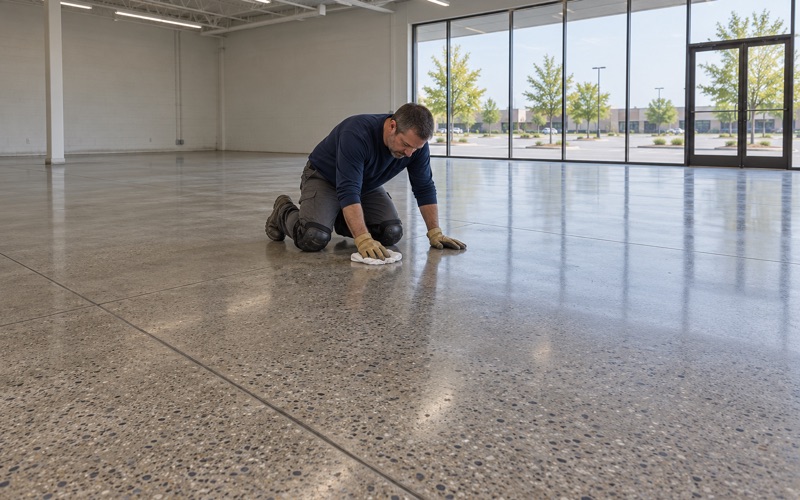
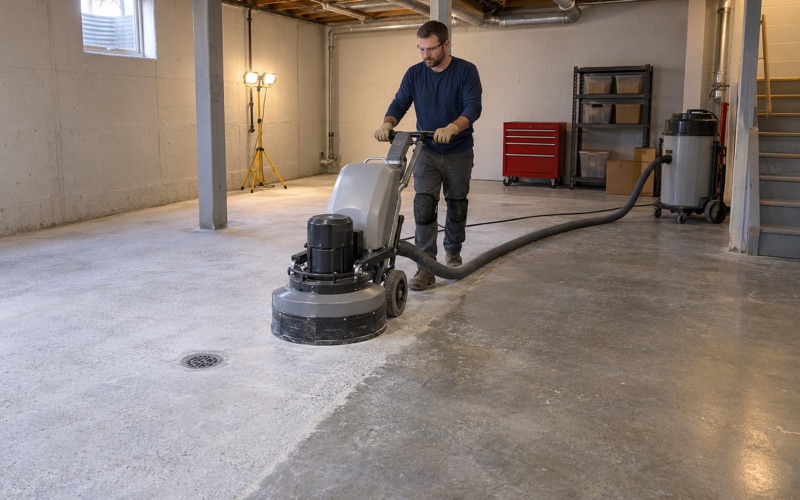
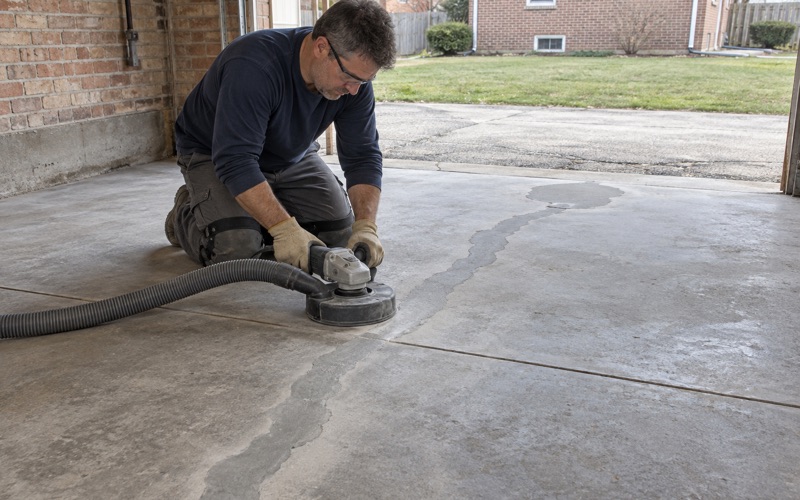
Every commercial job starts the same way. We open the slab with a diamond grinder or a shot blaster rather than an acid etch, pull the dust into a vacuum at the machine, and map cracks, spalls and old coatings before anything is priced. If the concrete needs repair first, the proposal says so.
That proposal also names the product line, the number of coats and the finished thickness, so a facility manager can hold the installed floor against the paper. For a business that cannot close for a week, we phase the work around the hours the doors have to stay open.
A 1925 Movie Palace With Recliners and a Bigger Footprint
From Vaudeville Stage to Classic Cinemas
The La Grange Theatre at 80 S. La Grange Road opened in 1925 as a vaudeville stage and movie theater. Classic Cinemas began operating it in 2022, and the renovation that May installed heated reclining seats and built one more auditorium.
The recliners changed the room more than the marquee did. Seating fell from 986 to 318 across six screens, which means far fewer seats but far more floor around each one, and every recliner footprint is a pocket where a dropped cup or a scatter of popcorn settles out of easy reach.
Six Screens to Nine
In September 2023 the village board unanimously approved permits for three new auditoriums on the 70-76 S. La Grange Road site, and construction broke ground in November 2024. Two of the three are planned as XQ premium screens, in a project meant to take the theater from six screens to nine and 503 seats.
Whenever rooms like those open, the lesson for any theater adding screens is the same. New auditoriums mean new floor, and a new floor is the one moment a coating system, its texture and its step-edge markings can be chosen before the first show instead of retrofitted around a running schedule. Retrofitting a stripe or a texture into a room that runs shows every day is possible, but it costs hours the room is closed.
A Floor Measured in Visitors
The theater drew about 180,800 visitors in the year to September 2023, a commercial load by any measure, and in any cinema that traffic funnels through a few doors, a ticket line and a concession counter. A floor in that kind of room wears in paths, and the paths show first at thresholds, turns and the front of the counter.
Wear in paths is why the surface preparation matters more than the color chart. The ICRI surface profile we grind to is what the primer locks into, and on a floor where traffic concentrates, real mechanical bite is the difference between a worn topcoat that can be scuffed and recoated and a film that peels in sheets.
Looking for epoxy-flooring closer to Summit? See Summit Epoxy-Flooring.
What a Show Leaves on the Floor, and the Minutes to Clean It
Soda Dries Tacky, Popcorn Oil Spreads Thin
Sugary soda does not stay wet for long. Once the water evaporates it leaves a sticky film that grabs shoe soles and holds grit, and on bare or worn concrete the sugar soaks into the pores where a mop only moves it around. Left for a few days, those tracks darken into the gray paths every theater manager knows.
Buttered popcorn brings the opposite problem. The oil spreads into a thin, nearly invisible slick, and dropped kernels act like ball bearings underfoot. A dense, nonporous coating keeps both residues on the surface, where a cleaner can lift them in one pass instead of chasing a stain that has already wicked into the slab.
Texture That Grips Without Trapping
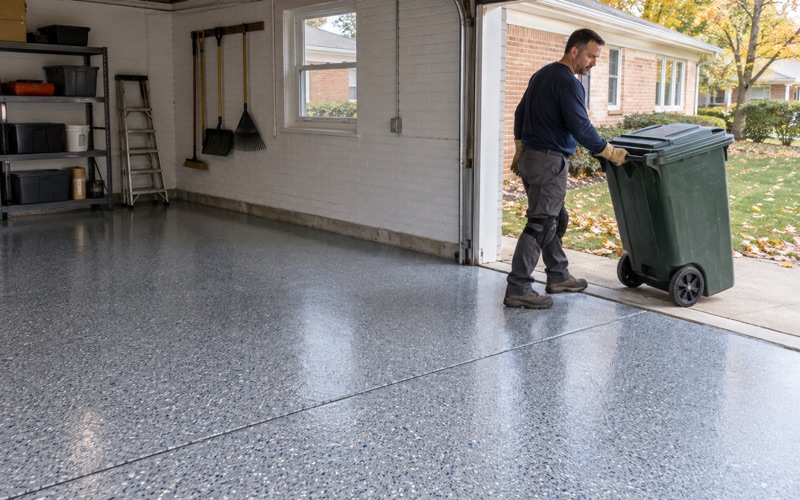
A glossy floor that wipes clean can turn slick the moment oil lands on it, so the finish needs texture. We usually broadcast quartz aggregate into the body coat or blend a fine grit into the topcoat, then lock it under a polyaspartic or urethane finish so the profile stays put. Vinyl flake can work in a lobby, but in an aisle we favor quartz for its grip.
The balance is the whole job. Too little texture and a buttery aisle becomes a hazard; too much and the same surface snags a microfiber pad and holds dried soda in its valleys. We set the grit size by how the room is cleaned, and we show the owner a sample board before the order is placed.
Turnover in Low Light
A cinema floor is cleaned in the minutes between one show letting out and the next one seating, usually with house lights partly up at best. Crews working that fast need a surface where a spill is either gone or obviously not, and a mid-tone solid color shows a wet patch or a sticky track better than a busy flake blend designed to hide dirt.
Cleaning chemistry matters as well. Neutral cleaners and auto-scrubber pads suit a properly cured epoxy and polyaspartic system, and we write down which cleaners the floor is meant to see so the cleaning crew is not guessing with whatever is under the sink. Harsh solvent degreasers and acidic descalers can dull a topcoat long before foot traffic would.
A Stripe at Every Tread, Built Into the Coating
What the Building Code Asks For
Stadium-style auditoriums often climb on aisle steps, and the International Building Code is plain about them: a contrasting marking stripe shall be provided on each tread at the nosing or leading edge, so that each tread is readily apparent when viewed in descent. An exception applies where the tread surface itself already makes each edge obvious. A stripe that has worn away, peeled up or faded into the tread color no longer does that job.
We have not seen the inside of the La Grange Theatre’s auditoriums and do not know whether they use aisle stairs or ramped aisles, so we make no claim about them. For any theater that does have steps, the Village of La Grange issues its own building permits, and the edition of the code it enforces is a question for its building department before a stripe width is fixed.
Coated In, Not Taped On
Tape and paint stripes are the usual answer, and they are also the first thing to lift at a nosing, where every heel strikes. We build the stripe into the floor system instead: the tread and the nosing band are coated in contrasting colors during the same installation, then sealed under one continuous clear topcoat so there is no edge for a shoe or a scrubber to catch.
The contrast has to hold up in the dark, not just under work lights, so we pick the pair by how it reads at the low light level the room actually runs during a show. The nosing band also takes the hardest wear on the stair, which is why it gets the same grind, the same primer and the same film build as the tread beside it.
Curing Around a Show Schedule
A stair run cannot be closed for days in a theater that sells tickets every night. We schedule the work by auditorium, one room dark while the others play, and let slab temperature and the dew point spread at the surface decide when a coat is ready for the next, rather than a date on a calendar. Each room goes back into service only after a walk test with the lights at show level.
Fast-cure polyaspartic topcoats help here, since a room coated after the last show can often take foot traffic the next afternoon. We still check for amine blush on the epoxy layers before recoating, because a blushed film under a topcoat is a delamination waiting to start at the most-walked edge in the room.
Lobby, Concession Counter and Aisle: Three Floors Under One Roof
The Lobby Takes the Foot Traffic
A lobby takes the crowd from the sidewalk, including whatever grit came in on their shoes, and then sends them into every auditorium. That is a wear floor first, and we usually specify a thicker 100% solids epoxy body with a quartz or flake broadcast and a polyaspartic topcoat that shrugs off scuffing.
Before a lobby slab is coated we run a moisture test and write the result into the scope, because moisture is the first exclusion we name when we explain a coating warranty. ASTM F2170 relative humidity probes or ASTM F1869 calcium chloride tests give a number, and the product choice follows from that number. A slab that reads high gets a moisture-mitigation primer, or a frank conversation about whether coating is the right call at all.
The Concession Stand
Behind the counter the floor sees syrup from fountain lines, butter topping, ice that melts underfoot and constant pivoting by staff in rubber-soled shoes. That floor needs the most stain resistance and the firmest texture in the building, and it is the area we most often isolate and phase separately so the stand can keep selling.
Concession floors also take the worst of the cart traffic, from syrup boxes on hand trucks to restocking dollies, so we look hard at cracks and spalls there before quoting. A moving crack left under a coating tends to come back through it, and we would rather say a section needs repair than coat over it.
Aisles and the Floor Around Each Recliner
Aisle floors in a recliner house are long, narrow and dim, and the floor beneath and beside each seat is where spills collect between deep cleanings. A seamless coating carried right up to each seat footprint, instead of stopping at a carpet edge, gives the crew a surface they can wipe all the way under the leg rest. Heated reclining seats also mean powered seats, so coating around them is coordinated with whoever services the seating.
We plan that work around the theater’s calendar, grinding with vacuum-captured dust so nothing drifts into a neighboring auditorium, and we keep every product inside the Illinois VOC limits for floor coatings, which bind whoever applies them. Odor matters in a building that stays open to the public while other rooms are being worked. When the last coat is down, the floor should match the proposal line for line.
- 20+ Years on Concrete
- Moisture Tested First
- Free Written Estimates