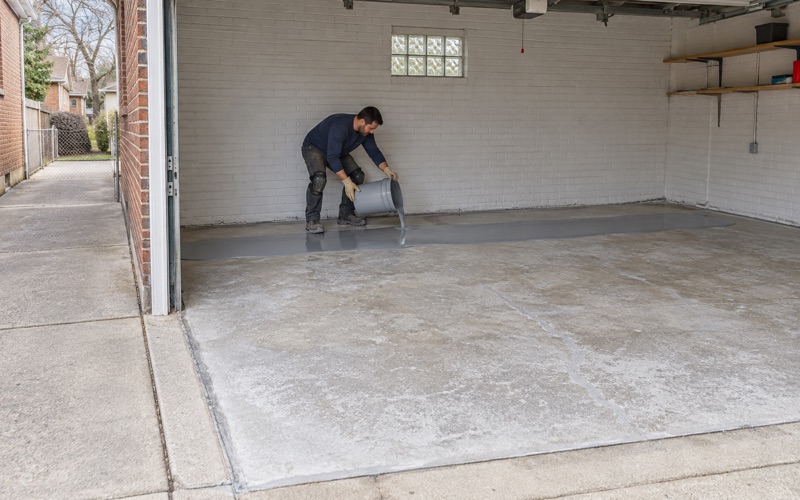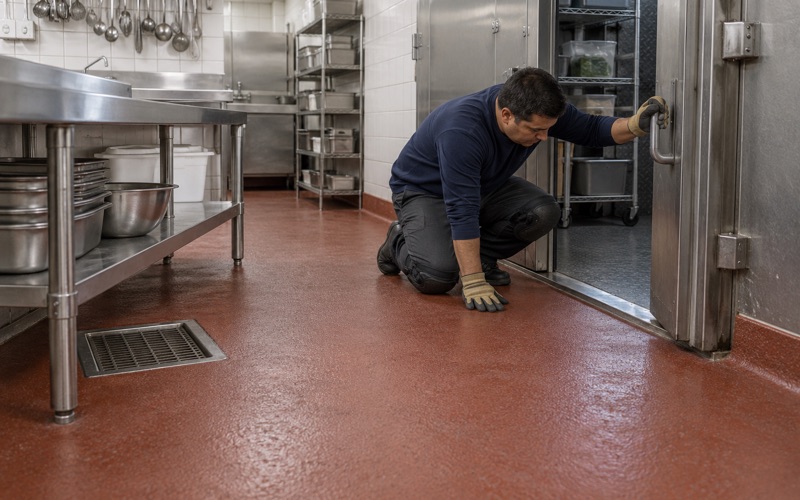
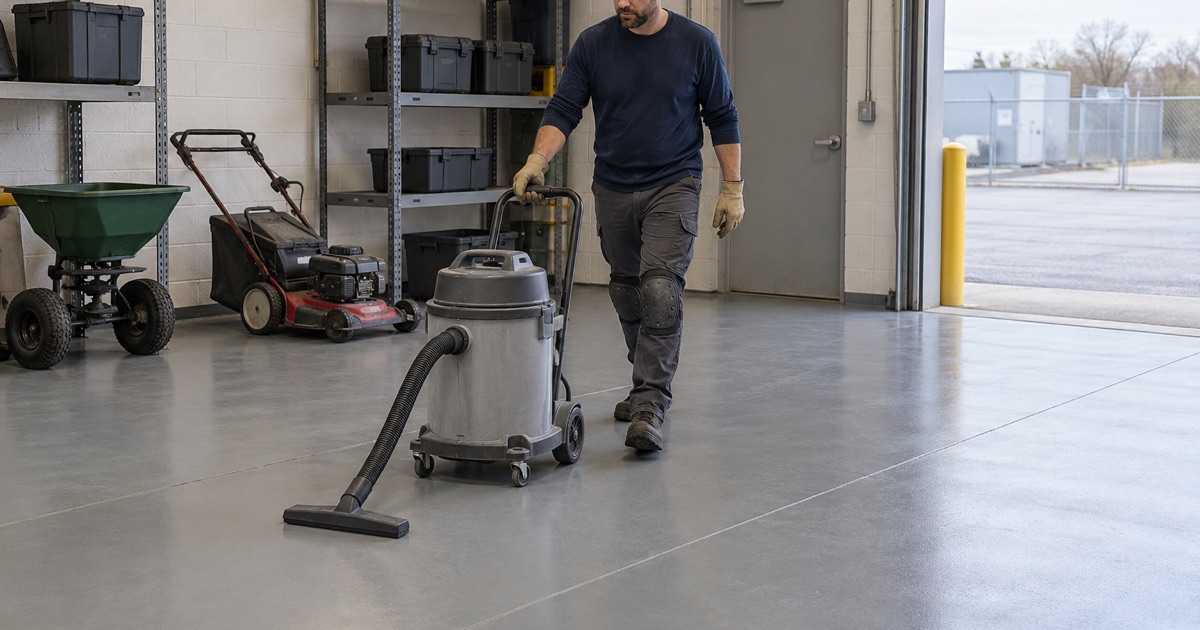
Skokie Epoxy Flooring brings more than 20 years of epoxy-flooring work to Justice, and a floor that stores lawn chemicals is one we plan differently from a floor that only parks a car. A garage holding a broadcast spreader, a few bags of fertilizer and a coiled hose takes wear that tires never deliver. We build the system around what gets spilled on the slab, not only what rolls across it.
Every job starts the same way. We open the concrete with a diamond grinder or a shot blaster rather than an acid etch, run a moisture test that is written into the scope before the price is final, and map cracks, spalls and any old coating so you know whether the slab needs repair first. The proposal names the product line, the coat count and the finished thickness, so the floor you get can be checked against the quote.
What we will not do is tell you a coating fixes a stain that has already set, or that it qualifies as spill containment. A coated floor resists chemicals and sweeps clean; keeping spilled granules from sitting wet on it is still the owner’s job. This page walks through why that matters and what we do about it.
A Lawn-Care Contractor in Justice’s Industrial Park
Betcher Landscaping on 86th Court
Betcher Landscaping and Lawn Care is listed at 8266 S. 86th Court, an address in the small industrial park inside the Village of Justice. Its own site lists Fertilization & Weed, Bush Fertilization and Grub Worm Control among its services, along with aeration, power seeding and mulch, and says Orley and Gary Betcher have more than 40 years of experience in landscaping and lawn care.
We have no relationship with Betcher and have never seen its shop or its floors. We mention it because it is a plain local example of a trade that handles fertilizer every season, sitting on 86th Court beside truck repair and heating businesses. The village itself says its industrial park holds small shops rather than major industry, and a yard-care operation fits that pattern.
Why Yard-Care Storage Is a Floor Question
A lawn-care trade, or a homeowner who treats their own yard, stores product in bags that tear, runs spreaders that shed granules, and rinses equipment where it sits. Bare concrete is porous, so whatever lands on it and gets wet works into the surface instead of staying on top. A sealed, chemical-resistant floor that is swept dry gives that material nowhere to go.
That is the whole case for coating a fertilizer storage area, and it is a modest one. A coating does not hold back flood water and is not a substitute for good housekeeping. What it does is turn a surface that absorbs into one that sheds, so a spill becomes a cleanup instead of a mark.
Looking for epoxy-flooring closer to Bridgeview? See Epoxy-Flooring in Bridgeview.
What Wet Fertilizer Does to Bare Concrete
Ammonium Salts and Cement Paste
Many lawn fertilizers carry nitrogen as ammonium salts, and two of them have a poor record against concrete. Academic sources describe ammonium sulfate as extremely deleterious to concrete because of its dual acid-sulfate action, which can disintegrate the hydrated cement paste that binds the sand and stone together. A fertilizer-storage study puts ammonium nitrate in the same harmful category for cement paste.
When granules dissolve on a damp slab, the solution soaks into the pores of the surface rather than sitting on top. The paste between the sand and stone is what reacts, so any wear shows up first as a loss of that binder at the surface. The aggregate is not the target; the material holding it in place is.
Repeated, Wet and Concentrated Is What Counts
None of that means a single dry spill, swept up the same day, does much harm. A RILEM overview of the research makes the distinction plainly: ammonium nitrate causes severe degradation in fertilizer factories and storage silos but is a very scarce risk for concrete structures generally. The damage follows exposure that is wet, repeated and concentrated, which is exactly what a storage corner can become over years.
Think of the spot where bags have been stacked for a decade, damp from the hose every spring and swept only when someone remembers. That is a small version of the fertilizer-store condition the research describes. A garage or shop that handles fertilizer once a season is lower risk; one that stores it in bulk and washes equipment on the same slab is higher.
Rust-Orange Stains From Iron-Bearing Granules
The second problem is cosmetic, and it shows up much faster. Many lawn fertilizers include iron for greening, and when those granules get wet on concrete they oxidize and leave rust stains, often a speckle of orange dots wherever the spreader leaked or a bag split. Stain-remover vendors sell products for exactly this, which tells you it is a familiar problem.
On bare concrete those stains sink into the pores, and removal results vary; we do not promise that a set stain will come out. On a sealed epoxy or polyaspartic topcoat, a wet granule wiped up promptly has nothing porous to bleed into. If the slab already carries rust spots, we record them when we map the floor and say before the job is sold that coating over them is not a stain treatment.
Spreaders, Bags and Rinse Water: Where the Floor Takes the Hit
The Spreader Parking Spot
A broadcast or drop spreader is often put away with granules still in the hopper and dust on the frame. It sheds a little every time it is moved, and the wheels track residue in a line from the door to wherever it lives. On many garage floors you can find that corner by the faint orange freckles alone.
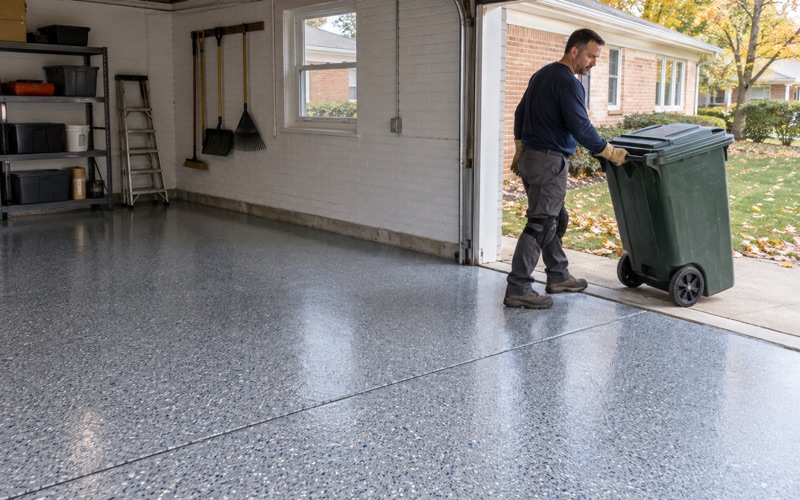
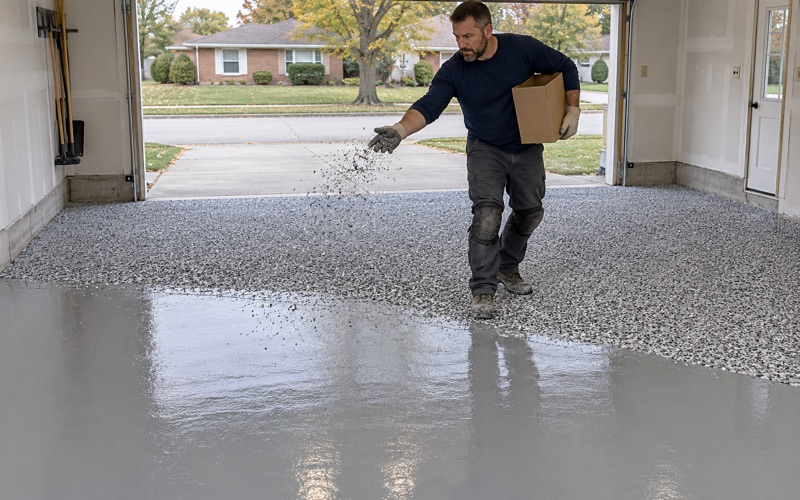
For that spot we favor a broadcast system: 100% solids epoxy with a vinyl flake or quartz aggregate broadcast, finished with a polyaspartic or polyurea topcoat. The texture keeps footing sure when the floor is damp, and the topcoat gives granules a hard, closed surface to sit on until they are swept. Emptying the hopper outdoors before the spreader comes inside leaves the floor very little to deal with.
Torn Bags and Rinse-Out Water
Fertilizer bags are stacked on the floor, dragged, and eventually split at a corner. The granules that escape do little while they stay dry, and that window is the one to use: sweep them up and back into a sealed container before the floor gets wet. Putting the stack on a pallet or shelf keeps the bottom bag out of any water that runs across the slab.
Rinse water is the harder habit to break. Hosing a spreader or a sprayer inside the garage carries dissolved fertilizer across the floor toward the door or a drain, wetting every crack and joint along the way. Doing that washdown outside, or at least sweeping the floor dry first, removes the condition the research ties to damage.
Sealed Floor Versus Porous Slab
Side by side, the difference is about time. A porous slab starts absorbing a wet spill the moment it lands, so the clock runs against you. A sealed, chemical-resistant floor holds that spill on the surface long enough to be squeegeed and wiped, and its cracks are filled and sealed rather than left open to wick.
A sealed floor is not a reason to stop sweeping. Topcoats resist chemicals rather than ignore them, and grit ground under boots and spreader wheels wears any finish over time. The floor buys you a margin; the broom keeps it.
Fertilizer in a Justice Garage: Storage, Sweep-Up and the Job Itself
Prep and Moisture Before Anything Is Sold
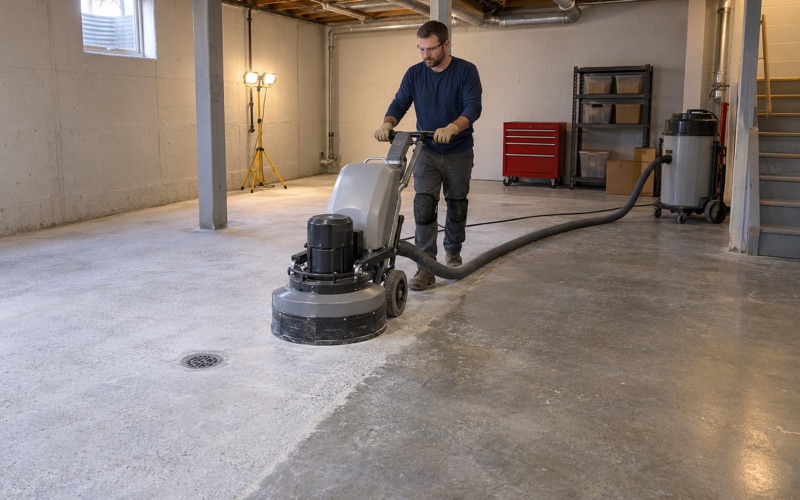
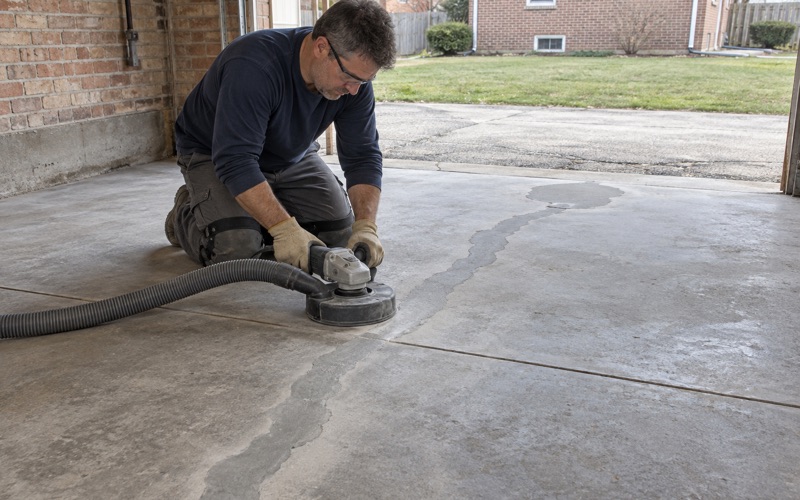
A slab that has held fertilizer for years gets ground, not etched, so any weakened paste comes off and the coating bonds to sound concrete at a measured ICRI concrete surface profile. Our grinders run with vacuums attached, and the dust is captured at the machine rather than washed toward a floor drain. If the paste loss runs deeper than grinding should chase, we say the slab needs repair first.
Moisture comes next, and it goes in writing. Depending on the slab we use an ASTM F2170 in-situ relative humidity probe, an ASTM F1869 calcium chloride test, or an ASTM D4263 plastic sheet check, and the result shapes the primer. Moisture is also the first exclusion we name when we explain what the coating warranty does not cover, before you sign.
Registration and Permits in the Village of Justice
Illinois licenses no flooring or coatings contractor, so the Village of Justice’s own rules are the binding credential here. Its Building Department at 8748 W. 82nd Place runs a Contractor’s Work Permit Program: contractors working under a permit must be registered and bonded with the village, and no permit issues until every one of them is. The bond is $10,000 for most trades and runs on a licensing year of February 1 to January 31.
We check that registration before a Justice job is booked. Concrete work is a listed permit item that also calls for a plat of survey, so if a project includes slab repair rather than a coating alone, the permit question gets answered up front. Home jobs over the state threshold also get a written contract and the Home Repair: Know Your Consumer Rights pamphlet before any grinding starts.
Curing, Then Keeping It Swept Dry
Cure follows slab temperature and the dew point spread at the surface, not a date on the calendar, and an unheated detached garage in deep winter is told to wait for warmer conditions. Plan to move the spreader, bags and lawn equipment out for the cure and bring them back onto shelving rather than straight onto the new floor.
After that, the routine is short. Keep a broom and a lidded bin near the storage spot, sweep spilled granules the same day before they meet water or snowmelt, and wipe any wet spill instead of hosing it away. A floor treated that way stays a sealed surface for yard-care storage, and the rust stains and paste wear that bare concrete collects simply have less chance to start.
- 20+ Years on Concrete
- Moisture Tested First
- Free Written Estimates