
Skokie Epoxy Flooring installs industrial epoxy flooring in Skokie, IL, serving surrounding cities including Lincolnwood, Winnetka, Norridge, Schiller Park and River Grove. After 20+ years on industrial slabs, we know that a plant floor is judged by one thing: whether it is still intact after years of wheels, impacts, chemicals and cleaning, with production running the whole time.
Skokie and its neighbors have a real manufacturing base alongside their retail and healthcare economy, from gasket and food plants to metal finishing and plating shops listed among the area’s significant industrial users. Those facilities need floors specified around their actual exposures, not a generic coating rolled over the slab.
Every industrial project starts with the exposure list: chemicals, temperatures, wheel types and loads, cleaning methods and the production schedule. The system, thickness and phasing follow from that list, and all of it is written into the proposal.
Preparation for Heavy-Duty Floors
Shot Blasting and Grinding
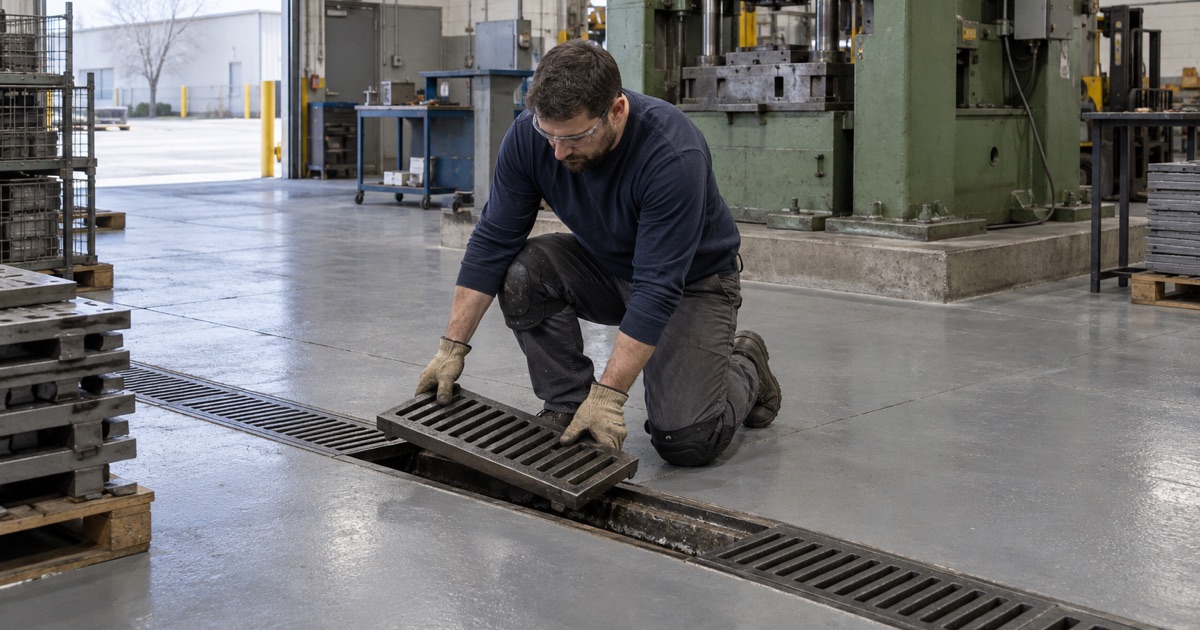
Industrial coatings need a rough, clean surface profile to anchor high-build systems. We shot blast open floor areas and diamond grind edges, around equipment bases and in tight spaces, removing old coatings, oil contamination and weak surface concrete. Dust is captured at the machine by industrial vacuums, so it does not spread through production areas or get washed toward floor drains and trenches.
Joints, Cracks and Spalls
Forklift wheels pound the edges of control joints until they chip and widen, and that damage spreads into any coating that bridges over them. We rebuild damaged joint edges with repair mortars and fill joints with semi-rigid fillers that support wheels while allowing slight movement.
Cracks, gouges and spalled areas are filled and ground flush before coating. Where a slab is failing in large areas, we identify it during the survey and discuss replacement or structural repair before quoting the coating.
Moisture and Contamination
Oil-soaked concrete and moisture coming up from below are the two most common reasons industrial coatings fail. We test moisture with ASTM F2170 or ASTM F1869 methods before the price is final, and degrease or cut out heavily contaminated areas rather than coat over them.
Systems Matched to the Exposure
High-Build Epoxy for Traffic and Abrasion
High-build 100% solids epoxy systems are the backbone of most warehouse and manufacturing floors. They resist abrasion from forklift and pallet jack wheel loads, seal the slab against dusting and spills, and can be built thicker in areas with heavier traffic. Broadcast aggregate can be added for slip resistance in wet or oily areas, and clear or pigmented topcoats seal the surface for easier cleaning.
Novolac Epoxy for Aggressive Chemicals
Where concentrated acids, solvents or other aggressive chemicals are present, standard epoxies can soften or stain. Novolac epoxy offers higher chemical resistance and is often used in battery rooms, chemical storage, containment areas and some lab and plating spaces. We select the system based on the actual chemicals, concentrations and exposure times, using manufacturer resistance charts rather than general claims.
Urethane Cement for Heat and Washdown
Food plants and other facilities with hot water washdown, steam cleaning and thermal shock need urethane cement. It tolerates heat, grease and repeated temperature swings that would crack or soften epoxy, and it is more tolerant of slab moisture. Urethane cement can be troweled thick for heavy-duty areas and finished with a textured surface for grip in wet process zones.
Food Plants and Warehouses
Food Production Floors
Food production floors see sugar, oils, food acids and daily sanitation with hot water and strong cleaners. Sugar in particular attacks concrete, and spilled syrups and fruit acids etch unprotected slabs into rough, hard-to-clean surfaces.
We use urethane cement in process areas and chemical-resistant epoxy in packaging and dry storage, with slope to drain and integral cove bases where washdown reaches the walls. The finish is textured enough for grip on wet floors while still cleaning thoroughly.
Warehouse and Distribution Floors
Warehouses and distribution floors face constant forklift and pallet jack traffic, tight turns at aisle ends and dropped loads. High-build epoxy over a shot-blasted slab resists abrasion and seals out dusting, and rebuilt joints keep wheels from tearing the coating at each crossing. In dock areas, where winter brings in brine, salt and slush on trailers and equipment, we add broadcast texture and a thicker build to handle the wear.
Cold Storage and Freezer Areas
Cold rooms and freezers need systems that cure and perform at low temperatures and tolerate thermal cycling as doors open and close. We select products rated for those conditions and plan installation around how long the space can be warmed or taken out of service.
Metal Finishing and Plating Shops
Acids, Caustics and Rinse Water
Plating and metal finishing shops handle acids, caustics and rinse water that attack concrete quickly. Floors in these spaces need chemical-resistant linings carried into trenches, sumps and containment areas so nothing seeps into the slab. We detail drains, curbs and equipment bases as part of the system, since a single unprotected edge can let chemicals get under the coating and spread damage.
Coordinating With Plant Operations
These shops often operate under wastewater permits and strict housekeeping rules. We plan grinding, cleaning and coating so dust and wash water are managed properly and not discharged to floor drains.
Scheduling, Safety and Compliance
Working Around Production
Most plants cannot stop for long. We phase work by line or zone, schedule grinding and coating during shutdowns, nights and weekends, and use fast-curing products where a zone has to return to service quickly. The phasing plan, with areas, dates and cure times, is agreed in writing before work starts.
Safety Markings Built Into the Floor
Aisle lines, pedestrian walkways, forklift zones and hazard areas can be built into the coating in contrasting colors. Markings that are part of the floor last much longer than paint applied on top.
VOC Limits on Industrial Coatings
Illinois limits volatile organic compounds in industrial maintenance coatings under 35 Ill. Adm. Code Part 223, and those limits apply to the applicator. We select compliant products for the Chicago ozone nonattainment area and provide product data sheets for your records.
- 20+ Years on Concrete
- Moisture Tested First
- Free Written Estimates