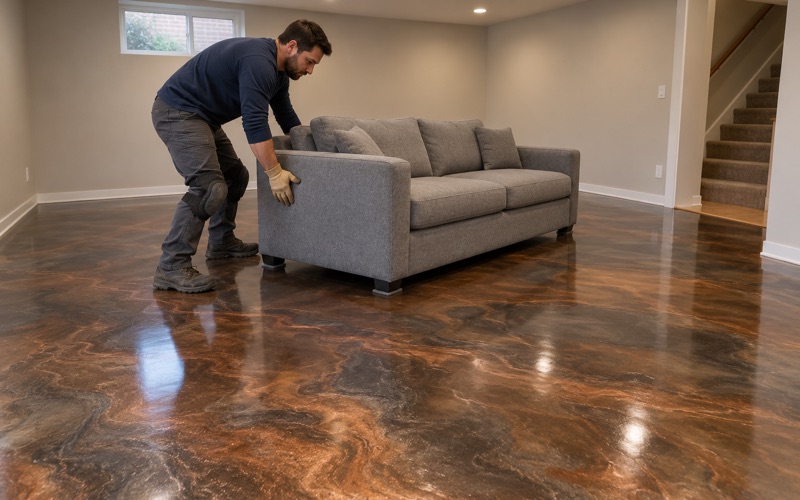
Skokie Epoxy Flooring brings more than 20 years of work to epoxy flooring in Deerfield, and the floors we think hardest about here are the ones that do two jobs at once. A retail slab that also hosts people standing with a drink is one of them. It needs grip where glasses are held and a clean, rolling surface where carts move.
Spilled beer and wine are the reason the distinction matters. Bare or worn concrete is porous, so a drink that lands on it soaks in and leaves a mark that outlasts the visit. A sealed coating keeps the liquid on top, where a mop can reach it, and lets the floor be built differently in different places.
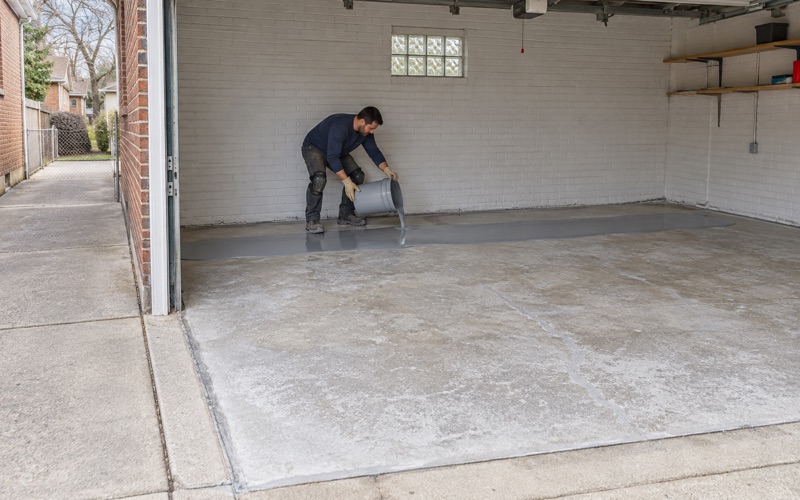
Every floor we take on starts the same way: the slab is opened with a diamond grinder or a shot blaster, never an acid etch, and a moisture test is written into the scope before the price is final. Our proposal then names the product line, the number of coats and the finished thickness, so an owner can hold the completed floor up against the quote.
A Liquor Store With a Bar on Waukegan Road
Deerfield’s Sampling License
In April 2023 the Deerfield village board approved an ordinance creating a new class of liquor license for a product-sampling concept. It lets customers consume full serving size samples of the alcoholic products a store offers for sale, rather than small tasting pours. In practice, that turns part of a retail floor into a place where people stand and drink.
The class is narrow by design. It requires a Class A liquor license, a location in the C-2 outlying commercial district and a store in excess of 4,000 square feet, along with a limited menu of prepackaged food available whenever alcohol is consumed on site. The proposal it was written for had no kitchen, so the spills on that floor are mostly drinks rather than grease.
57 S. Waukegan Road in Cadwell’s Corners
The license was written for Garfield’s Beverage Warehouse, proposed at 57 S. Waukegan Road in Cadwell’s Corners. The 2023 proposal described a 20-foot bar front, three to four tables, seminars for 20 to 25 people and prepackaged items and charcuterie boards in place of cooked food. The chain’s other stores pour draft beer from local breweries and wine, with no mixed cocktails.
The store opened in late 2023, and in a March 2024 interview the owner said response had been very positive, including for the on-site bar. We have never worked in that building and have not seen its floor. What interests us is the layout the proposal describes, because it is a pattern any store using this license class will face.
A Bar Floor Inside a Retail Floor
Most retail floors are designed for walking and rolling. A sampling bar adds standing, lingering and pouring, sometimes with a seminar crowd around it. The strip in front of a bar and the tables near it collect most of the drips, while the aisles still carry carts, hand trucks and cases of bottles.
That split is the whole design brief. One coating system spread wall to wall forces a compromise: smooth enough for carts means slick under a spilled glass, and gritty enough for a wet bar front means harder to roll across and harder to mop. Treating the two areas as separate zones on the same slab avoids that trade.
Looking for epoxy-flooring closer to Prospect Heights? See Prospect Heights Epoxy-Flooring.
Beer and Wine on Concrete: Soak-In, Stains and a Sticky Film
Why Bare Concrete Holds On to a Spill
Concrete is porous, and trade writing on beverage floors notes that it can absorb liquids, beer and the caustic cleaning chemicals that can attack the cement matrix. A spill that sits on an unsealed or worn slab does not stay on the surface. It wicks into the paste, carries color with it and leaves a shadow that scrubbing struggles to lift.
Acidic liquids such as wine also react with the calcium compounds in concrete, which shows up over time as surface wear and discoloration. We know of no published figure for how quickly a retail bar’s drips do that to a bare slab, so we treat it as a reason to seal rather than a countdown.
The Sticky Film and the Slip Risk
Beer and wine both carry sugars, and when the water evaporates the sugar stays behind as a tacky layer. On bare concrete that layer bonds into the texture of the slab and grabs dust, so the bar front turns gray and sticky long before the rest of the store looks dirty.
Fresh puddles and a half-dried sugar film are also the conditions under which people slip. A guest holding a full serving is not watching the floor, and a smooth coating that looks great in an aisle can feel like ice under a fresh spill. Grip has to be built into the bar zone, not added later with mats.
What Sealing Actually Requires
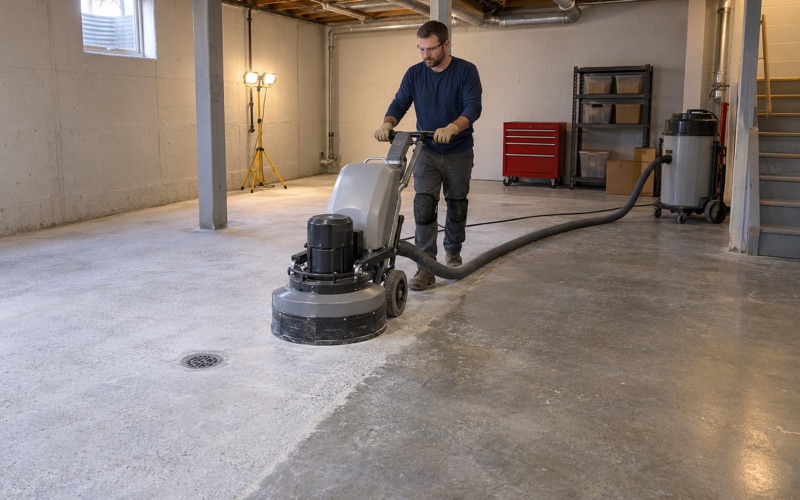
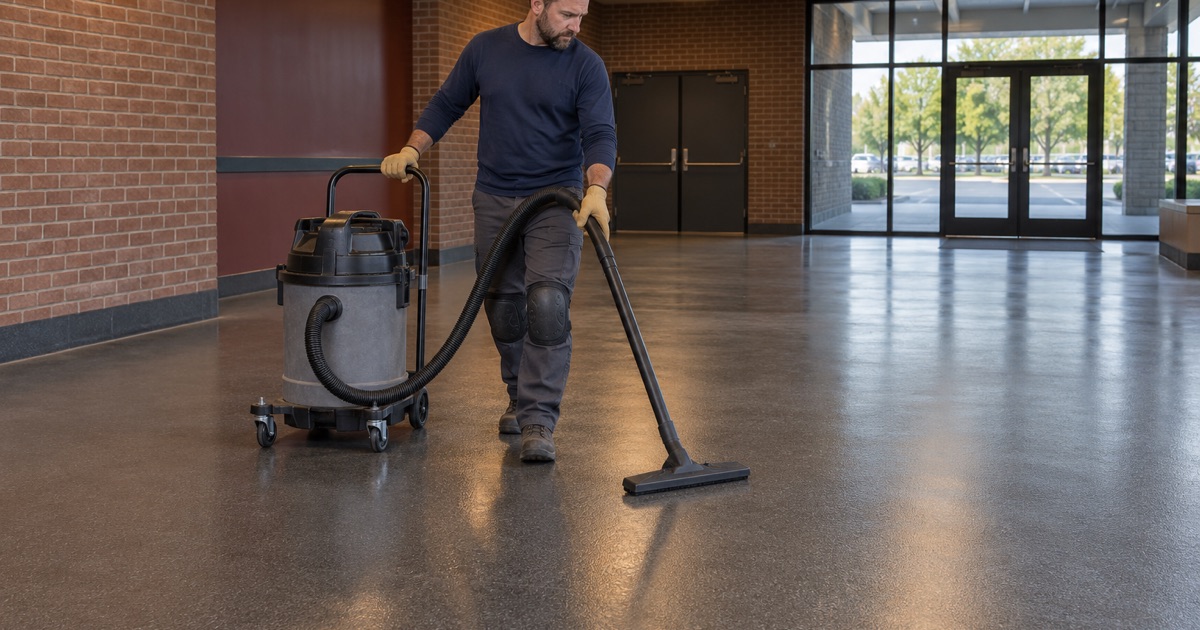
A sealer brushed onto a dusty slab will not hold up to a bar. We open the surface with diamond grinding or shot blasting to an ICRI concrete surface profile the chosen system calls for, and the dust is captured at the machine by a vacuum rather than washed toward a floor drain. That profile is what the coating grips.
The test written into the scope is usually ASTM F2170 in-situ relative humidity probes or an ASTM F1869 calcium chloride test. A coating on a slab pushing vapor up from below can blister no matter how clean the bar above it is kept, and moisture is the first exclusion we name when we explain what a warranty does not cover.
Zoning One Slab: A Textured Bar Zone and Smooth Aisles
The Bar Front and Tasting Tables
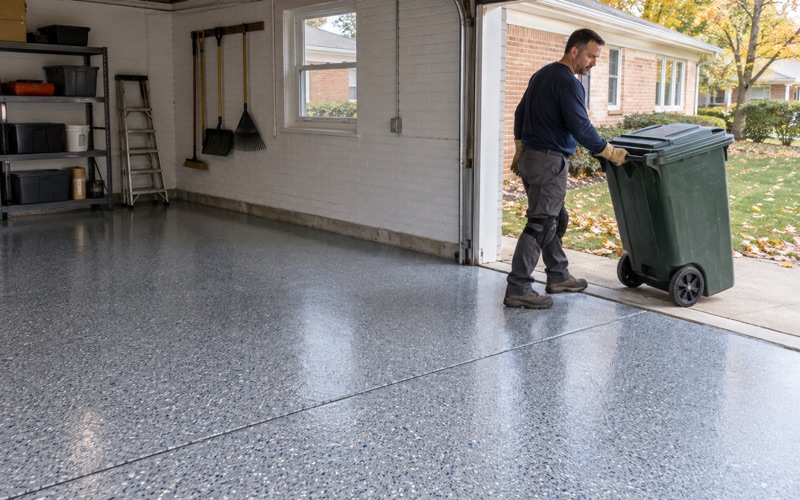
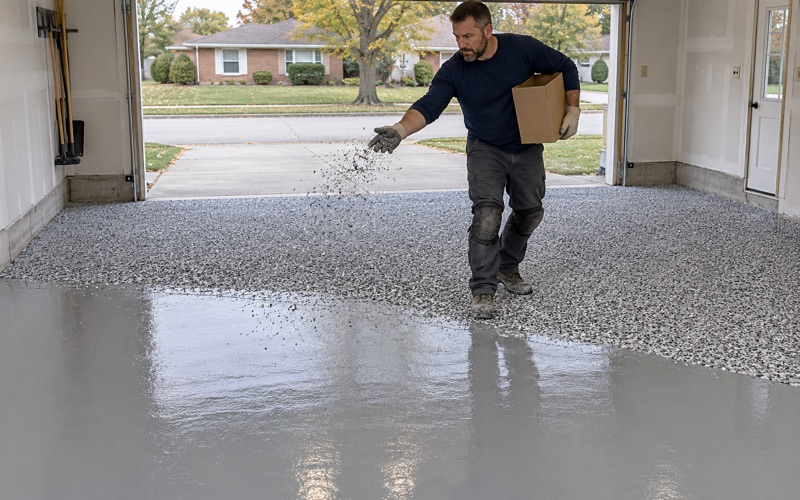
Where people stand with a glass, we build a sealed, textured surface. A common approach is a 100% solids epoxy base with quartz aggregate broadcast into it, locked down with a clear polyaspartic or polyurethane topcoat. The quartz gives shoes something to bite on when the floor is wet, and the topcoat seals the texture so spills stay on top instead of soaking in.
The zone should reach past the bar front itself to cover the tables and the path guests walk between them, because drips follow the glass. How coarse the texture runs is a choice between grip and cleanability, and it is worth feeling samples of both before the order is placed. A rougher broadcast holds a shoe better but takes a little more scrubbing.
Cart-Friendly Aisles
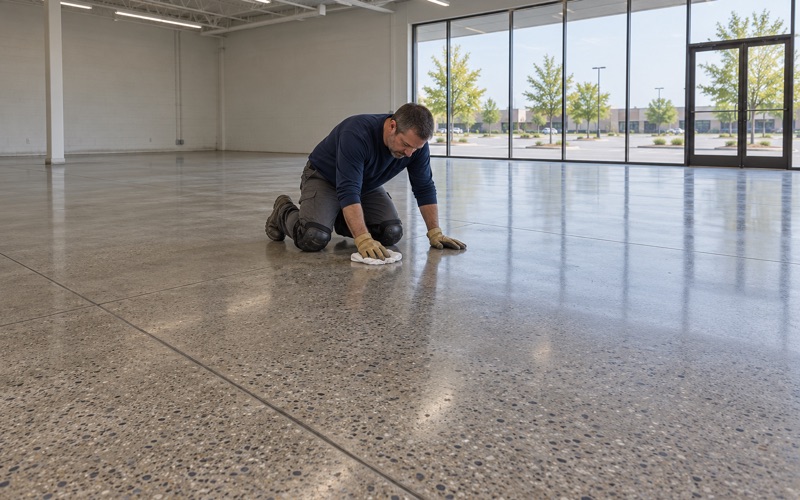
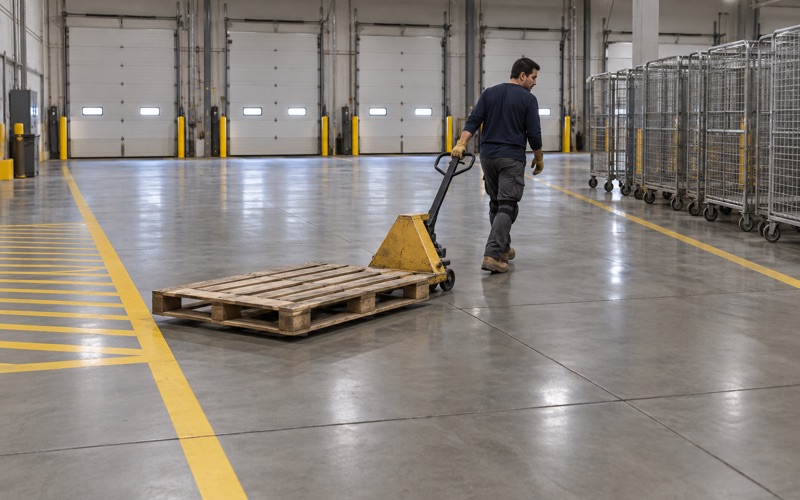
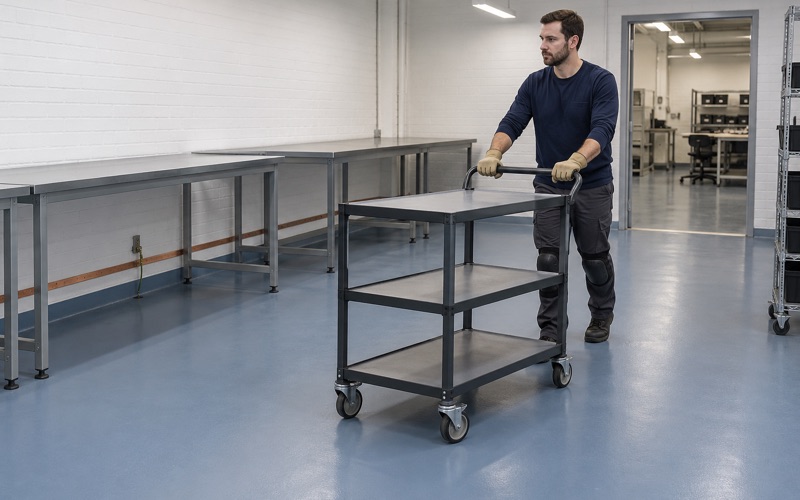
The aisles want the opposite: a smooth, tight finish that a loaded cart or a hand truck stacked with cases rolls across without chatter. A solid-color epoxy or a fine vinyl flake broadcast, sealed with a durable topcoat, cleans with an auto-scrubber or a mop and does not trap grit the way an open texture would.
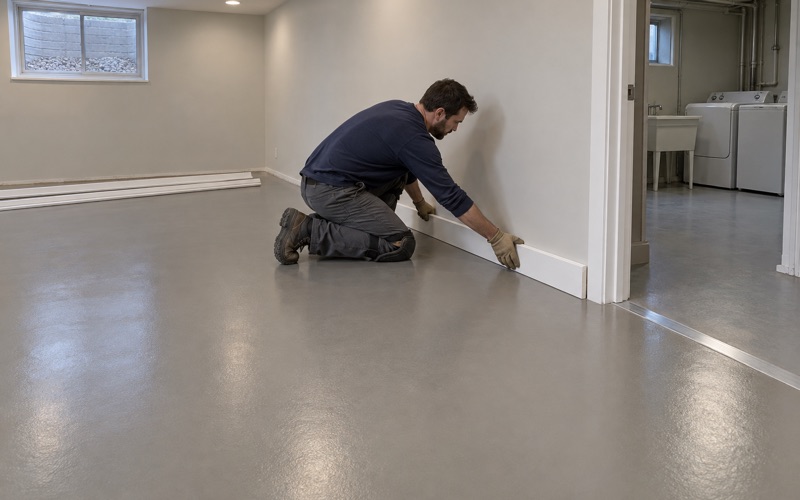
Aisles still see the occasional dropped bottle and a trail of drips from a leaking case, so they are sealed just as completely as the bar zone. The difference is only in the texture of the top layer. Both areas share the same prep, the same moisture readings and the same base chemistry, which keeps the two zones behaving as one floor.
Where the Zones Meet
The line between zones is laid out before any coating goes down, usually along a fixture edge or a change in use rather than a random spot in the middle of a walkway. A visible color or texture change also gives staff a clear edge for where each cleaning routine applies.
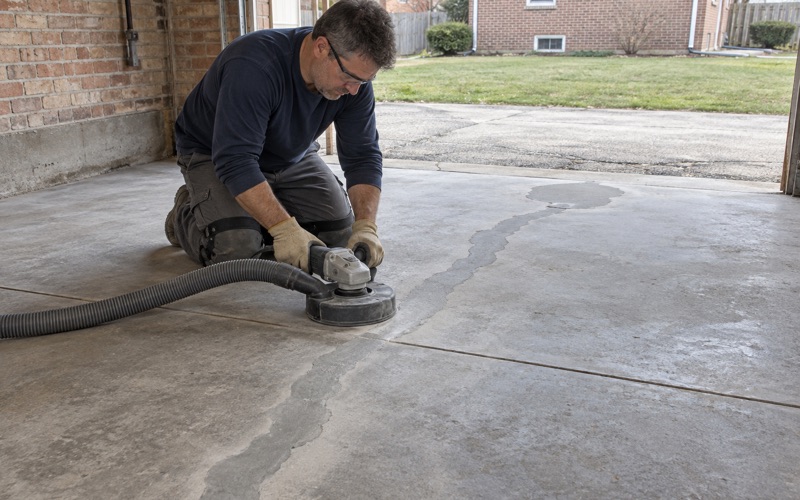
Before the layout is final, we map cracks, spalls and any old coating across the whole slab. A crack running under the bar front needs to be repaired, not buried, and if a section of the slab is too far gone to coat, we say so plainly and price the repair or replacement before we price the floor.
Cleaning Between Tastings, Seminars and Business Hours
After a Tasting
A sealed floor changes what cleanup looks like. On a coated bar zone, a spill is wiped or mopped while it is still liquid, and a neutral cleaner lifts the sugar film without dulling the topcoat. Leaving a spill overnight is far less costly than on bare concrete, but sugar left to dry still makes the texture harder to clean the next day.
Harsh cleaning is its own risk. The coating keeps caustic cleaners away from the cement matrix, but it has chemical tolerances of its own, so we leave the owner a short list of cleaners the chosen system handles well. A floor maintained to its spec keeps its sheen and its grip longer.
After a Seminar Crowd
A seminar for 20 to 25 people concentrates traffic in a way ordinary shopping does not. Chairs, tables, charcuterie boards and full glasses all share a small footprint, and the floor under them takes crumbs, drips and chair legs together. Where seminar seating sits on the textured zone, the floor handles that load far better than a slick finish would.
Cleanup after an event is a sweep for crumbs and broken glass, then a damp mop, then a dry pass where the textured zone holds water. Felt or rubber glides on chair and table legs keep the topcoat from being scuffed through in the same few spots week after week.
Installing Around Open Hours
A store with a bar rarely wants to close for a week. We phase the work so the aisles and the bar zone are done in separate stages, and we schedule cure time around the hours the store has to stay open. Fast-curing polyaspartic topcoats help here, though the epoxy base beneath them still needs its full cure before carts and crowds return.
Cure times follow slab temperature and the dew point at the surface, not the calendar, because a coating laid on a slab too close to the dew point can blush and lose adhesion. Every product we specify sits within the Illinois VOC limits for floor coatings, which bind the applicator, and Deerfield’s own contractor registration and insurance rules are checked before the job is booked.
- 20+ Years on Concrete
- Moisture Tested First
- Free Written Estimates