
Skokie Epoxy Flooring performs concrete floor repair in Skokie, IL, serving surrounding cities including Lincolnwood, Winnetka, Norridge, Schiller Park and River Grove. In 20+ years of coating slabs, we have found that the repairs underneath a floor matter as much as the coating on top, because a coating follows whatever the concrete does.
Most slabs we see have some damage. Garage floors carry salt pitting and broken edges at the door, basement floors carry shrinkage cracks and old patches, and commercial floors carry spalled joints and gouges from wheels and dropped loads. All of it is mapped before we quote, so the repair scope is written down rather than discovered halfway through the job.
We are also direct about the limits of repair. When a slab is failing below the surface, more patching will not save it, and we will say it needs replacement before it is worth coating.
Cracks in Concrete Floors
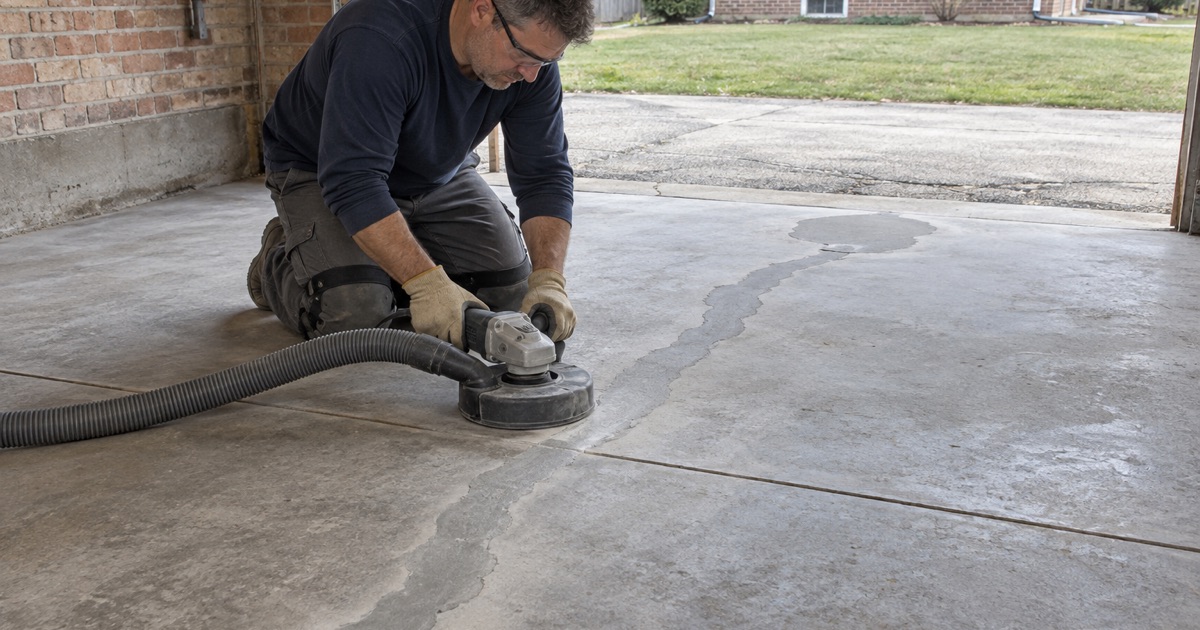
Shrinkage and Settlement Cracks
Almost every slab cracks as it cures and shrinks, and many older floors have settled slightly over the decades. Thin, stable cracks are routed or chased open, cleaned of dust and debris, and filled with a rigid or semi-rigid repair material compatible with the coating that will go on top.
Once filled, the repair is ground flush with the surrounding concrete. Under a flake or solid color coating, a stable crack repaired this way is usually invisible.
Moving Cracks and Joints
Some cracks open and close with temperature and seasons, and control joints are designed to move. A rigid filler in a moving crack will crack again, and a coating bridged over an active joint will split along it.
We use flexible fillers in those locations or honor the joint through the coating. We also tell you in advance which cracks may reflect through as a hairline line over time, so there are no surprises later.
Cracks That Signal a Bigger Problem
Wide cracks with one side higher than the other, cracks that keep growing, and cracks with water seeping through point to movement or drainage problems below the slab. Those need to be diagnosed before any cosmetic repair, and sometimes the answer is structural or drainage work rather than a coating.
In basements, a crack that lets water in after heavy rain is a drainage or foundation question, not a coating question. Filling it from above may slow the water for a while, but hydrostatic pressure will find a way through, and a coating sealed over it can blister. We point you toward the right trade before quoting the floor.
Spalls, Pitting and Scaling
Salt Damage on Garage Floors
Brine, calcium chloride and rock salt ride in on tires all winter, soak into bare concrete and break down its surface through repeated freezing and thawing. The result is pitting, scaling and flaking, usually worst near the garage door and under where cars park.
We grind away loose material, fill pits with a repair mortar or epoxy filler, and rebuild badly scaled areas before coating. A sealed, seamless coating then keeps salty water from soaking in again.
Spalled Edges and Door Aprons
The edge of a garage slab at the door and the edges along joints take impact from tires, shovels and snowblowers. When they chip and break, we saw back to sound concrete, clean the area and rebuild the edge with a durable mortar. Rebuilt edges are ground flush so the coating ends cleanly and does not leave a lip for a shovel to catch.
Surface Wear and Old Patches
Older basements and commercial floors often have patches made with materials that do not bond well or that crumble under grinding. We remove weak patches and replace them with materials that will hold up under the coating.
Low spots that collect water get the same attention. Around basement floor drains, we can build up a sloped patch so water runs toward the drain instead of pooling, and in garages we can fill birdbaths that hold slush long after the rest of the floor has dried.
Efflorescence and Surface Salts
White, powdery deposits on a basement or garage floor are efflorescence, salts carried to the surface by moisture moving through the concrete. They must be ground off before repair or coating, and their presence tells us to test the slab’s moisture carefully, because a repair material or coating sealed over active moisture will not bond reliably.
Joints, Gouges and Commercial Damage
Spalled Control Joints
Forklift and pallet jack wheels pound the edges of control joints, causing them to chip and widen. We rebuild damaged joint edges, then fill joints with a semi-rigid filler that supports wheels while allowing small movement. That repair prevents the joint from becoming the place where a coating starts to tear apart under traffic.
Gouges and Impact Damage
Dropped equipment, dragged pallets and steel wheels gouge concrete in shops and warehouses. Those gouges are cleaned out and filled with fast-setting repair materials so the floor can be coated and returned to service quickly.
In businesses that cannot close, repairs are phased with the coating work. Fast-setting materials let us repair and coat an aisle or bay overnight, and forklift and pallet jack traffic can return once the product’s cure time has passed.
When a Slab Needs Replacement Instead
Signs a Floor Is Past Repair
A slab that has broken into large plates that rock underfoot, sunk well below adjacent surfaces or turned soft and crumbly across large areas is failing as a structure. Patching and coating it would only hide the problem until it cracks through again.
In those cases we recommend replacement before any coating. Replacing a slab is permit work in most villages, and a new slab needs time to cure and must be tested for moisture before it can be coated.
Honest Scoping Before Pricing
Our written proposal lists every repair we plan, the materials and the expected result. If we find a slab cannot be made sound enough to coat, we say so before you commit, rather than coating over a floor that is going to fail.
- 20+ Years on Concrete
- Moisture Tested First
- Free Written Estimates