Skokie Epoxy Flooring brings more than 20 years of work to epoxy flooring in Chicago Ridge, and the floors we think hardest about are the ones where a slip has consequences beyond a bruise. In a commercial kitchen that means the strip of concrete in front of the fryers, where hot oil, breading and wash water all land on the same few square feet. Our job there is to build a surface that keeps its grip while it is dirty and keeps that grip after months of daily scrubbing.
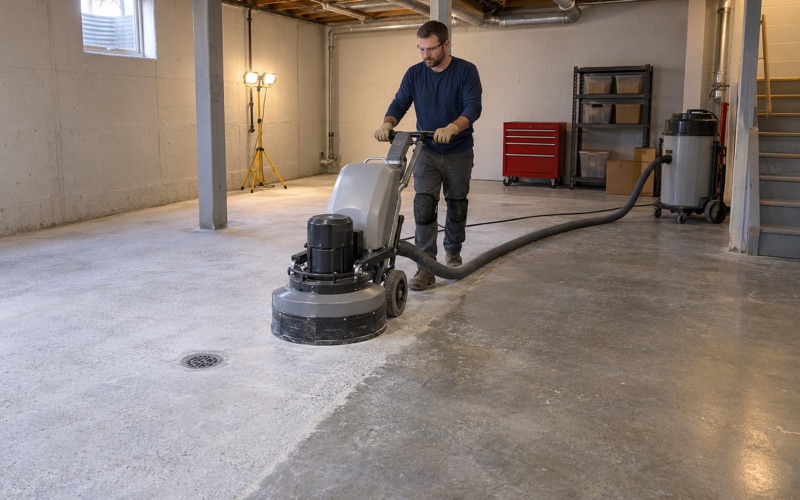
That starts with preparation. We open every slab with a diamond grinder or a shot blaster rather than an acid etch, so the resin bonds into a measured profile instead of a dusty skin, and the dust is pulled into a vacuum at the machine instead of washed toward a floor drain. Before we put a final number on a job, a moisture test is written into the scope.
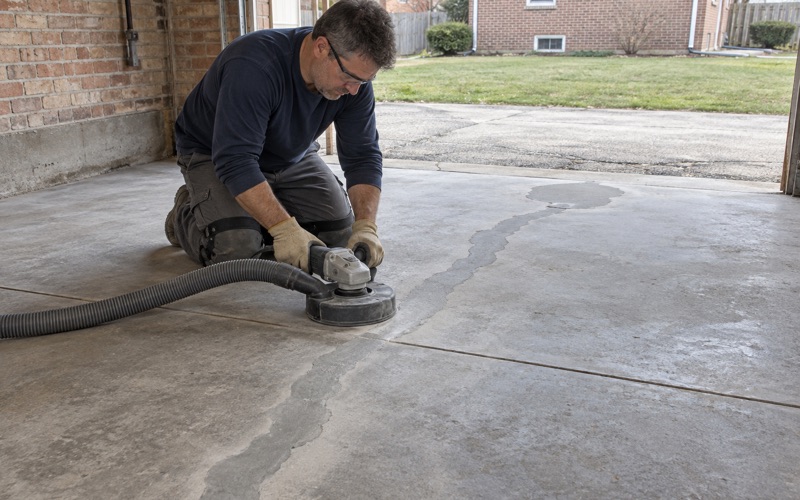
Our proposals name the product line, the coat count and the finished thickness, so an owner can hold the installed floor against the paper. We map cracks, spalls and old coatings first, and when a kitchen slab needs repair before it should be coated, we say so plainly. The rest of this page explains how we approach a frying floor here, where a new restaurant has put that question in front of the village.
A Fryer Line on 95th Street, Open Until 1:00 a.m.
A New Kitchen at 95th and Ridgeland
Raising Cane’s held its ribbon-cutting in Chicago Ridge on Tuesday, June 3, 2025, at 6401 W. 95th Street, on the corner of 95th Street and Ridgeland Avenue. The address sits inside the village, in Worth Township, and the restaurant is a stand-alone building whose kitchen fries chicken from opening to close. That makes it a useful reference point for anyone in town who runs, or is planning, a kitchen with a fryer bank.
We want to be clear about what we know and what we do not. We have no relationship with the restaurant, and we have not seen its kitchen floor, its fryer count or the cleaning products its crew uses. What we can describe is the kind of floor a frying kitchen asks for, and why the area beside the fryers is chosen differently from the rest of the room.
A Long Day and When the Floor Gets Cleaned
The restaurant is open daily from 10:00 a.m. to 1:00 a.m., a fifteen-hour service day. A kitchen on that schedule does not get a quiet afternoon for a floor to dry; it is usually cleaned in passes during service and scrubbed hard after close, often by a crew working late. Whatever goes down in front of the fryers has to take a wet mop at noon and a heavy degreasing in the early morning hours.
That rhythm also shapes how any floor work is planned. A frying kitchen cannot close for a week, so we phase installs around the hours a building has to stay open, coating one section or one line while the rest of the kitchen keeps working where the layout allows. Cure times are set by slab temperature and dew point, not by the calendar, so a reopening date is never promised before the conditions are read.
Looking for epoxy-flooring closer to Palos Hills? See Epoxy-Flooring Services in Palos Hills.
Why the Floor by the Fryers Is the Dangerous One
Falling Onto Hot Surfaces
Most slips in a building end on the floor. In a frying kitchen a slip can end against a fryer basket or a vat of hot oil, which is why OSHA’s Young Worker Safety in Restaurants eTool tells kitchens to keep floor surfaces clean and dry to prevent slipping or falling onto hot surfaces. The same guidance says not to work closely to hot fryers when the floor is wet, and it names slip-resistant shoes as part of the answer.
That eTool is guidance written for restaurant crews, not a standard, and a floor coating does not satisfy it on its own. It does point at what the floor contributes. Shoes, housekeeping and a dry floor carry most of the weight; a surface that holds its texture under a film gives a worker one more chance when the others lapse.
Shortening, Breading and Water Through a Shift
The film that builds in front of a fryer is not plain oil. Shortening spatters from the vat, flour and breading drift down from the dredging station, and water arrives from hand sinks, ice and mopping. Mixed together, they make a paste that fills the low points of a smooth floor and turns it into a skating surface.
The OSHA guidance also warns against storing oil on floors by the grill area, because someone could slip and fall into it. A dropped box of shortening or a jug left near the line adds exactly that. A floor cannot stop a spill, but its texture decides whether a boot finds anything to bite into while the spill is being cleaned.
The Cleaning That Follows
The eTool’s answer to the film is frequent cleaning with grease-cutting solutions, and most of those are strongly alkaline because alkali breaks fats down into something water can carry away. That is good for the floor surface and hard on the wrong coating. A topcoat that softens, dulls or loses its texture under daily degreaser can be worse than none, because it looks protective while the grip wears away underneath the shine. We plan for that chemistry from the first coat.
Texture That Grips Under Grease, a Topcoat That Takes Degreaser
A Broadcast Sized for a Greasy Floor
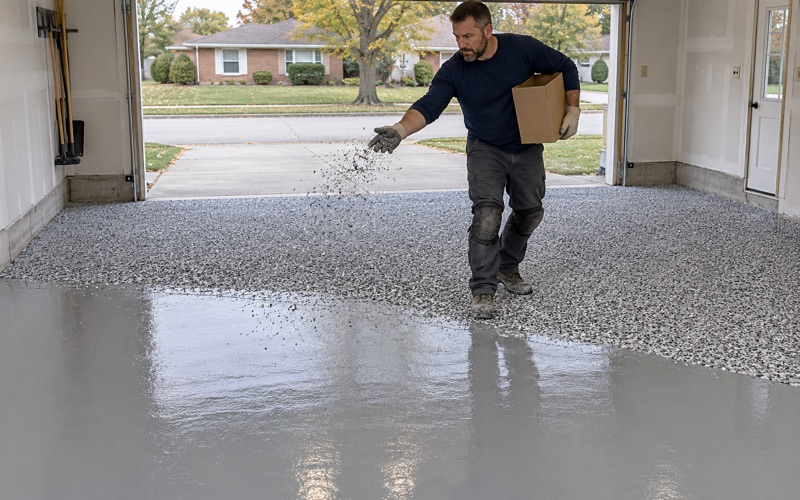
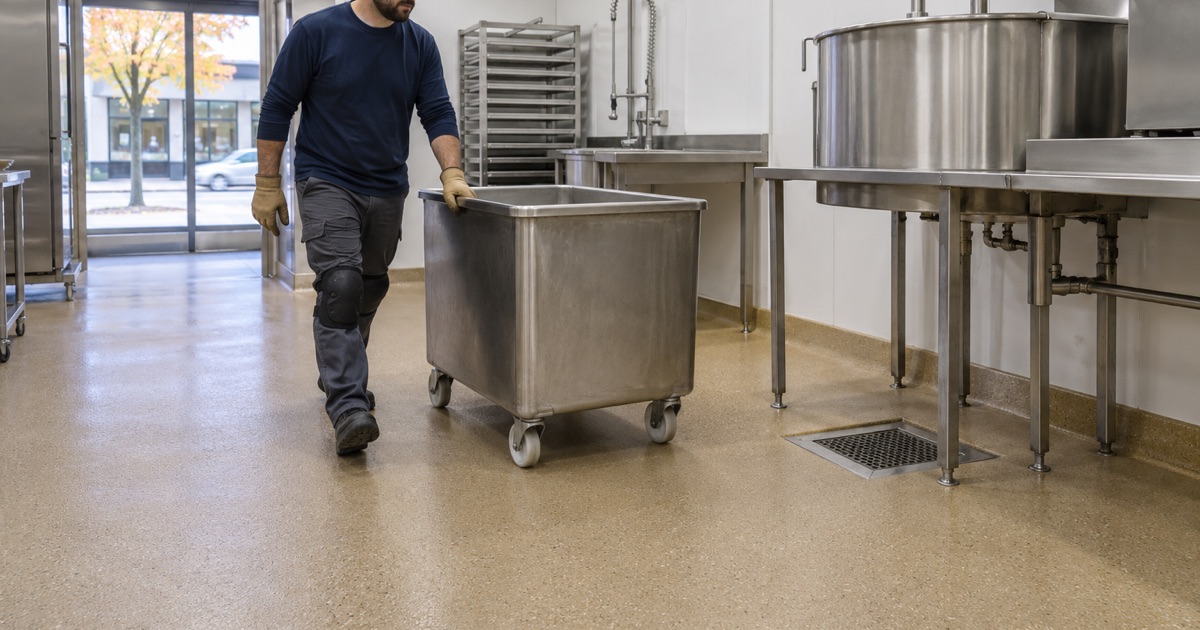
Grip under grease comes from aggregate standing proud of the film. We broadcast quartz into a wet 100% solids epoxy body coat, let it cure, scrape off what did not lock in, and seal it with a topcoat thin enough to keep the peaks sharp. A coarser broadcast reads rougher under a boot and holds more grip in a shortening film, at the cost of being harder to mop.
That trade-off is a decision, not a default. Directly in front of the fryers we lean toward a heavier texture; in the walkways and dish area a finer one cleans more easily. No coating removes the slip hazard from a greasy floor, and we write that into the proposal, but a well-chosen texture keeps far more traction than a smooth sealer once the film is down.
Resin and Topcoat Against Daily Degreaser
The topcoat is where alkaline cleaners do their work, so it is chosen for chemical resistance first. Depending on the kitchen we specify a urethane cement system or an epoxy body with a polyaspartic or polyurea topcoat rated for the cleaners in use. We ask for the actual product name of the degreaser and check it against the manufacturer’s resistance data before choosing.
Hot oil matters too. Spatter from a fryer arrives far hotter than mop water, and a floor near cooking equipment cycles between heat and cold rinses every day. That is a large part of why urethane cement shows up so often in commercial kitchens: it tolerates the temperature swing better than many thin-film coatings.
Preparing a Kitchen Slab
Old kitchen concrete is usually soaked with fat, and resin will not bond to it. We degrease, then grind or shot blast to an ICRI concrete surface profile matched to the system, and test whether oil is still wicking back up before anything goes down. Where it is, the slab is cleaned again or cut back further.
Moisture comes next. A slab on grade can push vapor from below, so we run a calcium chloride test to ASTM F1869 or in-situ relative humidity probes to ASTM F2170 as the job requires. If readings run high, a moisture-mitigation primer goes into the scope, and moisture is the first warranty exclusion we explain before anything is signed.
Fryer Floors in Chicago Ridge’s Other Kitchens and at Home
Registering With the Village First
Chicago Ridge requires every contractor to register at Village Hall, 10455 S. Ridgeland Avenue, before a permit is issued. A general contractor pays a $100 fee, supplies a current certificate of insurance and posts a $10,000 surety or performance bond. The village permit sheet says all construction or remodeling work on or in any type of building needs a permit, applied for by the contractor doing the work.
Illinois licenses no flooring or coatings contractor, so that village registration and bond are what bind us here, and we confirm them before a job is booked. Food-service kitchens in the village fall under the Cook County Department of Public Health, and we coordinate with the owner on any review that office expects before a kitchen floor goes down.
Smaller Kitchens With a Fryer
The fryer floor is not unique to one restaurant. Any kitchen in town with a fryer, from a corner grill to a catering kitchen, faces the same film and the same daily degreasing at a smaller scale. We size the texture and topcoat to the volume of frying and to how the floor is actually cleaned, which matters more than the size of the room.
For a small operator, phasing matters even more, because one closed day is a real share of the week. A compact kitchen floor can often be prepared, coated and topcoated across a short closure when the system is chosen for a fast return to service, and we tell an owner honestly when the slab condition makes that schedule unrealistic.
A Fryer in a Basement Kitchen
Home cooks who fry in a second kitchen in the basement produce a smaller version of the same film. A vinyl flake or quartz broadcast with a chemical-resistant topcoat holds up to the occasional splash and the degreaser that follows, and it cleans far better than bare concrete that drinks oil. We coat around the sump pit and floor drain, not over them, and home jobs above the state threshold get a written contract and the Illinois Home Repair: Know Your Consumer Rights pamphlet before any grinding starts.
- 20+ Years on Concrete
- Moisture Tested First
- Free Written Estimates