Skokie Epoxy Flooring has spent more than 20 years on epoxy flooring in Bellwood and the rest of the near west suburbs, and the floors we think hardest about are the ones where a spill is a fine powder rather than a puddle. A seamless, sealed coating changes what cleanup looks like when the material on the floor is dust that must not be swept or blown around.
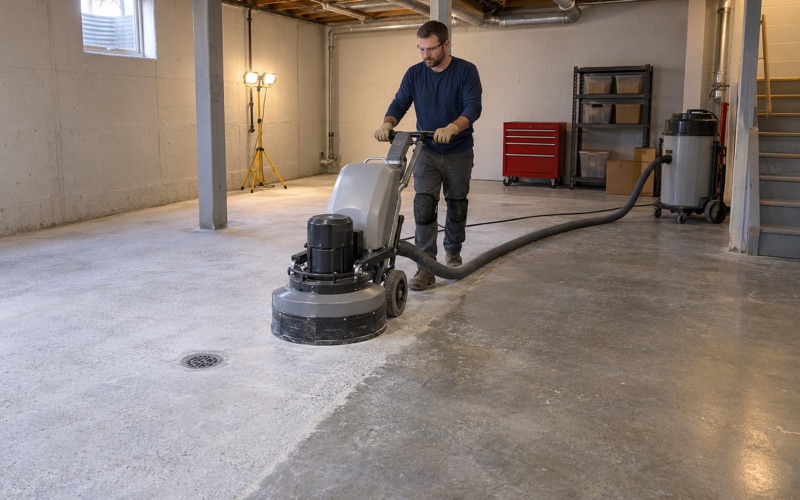
That shapes how we work from the first visit. Every slab is opened mechanically, with a diamond grinder or a shot blaster rather than an acid etch, and the grinding dust is pulled into a vacuum at the machine instead of being rinsed toward a drain. The coatings themselves are chosen for how they clean, not only for how they look on the day they cure.
The written proposal names the product line, the coat count and the finished thickness, so a plant manager or a homeowner can hold the finished floor up against the quote. What follows is how we approach a floor that has to give up fine dust cleanly, whether it sits in an industrial building or a two-car garage.
An Amorphous Boron Refinery on Davis Drive
SB Boron in Proviso Township
Bellwood is a village in Proviso Township, about 13 miles west of the Loop, and its industrial side holds a business few towns can claim. SB Boron Corporation, at 20 Davis Drive, describes itself as the exclusive North American refiner and manufacturer of elemental amorphous boron powder. It sells four grades, SB95, SB90, SB86 and SB2000, and says it is an ISO certified company.
The address also appears on the Metropolitan Water Reclamation District’s list of Significant Industrial Users as of September 1, 2026. The company’s own site points to applications such as airbags, pyrotechnics, refractory additives and welding and brazing fluxes, all of which start from a fine, dark powder. We have no connection to the company and have not seen its rooms, but the material itself tells a floor contractor a good deal.
What a Boron Safety Data Sheet Asks For
One supplier’s elemental boron safety data sheet, from Angstrom Sciences rather than SB Boron, classifies the powder as a flammable solid and carries the signal word Danger. Its firefighting section says not to use water for metal fires and to use special powder, sand or CO2 instead. Other suppliers classify boron differently depending on grade and form, so we treat that sheet as an example of the type, not a rule for every plant.
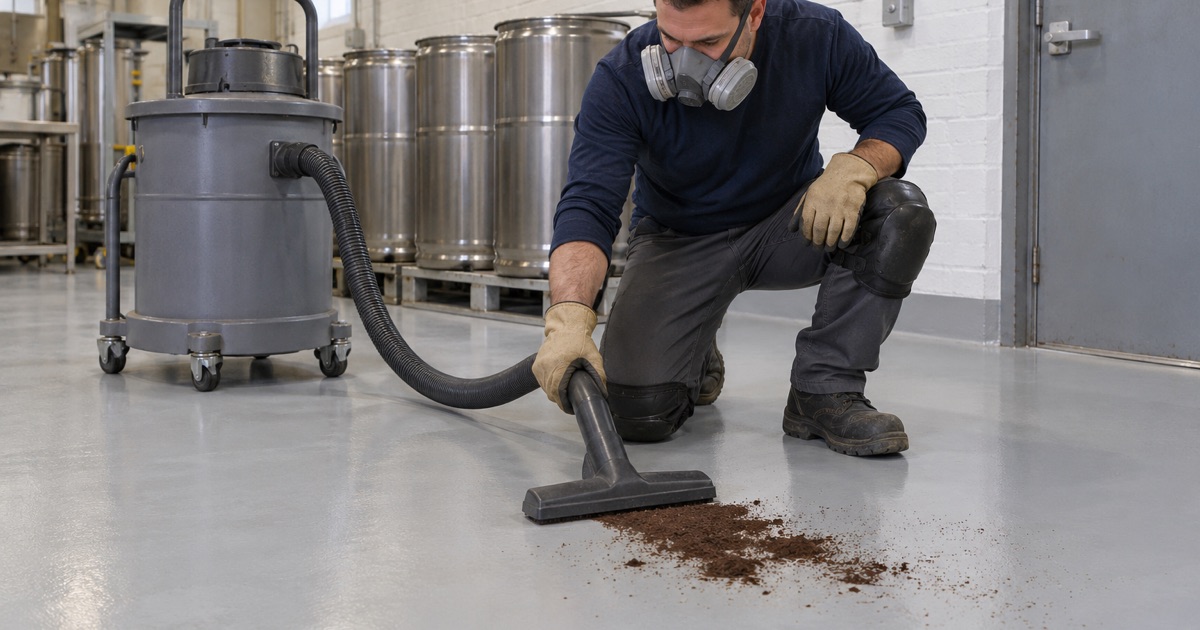
The spill section is the part that matters to us. It calls for vacuuming a spill with a HEPA-filtered vacuum, placing it in a closed container, and taking care not to raise dust, and the handling section warns against blowing dust off clothing or skin with compressed air. Put plainly, the powder is meant to be lifted off the floor quietly, never pushed around it.
Where the Floor Fits in a Spill Plan
A floor coating is not fire protection and it does nothing to make a room safe from combustible dust; that work belongs to engineering, ventilation and the plant’s own procedures. What a floor can do is make the cleanup the data sheet describes actually work. If the vacuum is the tool, the surface under it decides whether one pass collects the spill or leaves a share of it behind.
So in any shop where fine powder is handled, we treat the floor as one line in the spill plan rather than a finish chosen for looks. Three things decide it: the surface has to be seamless, it has to be sealed tight enough for a vacuum head to lift everything, and it has to be light enough that a dark spill is obvious.
Looking for epoxy-flooring closer to Wood Dale? See Epoxy-Flooring Services in Wood Dale.
A Floor Built for a HEPA Vacuum, Not a Broom
Why Brooms and Air Hoses Are the Wrong Tools
A push broom on bare concrete lifts the finest fraction of a powder into the air and drives the rest into the surface texture. A compressed air hose is worse, scattering dust across benches, ledges and the far side of the room. Both are the opposite of the instruction not to raise dust, and both are what people reach for when the floor makes vacuuming slow.
Water is not the easy answer either. A mop or hose on a flammable powder is not something a crew should improvise, and the data sheet we read rules water out for a metal fire. The practical goal is a floor where the HEPA vacuum is also the fastest tool in the room, so nobody is tempted to grab something else.
Sealed Smooth Enough to Give the Powder Up
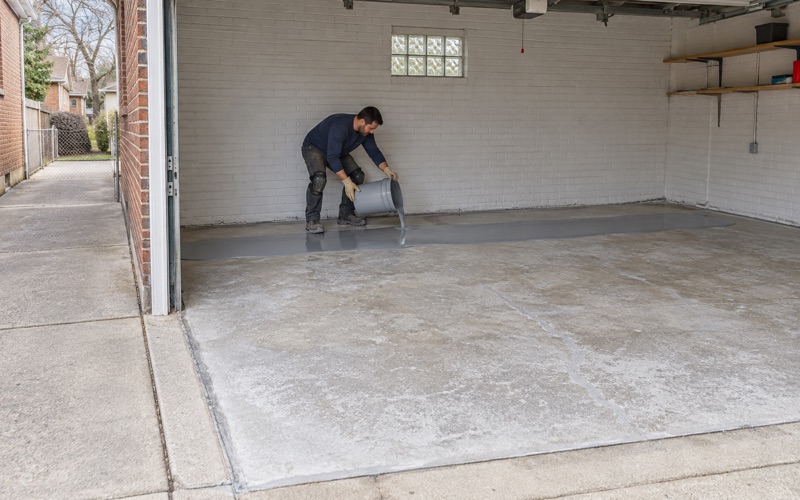
Bare concrete is porous, and its surface is full of tiny pits that hold fine particles the way a sponge holds water. A 100% solids epoxy body coat closes those pores, and a clear polyaspartic or urethane topcoat leaves a tight, continuous film. On that surface a vacuum head seals well against the floor and pulls powder off in a single pass rather than several.
Texture is a trade-off. A heavy quartz aggregate broadcast gives grip, but every peak and valley is a place for powder to sit, so where fine dust is the main concern we keep the broadcast light or use a finer grit in the topcoat. We also skip the decorative vinyl flake in these rooms, since a busy pattern hides exactly what the floor is supposed to show.
A Light Color That Shows a Dark Spill
Amorphous boron powder is dark, and on gray concrete a thin film of it can go unnoticed until someone tracks it into the next room. A light gray, tan or off-white coating turns the same film into an obvious stain. That makes the floor a quiet inspection tool, telling a crew where the vacuum still needs to go and when the job is actually finished.
Light colors show tire marks and scuffs too, so we talk through the trade before the color is chosen. In a production room we usually recommend one uniform light field across the floor, sometimes with a contrasting stripe for walkways, rather than a darker body color that would look cleaner while hiding more.
Joints, Cracks and Porous Concrete Where Powder Hides
Mapping the Slab Before the Price
A floor can be coated beautifully across its open field and still fail the powder test at its edges. Saw-cut control joints, hairline cracks, spalled patches around old anchor bolts and the gap at the wall base are where fine dust lodges, then works loose weeks later when a cart rolls over it or someone sweeps. We walk the slab and mark every one of those before we write a number.
That map also tells us when a slab should not be coated yet. Heaving sections, wide moving cracks or concrete that crumbles under the grinder need repair or replacement first, and we say so in writing rather than burying the problem under a film that will crack along the same line.
Grinding Open, Then Filling Solid
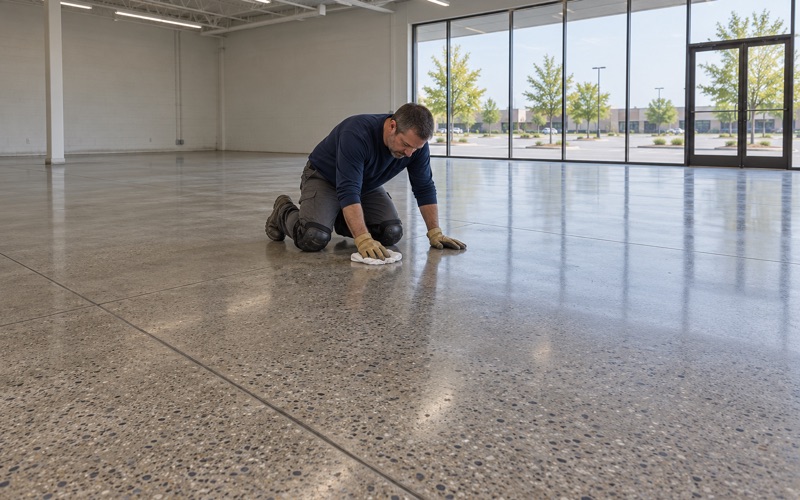
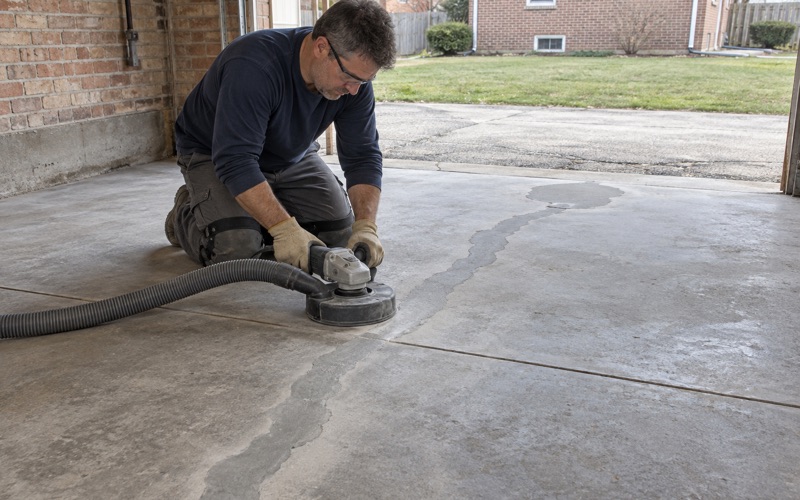
Diamond grinding or shot blasting to a measured ICRI concrete surface profile does two jobs here. It gives the primer something real to grip, and it opens cracks and old joints to sound edges so a filler can bond along their full depth instead of bridging over a dirty void. Each repair is ground flush afterward, so the coating runs over it without a ridge or a dip.
Non-moving cracks and dormant joints are filled with a rigid epoxy or polyurea filler and coated over, which leaves the floor genuinely seamless. Joints that still move cannot simply be buried, so we fill them with a semi-rigid material, keep them in the plan and tell the owner they will need watching.
Keeping a Crevice-Free Floor That Way
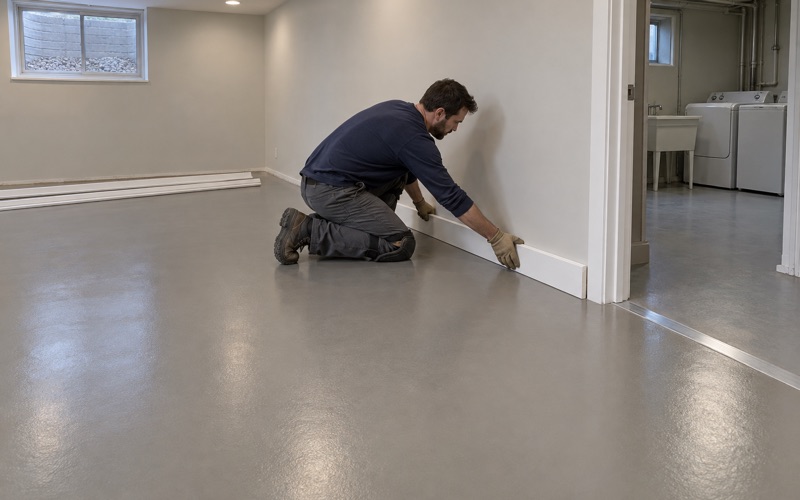
Edges are the last place powder hides. Where the budget allows, we run the coating up the wall as an integral cove base, so there is no corner seam between floor and wall for dust to pack into. Around column bases, equipment pads and drains, the coating is detailed tight rather than stopped short.
Over time, a crevice-free floor stays that way only if damage is fixed while it is small. A gouge from a dropped tool or a chipped edge at a doorway should be patched and topcoated before it becomes a new pocket, and we would rather show a maintenance crew how to spot one than return to a floor full of them.
Fine Dust in Bellwood Shops and Garages
Home Garages With a Workbench
Most of Bellwood’s housing is single-family detached, and a garage often doubles as a workshop. Sanding dust, drywall dust, sawdust and grinder grit settle into a bare garage slab the same way, if far less dramatically, and the same habits creep in: a broom, a leaf blower, a hose toward the driveway.
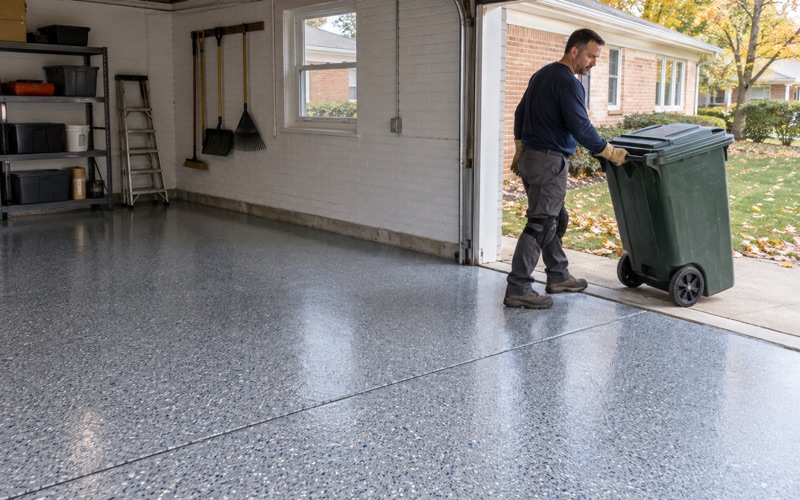
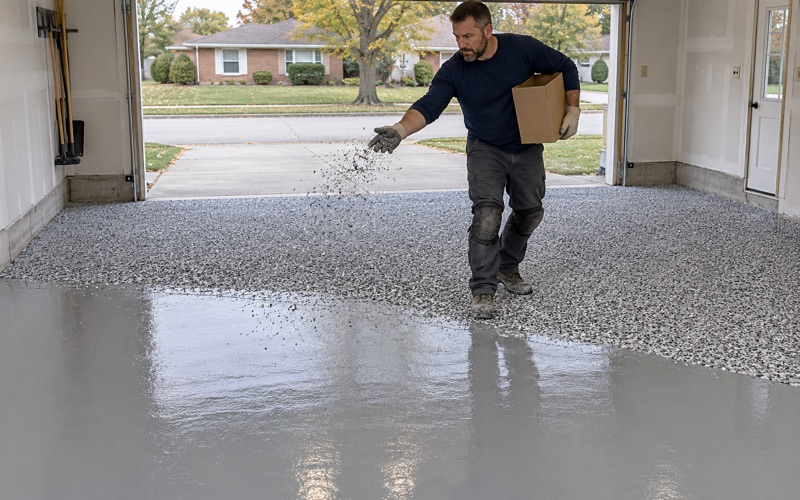
A sealed, light-colored garage floor makes a shop vacuum the easy choice and shows exactly where the dust went. We choose garage systems to stand up to the rock salt and brine that ride in on tires all winter, and we pick a broadcast fine enough that cleaning out a winter’s grit is not a fight with the texture.
Before any of that, a moisture test goes into the written scope, and the cure schedule follows slab temperature and dew point rather than the calendar. An unheated detached garage in the middle of a Chicago-area winter is usually told to wait for spring.
Booking Shop and Plant Work in the Village
Illinois has no state flooring license, so before a Bellwood job is booked we check the Village of Bellwood’s own contractor registration and insurance requirements and confirm with the Building Department whether the work needs a permit. Home jobs above the state threshold get a written contract and the Home Repair: Know Your Consumer Rights pamphlet before any grinding starts.
In a working plant, we phase the floor around the hours the building has to stay running, coating one bay while the next keeps producing. Products are chosen inside the Illinois VOC limits for industrial coatings, and the warranty exclusions, moisture first among them, are explained before anything is signed.
- 20+ Years on Concrete
- Moisture Tested First
- Free Written Estimates